
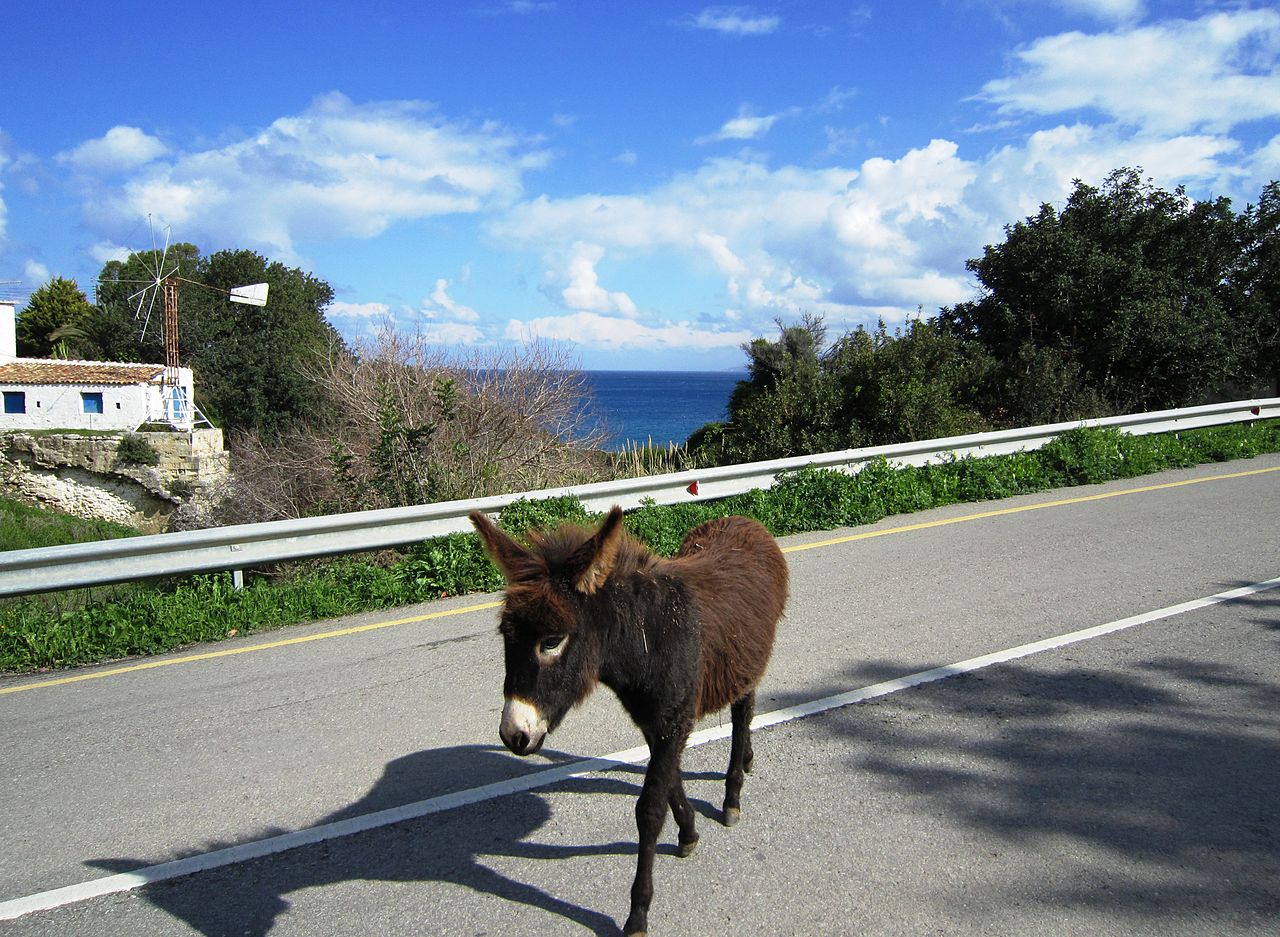

They have fended for themselves for decades – with a little help from humans passing through.
The Cyprus donkey is the donkey breed of the Mediterranean island of Cyprus. There are two principal strains: a large dark-coloured type with a pale belly, probably of European origin; and a small grey African type which represents about 20% of the total population, which in 2002 was estimated at 2200–2700.
In 2008, a group of Greek and Turkish Cypriots organized to save the animals from extinction after ten of them were found shot dead.
And wild donkeys in the Turkish occupied part of Cyprus are thriving!
Experts estimate there must be about 2,000 today, roaming the hills, sand dunes and country roads of the remote Karpas Peninsula.
A previous field study in 2003 put the number at 800-900, covering an area of 132 sq km.
“They are a very big attraction for the tourists, for local and international tourists,” said biologist and wilderness guide Tugberk Emirzade.
“They are very cute animals. They are very friendly and they are interesting. They have interesting history on the island, and they should be utilised in tourism.”
Greek-Cypriot farmers once owned donkeys in the area but abandoned them when fleeing the Turkish invasion, triggered by a brief Greek-inspired coup, that divided Cyprus in 1974.
The donkeys’ domain, on the easternmost point of Cyprus, is a focal point for pilgrims among the island’s Greek and Turkish Cypriot population because of a monastery dedicated to the Apostle Andrew, one of Jesus’s first followers.
The donkeys eagerly await visitors. Cars mean people, and people mean food.
Drivers frequently find packs on the meandering narrow roads, refusing to budge until the windows are wound down. Ears back and snouts pulled into a grin, the donkeys stick in their muzzles in the hope of a reward.
But while the animals are loved by tourists, they are loathed by some locals who say they damage crops and make roads dangerous, causing traffic accidents.
There is also a Donkey sanctuary in Limassol, Cyprus which was established in 2007 and is a subsidiary of The Donkey Sanctuary, UK founded in 1969 by Dr Elisabeth Svendsen MBE. It is only through her amazing devotion to donkeys and hard work that the Sanctuary grew to the international charity it is today. Over 50 million donkeys and mules exist in the world. Many need care and protection from a life of suffering and neglect, whilst others have a vital role to play in human survival and happiness; they are at the heart of everything we do here at Donkey Sanctuary (Cyprus).
Euro News