
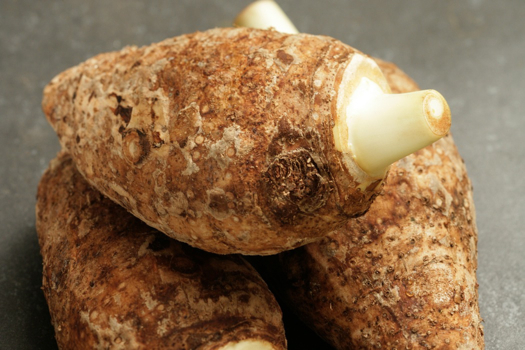

A two-day gastronomy event is currently taking place in Holland to promote Sotira Municipality’s Protected Designation of Origin (PDO) product – the vegetable taro root (Kolokasi Sotiras).
The event is taking place at the prestigious ‘Hotelschool The Hague’, in Holland, which is one of the top five hotel schools/hospitality business schools in the world, with 45% of its attendance made up of international students.
The initiative is being hosted under the sponsorship of Sotira Municipality, the Embassy of Cyprus in the Netherlands, IHE-Innovative Hospitality Education, and KEO, with additional support from the Cyprus Tourism Organisation (CTO).
Its event coordinator and promoter is Giorgos Zachariades , who is a third year Hotel Management student at Hotelschool The Hague. Zachariades also works at IHE-Innovative Hospitality Education during school breaks – a business consulting and training firm based in Limassol that focuses on the hospitality industry.
It was through IHE that Zachariades met award-winning chef Antonis Attounis – Executive Chef of the Sunrise Hotel chain in Paralimni, and the idea came about to hold an event at the school as part of Sotira Municipality’s efforts to promote Kolokasi Sotiras in Europe following its official PDO status in 2016.
The participants of the event are distinguished guests; teachers and students of the school, and other guests who have booked to enjoy a meal based on taro root at the school’s renowned restaurants.
Yesterday an open workshop was held where participants were involved in preparing some of the elements for the dishes that will be served at today’s dinner.
The workshop is part of the student’s practical training, and alongside working with taro root as an ingredient; the students also sampled other traditional Cypriot products, including Halloumi cheese, carob syrup and Commandaria dessert wine. A lecture on the evolution of Cypriot cuisine and its influences was also held.
Taro root dishes were showcased at the school’s annual International Food Festival yesterday.
The formal dinner will take place today, and will be hosted at the school’s two restaurants; Le Debut fine dining and the more causal Zinq brassiere.
Antonis Attounis has created a special four-course menu based on alternative dishes with taro root that were originally presented at September’s ‘2nd Kolokasi Gastronomy Night’, but modified to suit the European palette.
The practical education students will assist with the preparation and serving of the meal.
The menu will consist of a starter of Halloumi and tomato timbale, followed by octopus ‘souvlaki’ with taro root ravioli stuffed with king prawns on a beetroot puree, followed by a main course of veal entrecote with ‘kolokasi kapama’ (a traditional dish with red wine and coriander seeds), and steamed baby radish. The meal ends with a dessert of sweet taro root cream with filo pastry, drizzled with carob syrup.
Coordinator Zachariades explains the concept behind the event: “The overall aim of the event is to promote and raise awareness about Cypriot gastronomy and cuisine, and more specifically, Kolokasi Sotiras outside of Cyprus, especially now that it is an official product of Sotira.
“There has been a great response to the idea, as well as open-mindedness to using kolokasi as a versatile ingredient that many chefs and students have not actually encountered before.”
Zachariades says that taro root – which is similar to yams and sweet potatoes – is wonderfully versatile: “Kolokasi is such an interesting ingredient due to the fact that you can use it and transform it in many different ways thanks to its fine taste that can be played with.
“It works equally well as a main or side dish, or as a savoury dish (such as mash or chips) or a dessert, which is unique for a vegetable, and what makes it so intriguing as an ingredient.”
It is believed that taro root was brought to the island by the Romans, who called it ‘colocasia’, whilst another version tells that the earliest reference to the taro root of Cyprus dates back to 1191 AD at Richard the Lionheart’s wedding dinner at Limassol Castle.
Sotira grows 85% of the root vegetable on the island and has held an annual festival in its honour since 1973. In 2015 the festival was given a makeover to become a gastronomy night. The most popular dishes made with taro root are a pork stew, crisps and ‘poulles’, which is baby taro root that is sautéed and de-caramelised with dry wine and coriander seeds and was also given PDO status.

