
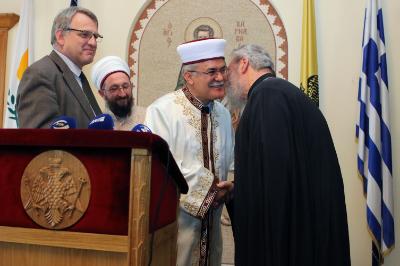

The main lesson for the religious leaders, in the framework of the Religious Track of the Cyprus Peace Process (RTCYPP), is that when they stand up for the needs of each other they are able to use the political trust within their own communities to enhance the human rights agenda and contribute to confidence building.
This is how Peter Weiderud, one of the initiators of RTCYPP described the process during a lecture on Tuesday by the Swedish Research Institute, in Istanbul, entitled “Can Religion Contribute to Peace in Cyprus,” a RTCYPP press release said.
“The religious leaders of Cyprus have learned that it is very difficult to reach results in a situation of conflict, if they only address their own needs and in a national context,” he pointed out.
However, he added, “when they talk together, and address principle concerns, which are in line with the human rights law, they can count on international support for their claims. And when they stand up for the needs of each other, they are able to use the political trust within their own communities to enhance the human rights agenda and contribute to confidence building.”
This, according to Weiderud “is the main lesson learned from the Religious Track, which could be shared with others and also be applied in other conflicts and contexts.”

