

And wine maketh glad the heart of man
– Psalm 104
Ernest Hemingway won the Nobel Prize for Literature in 1954. His best book, in my opinion, is ‘The Old Man and the Sea’, a perfect novella about an ageing Cuban fisherman and his epic battle with an Atlantic blue marlin that he’s trying to catch. The book is a diabolical cross between The Odyssey and Jaws – with a vibrant ‘will he make it back home?’ energy. The title itself is indeed taken from Homer – γέρων άλιος. The English composer and novelist Anthony Burgess said, “It is unsurpassed in Hemingway’s oeuvre. Every word tells, and there’s not a word too many.”
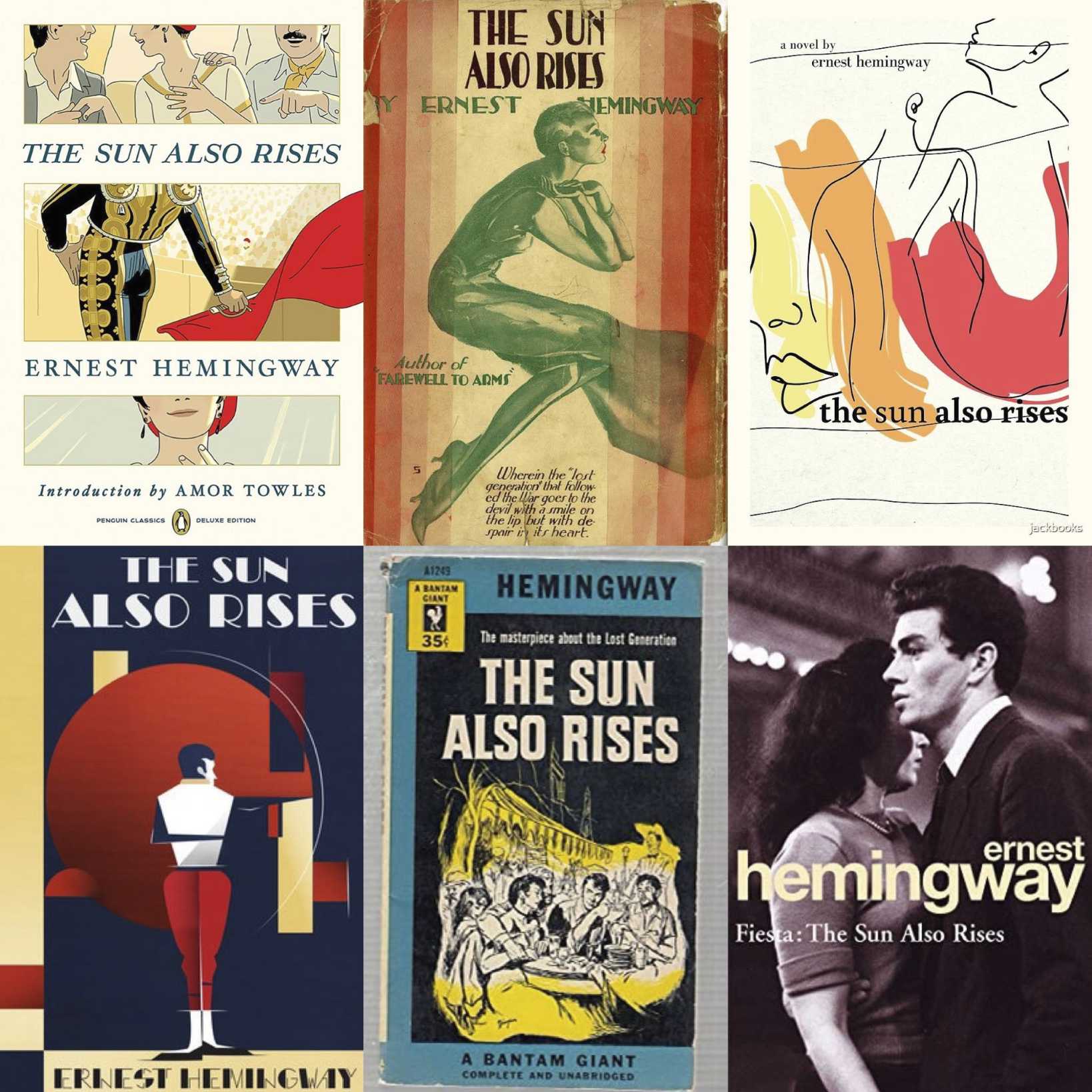
Another Hemingway book that I love is ‘The Sun Also Rises’, about American expats living in Paris. They visit Spain and experience the bull running of Pamplona and the heady living of San Sebastien. I think it’s a better book than ‘The Great Gatsby’ (considered “The Great American Novel”). But then, I don’t pretend to be much of a judge of literature, I’m a Maths teacher after all, not a Guardian writer.
Drinks
Years ago, when I read ‘The Sun Also Rises’, two things struck me: first, how smooth and easy it was to read; second, the sheer volume of alcohol that the characters consumed. When I finished it, I wanted to read it again, just to count how many drinks were imbibed.
So, this summer, ten years on, that’s exactly what I did. I re-read the book over three days, and listed, on a spreadsheet, precisely how many drinks were devoured. My first ever primary research in the field of lit-ra-cha. Le geek, c’est chic.
Here’s what I found. In the book’s 216 pages, I counted 199 drinks. The number of times that each drink is mentioned, is as follows: –
Wine 66, Indeterminate drink* 25, Beer 24, Coffee 19, Brandy 17, Champagne 9, Whisky 8, Martini 6, Liqueur 5, Absinthe 4, Cognac 3, Water 3, Cocktail 2, Pernod 2, Rum Punch 2, Sherry 1, Aperitif 1, Vermouth 1, Lemon juice 1.
(* – the word ‘drink’ is mentioned, but not specified)
I learnt some lovely new brandy and cocktail words: Fundador, ‘fines’, Rioja Alta, Jack Rose, Izzarra.
I’d much rather have been there with them, though. “Everybody behaved badly,” says Jake.
No footnotes
The late, great Professor of Comparative Literature, George Steiner, in a Dutch TV interview, picked out this book as an example of supreme writing. He reads a passage where two friends, Jake and Bill, take a bus trip into the Spanish mountains. Jake points out, through a dark forest, the grey metal roof of the monastery of Rancevaux. “It’s cold up here”, Bill says, “It’s awful cold.”
Rancevaux is the place where, in the medieval epic ‘Song of Roland’, Roland and his friends are betrayed by one of their number, and butchered in a Saracen ambush. The genius of Hemingway is not to say so. Only the word ‘Rancevaux’ tells us, that these two friends will betray each other. That they’re at the end of their relationship. And the repetition of ‘cold’: the coldness of the heart. Only a very great artist can say everything, without saying anything.
Steiner worried that his Oxford, Cambridge and Harvard students no longer recognise Rancevaux, “Our next editions need a footnote, which kills the whole thing.” Hemingway’s readership was a general reading public – this was a successful novel. He could assume that the word Rancevaux was known – was all you needed.
We’re reaching the point where ‘Elsinore’ needs a footnote.
James Neophytou

