


Viva Las Vegas is a 1964 American musical film starring Elvis Presley and Ann-Margret and regarded by fans and film critics as one of Presley’s best films. It also presents a strong set of ten musical song-and-dance scenes.
The chemistry between the two stars was genuine during filming. Presley and Ann-Margret began an affair and this received considerable attention from film and music gossip columnists. This reportedly led to a showdown with Presley’s worried girlfriend Priscilla Beaulieu. (Elvis and Priscilla married in 1967.) In her 1985 book Elvis and Me, Priscilla Presley describes the difficulties that she experienced when the gossip columnists erroneously “announced” that Ann-Margret and Presley had become engaged to be married.
In her memoirs, Ann-Margret refers to Elvis Presley as her “soul mate” and stated: “We felt there was a need in ‘The Industry’ for a female Elvis Presley.”
In addition, the filming of Viva Las Vegas reportedly produced unusually heated exchanges between the director, film veteran George Sidney, and Presley’s manager, Colonel Tom Parker, who was not credited as a “Technical Advisor” in the film’s credits. The arguments reportedly concerned the amount of time and effort allotted by the cinematographer, Joseph Biroc, to the song and dance numbers that featured Ann-Margret, ostensibly on the orders of the director.
David Winters from the original cast of West Side Story was the film’s choreographer and was recommended by Ann-Margret for the job. This was Winters’ first job as a choreographer on a feature film and Ann-Margret was his dance student at the time. Because the film went over budget, Parker would slash budgets for all remaining films in Presley’s career.
Little Church of the West, the oldest wedding chapel in Las Vegas, is the location used in the closing scene.
The scene where Presley sings “Viva Las Vegas” is performed in one single unedited shot – the only known example of such a technique in Presley’s film career.
For his role in Viva Las Vegas, Elvis received a third place prize 1965 Laurel Award for best male performance in a musical film. Viva Las Vegas also received the 1965 Laurel Award for runner-up in the category of the best musical of 1964. Ann-Margret was praised for her on screen chemistry with Elvis.
Some critics in 1964 were lukewarm about Viva Las Vegas, such as one for The New York Times, who wrote: “Viva Las Vegas, the new Elvis Presley vehicle, is about as pleasant and unimportant as a banana split.” However, many others deduced the reasons why many members of the North American public liked the movie so much. Variety magazine stated in its review: “Beyond several flashy musical numbers, a glamorous locale, and one electrifying auto race sequence, the production is a pretty trite and ‘heavy-handed’ affair”. Critical reaction notwithstanding, Viva Las Vegas has become one of Elvis Presley’s most popular and iconic films.
en.wikipedia.org
A Viva Las Vegas Love Story
Outside of Elvis Presley’s family, Ann-Margret was the most important woman in the entertainer’s life. Playing opposite Elvis in 1963’s Viva Las Vegas, she became the most memorable of Presley’s leading ladies during his Hollywood career. The personal relationship they shared through the years provides a fairy tale interlude in Presley’s curious life story, which ended so sadly in 1977.
The Swedish immigrant first met Elvis in early July 1963 on a soundstage at Radio Recorders studios in Hollywood. That day they were introduced to each other and the press as the stars of MGM’s upcoming film, Viva Las Vegas. It was 28-year-old Presley’s 14th film, while, at age 22, Ann-Margret’s career was just starting to explode. Her previous film, Bye Bye Birdie, released just three months before she reported for work on Viva Las Vegas, made her an instant star.
In her 1994 autobiography, Ann-Margret recalled her introduction to Elvis Presley:
“Except for a piano, the MGM soundstage where Elvis and I met was empty. In the background, a few of his guys hung around observing their boss, a ritual I would soon come to expect. Under the watchful gaze of director George Sidney, a studio photographer snapped shots of what the film company executives figured would be a historic moment.
“Elvis Presley, I’d like you to meet a wonderful young lady, Ann-Margret,’ said George Sidney. ‘Ann-Margret, this is Elvis Presley.’ The significance was lost on Elvis and me. I reached out my hand and he shook it gently. ‘I’ve heard a lot about you,’ we said at the same time, which made us laugh and broke the ice.”
In addition to launching the couple’s professional relationship, the meeting was the beginning of a personal one, as well. “I’m not really sure why I was so calm about meeting ‘the King,’” Ann-Margret noted. “After all, this was Elvis, a man who had captured the heart of almost every woman in America. Little did I know he would soon capture mine.”
Before filming began, the two had to record their musical numbers. On July 9-10 they each recorded their separate songs at Radio Recorders. Then, on July 11, they entered the studio together to work on three duets – “The Lady Loves Me,” “You’re the Boss,” and “Today, Tomorrow, and Forever.”
Three days later, the cast and crew travelled to Las Vegas where they checked in at the Sahara Hotel. On July 15, local filming began in the city and continued until July 26. After a weekend move back to Los Angeles, filming resumed at MGM studios and ran through August into the first week of September.
Ann-Margret could tell the partnership was working. “I’m sure that the producers knew that the fast-paced, boy-meets-girl musical would certainly be improved if the chemistry between Lucky (Elvis) and Rusty (Ann-Margaret) were right. Initially, Elvis and I might’ve admitted that the only heat between us came from the hot desert sun. But others saw sparks from the start.”
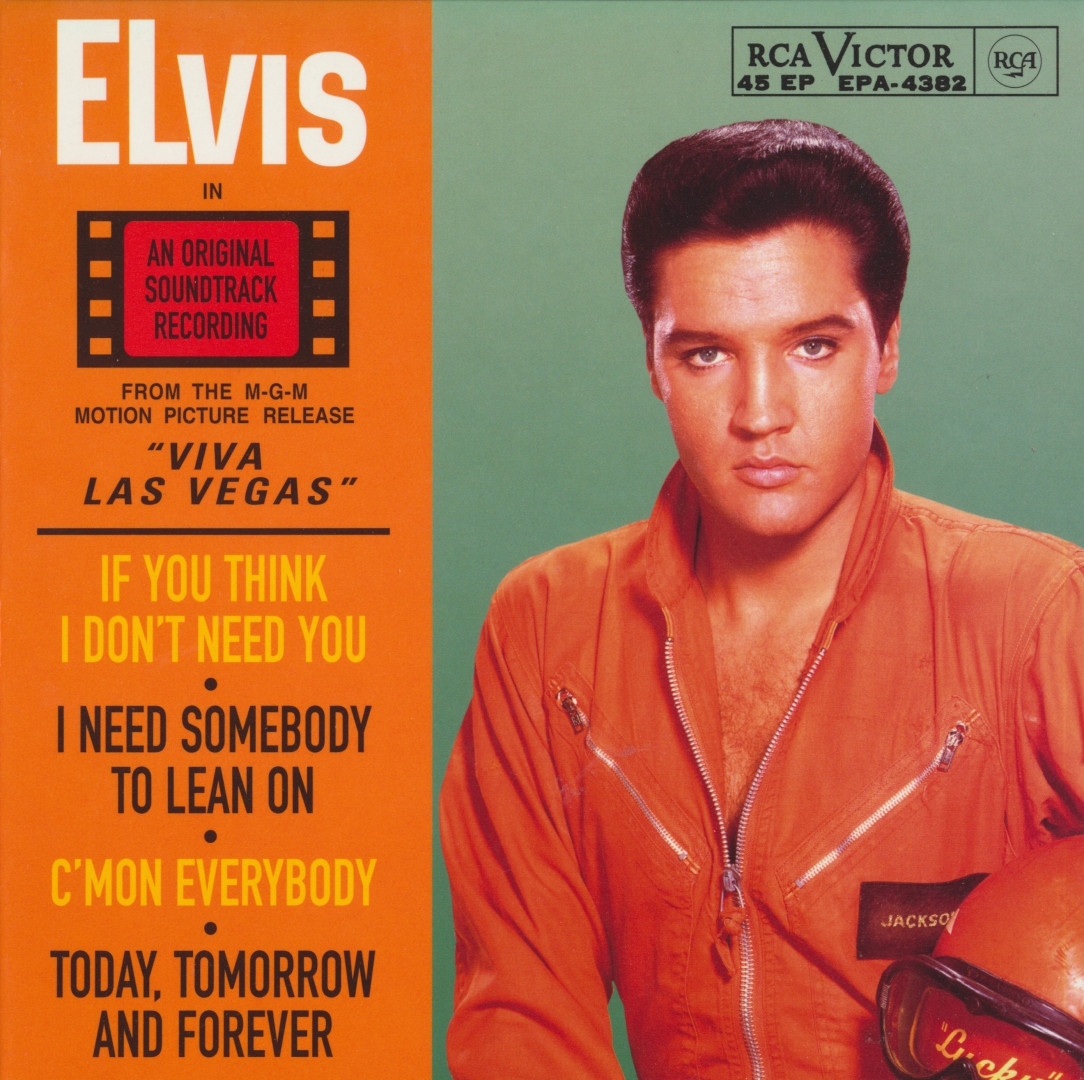
According to Ann-Margret, the energy of the music drew her and Elvis together immediately: “We experienced music in the same visceral way. Music ignited a fiery pent-up passion inside Elvis and inside me. It was an odd, embarrassing, funny, inspiring, and wonderful sensation. We looked at each other move and saw virtual mirror images. When Elvis thrust his pelvis, mine slammed forward too. When his shoulder dropped, I was down there with him. When he whirled, I was already on my heel.”
Ann-Margret understood Elvis’s Memphis Mafia
As they worked together; Ann-Margret says they discovered many things they had in common. In addition to the music, they shared a passion for motorcycles, a love of family, a desire for privacy, a devotion to God, and late night talks. Early during filming, Elvis asked her to go out with him and the guys to see a show in Las Vegas. “It was an innocent, friendly date,” she remembered. “I was used to having my parents accompany me on dates, so Elvis’s entourage wasn’t a problem. His guys always treated me wonderfully.”
As Elvis became more comfortable with Ann-Margret, however, they began to spend more time alone. “I knew I’d crossed into a certain uncharted territory when Elvis asked to be alone with me, but later the frequency with which it happened made me happy. It meant Elvis truly trusted me.”
During their private time together, Elvis opened up to her, perhaps more than he ever had with any other person in his life. She felt she came to know his heart intimately:
“Like everyone else, Elvis had dreams and desires, hopes and hurts, wants and weaknesses. He didn’t reveal this vulnerable side until everyone had disappeared, until those private moments when we were alone, after darkness had blanketed the city and we’d parked somewhere up in the hills and could look down upon the sprawl of L.A. or up at the stars.”
The camera angle controversy
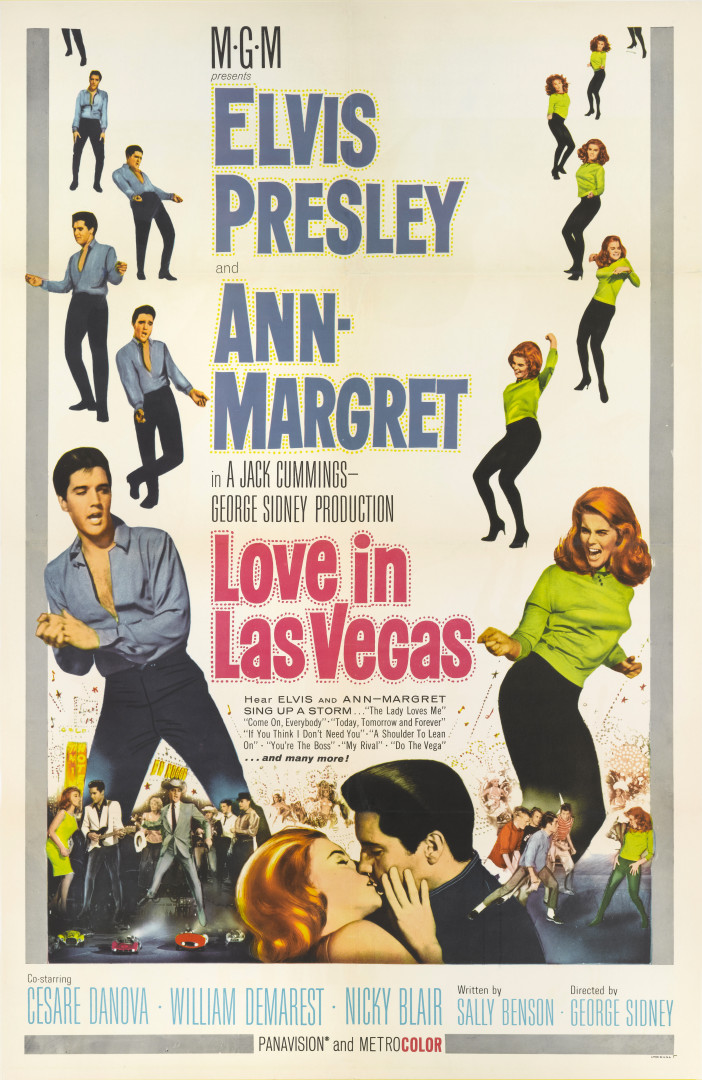
The only threat to their relationship during the Viva Las Vegas shoot was their egos. Ann-Margret admitted she had one, and no one would deny Elvis did as well. A case in point is the favouritism director George Sidney allegedly gave Ann-Margret during filming. Elvis cronies Red West, Lamar Fike, Joe Esposito, and Sonny West have all accused Sidney of giving Ann-Margret favourable camera angles at Elvis’s expense.
According to Red West, after viewing the daily rushes, Elvis would “complain bitterly to us that the sonofabitch was trying to cut him out of the picture.” Reportedly, Elvis’s complaints were passed on to Colonel Parker, who took Sidney to task. According to Presley biographer Peter Guralnick, the Colonel confronted the producers, reminding them that this was an “Elvis Presley picture.” He didn’t buy MGM’s argument that featuring Ann-Margret would draw a wider audience to the film. Guralnick even reported that Parker used his power to pull from the film two of the three duets recorded by the two stars.
A viewing of the final edit of Viva Las Vegas reveals that Elvis clearly received the most exposure musically. He had six solo numbers to only two for Ann-Margret. Her strength as a dancer was featured, naturally, but overall Viva Las Vegas comes across as an Elvis Presley film with Ann-Margret as a strong leading lady. None of the pro-Presley accusers blamed Ann-Margret for the director’s perceived favouritism of her, and she didn’t mention the controversy in her book.
If Elvis let some professional jealousy show in the camera angle controversy, it didn’t spill over into his personal relationship with Ann-Margret. By all accounts, that developed quickly into full-blown love affair. “Elvis’s affair with Ann-Margret was not just an affair,” declared Lamar Fike. “He was really in love with her. It got hot and heavy.” Marty Lacker added, “Neither one of them was married, and they really cared a lot about each other … and Priscilla was back at Graceland.” For her part, in her book Ann-Margret avoided passionate details of her relationship with Elvis, instead focusing on the motorcycle rides and other adventures they shared as close friends.
Elvis had to fulfil his commitment
Inevitably, though, at least to Ann-Margret it seemed, their love affair had to end. She explained in her autobiography: “There were other factors in Elvis’s life that forced him apart from me, and I understood them. Elvis had always been honest with me, but still it was a confusing situation. We continued to see each other periodically, until we had dated for almost a year. Then everything halted. We knew the relationship had to end, that Elvis had to fulfil his commitment.”
That commitment was marrying Priscilla in Las Vegas on May 1, 1967. Ann-Margret made a similar commitment a week later, when she married actor Roger Smith in the same city.
For the remaining 10 years of Elvis’s life, he and Ann-Margret remained good and loyal friends. When she made her first appearance on the Las Vegas stage in June 1967, Elvis sent her a guitar-shaped floral arrangement. He continued the practice for all of her Las Vegas openings for the rest of his life. When Elvis opened at the International Hotel on July 31, 1969, Ann-Margret was in the audience, according to Lamar Fike. Throughout the seventies, both would attend the other’s Las Vegas shows when possible and visit with each other afterwards.
In the seventies, both would struggle with drug dependencies. While Elvis abused prescription medications, Ann-Margret fought alcohol addiction. “I reached a point where my days and nights blended into one continuous, foggy state of inebriation,” she explained. “I’d drink a fifth of scotch, pass out, wake up, drink some more, and pass out again. I suffered periods that I couldn’t remember.”
Ann-Margret overcame her addiction; Elvis did not. In early 1977 she heard rumours about Elvis’s poor health. When Joe Esposito came to her show at the Tropicana in Las Vegas, she asked him how Elvis was doing. “Don’t worry,” he told her. “Everything’s fine. There are a few problems, but we’re taking care of them.”
Ann-Margret faithful to the end
When she opened at the Hilton on August 15, 1977, for the first time in 10 years, there was no flower arrangement or telegram from Elvis. The next morning a phone call from Graceland brought the devastating news. Joe Esposito explained it was going to be a madhouse in Memphis for the funeral and advised her not to come. “We’re coming,” she told him. When she arrived at Graceland, she and Elvis’s father Vernon embraced. “There was so much to say, to recount,” she recalled, “but instead, we cried.” Vernon said softly, “He was so proud of you.”
Three months later Elvis’s father and Colonel Parker asked her to host a two-hour Elvis NBC tribute, Memories of Elvis. She described it as one of the most “difficult, wrenching jobs” she had ever undertaken.
In early 1979, on hearing that Vernon Presley was seriously ill, Ann-Margret flew to Memphis to visit him. “We had a good visit, laughing and crying and trading stories,” she recalled. “He told me how much he missed his son, and I said that I missed him, too.” To comfort him, she occasionally called Vernon during the months leading up to his death on June 26, 1979.
Alan Hanson © January 2014
www.elvis-history-blog.com
Soundtrack List:
1: Viva Las Vegas
2: What’d I Say
3: If You Think I Don’t Need You
4: I Need Somebody to Lean On
5: C’mon Everybody
6: Today, Tomorrow and Forever
7: Night Life
8: Santa Lucia
9: Do the Vega
10: You’re the Boss (with Ann-Margret)
11: The Yellow Rose Of Texas / The Eyes of Texas
12: The Lady Loves Me” (with Ann-Margret)
Tom Hanks to Play Colonel Tom Parker in New Elvis Biopic
If the prospect of an Elvis movie directed by Moulin Rouge’s Baz Luhrmann isn’t enough to whet the appetite then how about this? Tom Hanks is in the frame to play the star’s infamous manager Colonel Tom Parker.
The film is in development at Warner Bros. and co-written by Luhrmann with regular collaborator Craig Pearce. Hanks’ involvement is seen as a major boost for the biopic’s prospects, though the title role of the King of Rock ‘n Roll will be taken by an unknown.
“While Luhrmann always envisioned a star for Parker’s part, he wants a newcomer for the role of Presley,” Variety reports.
Previous Presley players have included Kurt Russell (Elvis, 1979), Val Kilmer (True Romance, 1993) and Michael Shannon (Elvis & Nixon, 2016).
Parker is a contentious figure, credited with both discovering Elvis and exploiting his talent. While he helped his one and only client immeasurably – bringing him to the world’s attention and signing him to RCA Records – he was also “a shrewd, showman-like figure who learned how to sell an act by working for carnivals; he often referred to Elvis as ‘my attraction.’”
www.thevintagenews.com

