
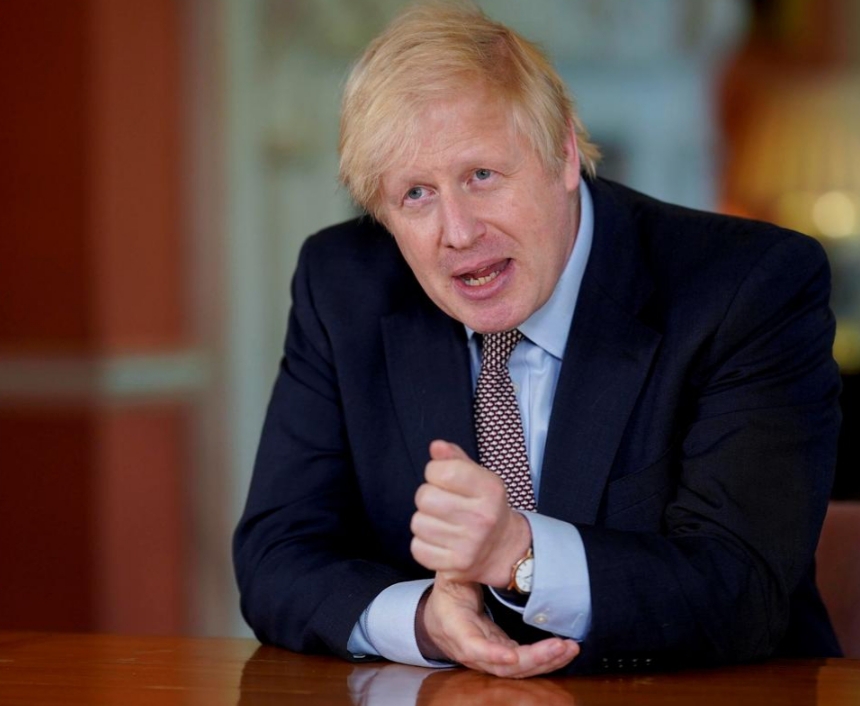

The coronavirus lockdown will not end yet, British Prime Minister Boris Johnson said on Sunday, urging people to “stay alert” to the risks as he outlined plans to begin slowly easing measures that have closed much of the economy for seven weeks.While his directions were for England, the government wants the United Kingdom’s other nations to take the same approach. But there were immediate divisions, with the leaders of Wales, Scotland and Northern Ireland saying they were sticking with the existing “stay-at-home” message.
In a televised address, Johnson announced a limited easing of restrictions, including allowing people to exercise outside more often and encouraging some people to return to work.
“This is not the time simply to end the lockdown,” he said. “Instead we are taking the first careful steps to modify our measures.”
The government has faced criticism over its handling of the pandemic and Johnson is wary of taking the brakes off too soon. Britain’s coronavirus death toll – 31,855 – is the second highest in the world, behind the United States.
With both the death rate and hospital admissions falling, it would be “madness” to allow a second spike in infections, he said.
But the decision to replace the government’s “stay-at-home” slogan, drummed into the public for weeks, was criticised by opposition parties who called the new “stay alert” message ambiguous.
Johnson said people should continue to work from home if they could, but those who cannot, such people working in construction and manufacturing, should be “actively encouraged to go to work”.
From Wednesday, people will be allowed to take unlimited amounts of outdoor exercise, he said, and can sit in the sun in their local park, drive to other destinations, and play sports with members of their own household.
Until now, people have been told only to exercise outdoors once a day and do so locally. Social distancing rules must still be obeyed, Johnson said, adding that fines would be increased for those who break them.
Johnson said he would set out further details to parliament on Monday, when a “roadmap” document will be published.
But opposition Labour leader Keir Starmer said Johnson had raised more questions than he had answered and there was now the prospect of different parts of the United Kingdom pulling in different directions.
“What the country wanted tonight was clarity and consensus, but we haven’t got either of those,” he said in a statement.
AMBIGUITY
Scottish First Minister Nicola Sturgeon said the only modification she was making to lockdown measures was to allow people to exercise more.
“(That) is the only change that the Scottish government judges that it is safe to make right now without risking a rapid resurgence of the virus,” she told a news conference, adding she had asked the UK government not to use its “stay alert” advertising campaign in Scotland.
Britain’s economy – the world’s fifth largest – has been hammered by the pandemic and the lockdown measures.
Business groups welcomed Johnson’s statement but said companies would need more advice on how to get people back to work safely.
The government has faced steady questions from Labour and others on why the country was not locked down earlier, why it has struggled to deliver mass testing and why there have been shortages of protective equipment for medics and care workers.
Johnson himself was critically ill with COVID-19, the respiratory illness caused by the coronavirus, last month.
The Sunday Times reported scientific advisers had told the government that deaths could exceed 100,000 by the end of the year if lockdown measures are relaxed too fast. As of Sunday, Britain had reported some 219,183 confirmed infections.
Johnson detailed an alert system ranging from ‘green’ level 1, to ‘red’ level 5, to allow the government to flag risks in different parts of England and to adapt restrictions where necessary. He said the country was on level 4 and could begin to move to level 3.
At the earliest by June 1, the government may be able to begin the phased reopening of shops and get some younger pupils back into schools, he said, adding by July at the earliest, there could be an opening of some of the hospitality industry and other public places if they enforce social distancing.
Britain will soon also begin to quarantine people arriving into the country by air, Johnson said.
“Throughout this period of the next two months we will be driven not by mere hope or economic necessity. We are going to be driven by the science, the data and public health,” he said.
“We will be monitoring our progress locally, regionally, and nationally and if there are outbreaks, if there are problems, we will not hesitate to put on the brakes.”
Prime Minister Boris Johnson on Sunday announced there would be no immediate end to lockdown in Britain, but he outlined plans to begin gradually easing some of the measures which have shut down much of the economy for nearly seven weeks.Following are some of the changes he announced, with further details due to be announced to parliament on Monday:
SLOGAN
The government is replacing its main “stay at home” slogan with “stay alert”. Government officials have said, however, that people will still be told to stay at home as much as possible.
CONTACT WITH OTHERS
In a government poster published by Johnson on Twitter on Sunday, the new guidelines included “limit contact with other people”.
A government official said there was no change in the advice for the most vulnerable people, who have been asked to shield themselves, but others could, for example, sit next to a friend in the park as long as social distancing measures were respected.
Johnson said fines for breaking social distancing measures would be increased. The fine is now expected to be 100 pounds, halved to 50 pounds if paid within 14 days.
EXERCISE
From Wednesday, people will be allowed to take unlimited amounts of outdoor exercise, sit in the sun in a local park, drive to other destinations and play sports, such as golf, tennis or angling, but only with members of their household.
RETURN TO WORK
Johnson said those who can work from home should continue to do so but anyone who cannot, such as those working in construction and manufacturing, “should be actively encouraged to go to work”.
SCHOOLS/SHOPS
Johnson said that at the earliest by June 1, Britain might be in a position to begin the phased reopening of shops and to get primary pupils back into schools, in stages, beginning with the youngest and oldest year groups.
A government official said the government would want to see the other years going back to school before the summer holidays.
“Our ambition is that secondary pupils facing exams next year will get at least some time with their teachers before the holidays. And we will shortly be setting out detailed guidance on how to make it work in schools and shops and on transport,” Johnson said.
Other year classes in secondary schools are not expected to return to school before the summer holidays.
HOSPITALITY
At the earliest by July and if the numbers on infection rates support it, Johnson said there could be the re-opening of at least some of the hospitality industry and other public places, provided they are safe and enforce social distancing.
Some of the hospitality industry could include restaurants or cafes with outside seating and public places could include places of worship.
TRANSPORT
The requirement for buses, trains and underground rail services to maintain social distancing rules means they will only be able to carry vastly reduced passenger numbers, with public transport capacity expected to drop by around 90%.
Johnson urged those returning to commuting to consider cycling, walking or driving to work instead.
WARNING SYSTEM
Johnson said the government was establishing a new Covid Alert System run by a new Joint Biosecurity Centre. The Covid Alert Level will be determined primarily by the reproduction rate of the disease, or R, and the number of coronavirus cases.
There will be five alert levels. Level One means the disease is no longer present in Britain and Level Five is the most critical and be used to flag the risk in different areas, allowing the government to tighten restrictions where necessary.
QUARANTINE ARRIVALS
Johnson said to prevent re-infection from abroad “it will soon be the time … to impose quarantine on people coming into this country by air.”
In a joint statement issued following a conversation between Johnson and French President Emmanuel Macron, France and Britain said no quarantine measures would apply to travellers coming from France for now and “any measures on either side would be taken in a concerted and reciprocal manner”.
SCOTLAND
Scottish First Minister Nicola Sturgeon said the only change she would be making to lockdown measures in Scotland would be to allow people to exercise more than once a day from Monday.
“We do not, at this point, want to see more businesses opening up or more people going to work,” she told a news conference. She added that her government would assess over the coming week whether it was possible to extend the range of permitted outdoor activities, reopen garden centres and allow some outdoor work to resume.

