
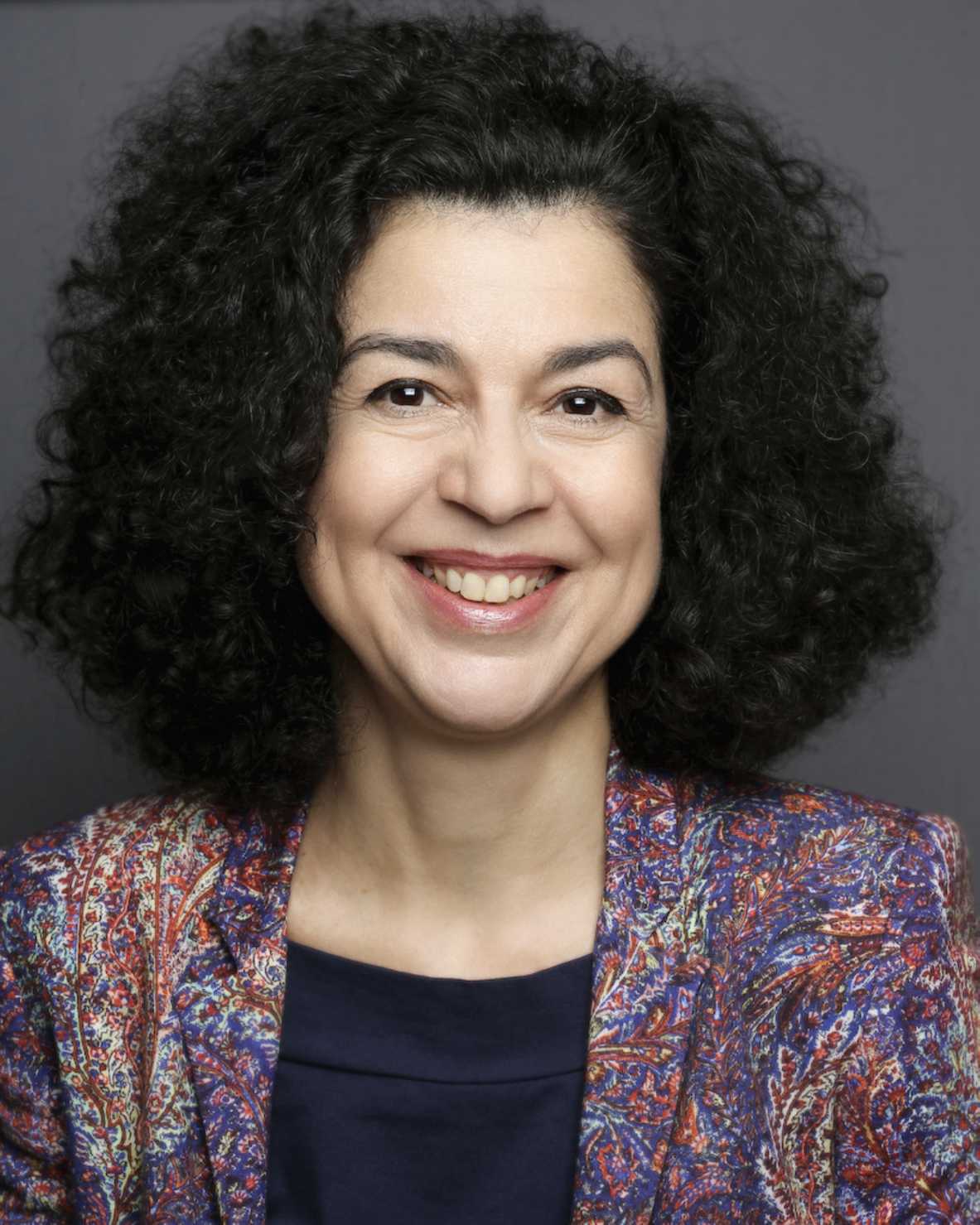

Lorna Vassiliades reveals preliminary findings on attitudes to wellbeing and mental health in our community
Lorna Vassiliades looks back at the stormy afternoon that led her to launch a survey on attitudes to wellbeing and mental health in UK Greek Cypriots and Greeks –and reveals the preliminary findings…
I can tell you the exact time the idea for a survey on attitudes to mental health in our community took shape in my head: Sunday 9 February 2020, before COVID-19 hit our headlines. That afternoon I braved Storm Ciara and made it to the Vaults, an arts venue divided into a maze of performance spaces underneath Waterloo Station’s disused railway arches. I didn’t want to miss seeing young British Greek Cypriot actress Sophia Eleni in Ivan Faute’s one-woman play On Arriving about an unnamed refugee. And thankfully for me, neither did my friend Nicholas Nicou.
In a damp theatre space with rain dripping through the ceiling and down the brick walls, we crammed tight on uncomfortable bench seats, never imagining that some weeks away this human closeness would no longer be possible or allowed. A small contingent of the audience were Cypriot, mostly Sophia’s parents and their friends. We were all so proud of her visceral performance.
As a child refugee from Varosha, Famagusta, I was stirred up. Storm Ciara raged on but Nicholas said we needed a cocktail and off we went to a deserted All Bar One. I talked, and he listened. I was studying for an MSc in Creative Arts and Mental Health at Queen Mary University of London after a long career in journalism (writing as Lorna V). This prompted me to think about our community’s mental health and what that means to us as families, individuals, refugees, migrants, and as a community. That early February evening I found myself telling Nicholas that I didn’t want to think. I wanted to know.
By the time we were ready to reach for our battered umbrellas again, Nicholas had convinced me to take inspiration from Andreas Pavlou’s Cypriot diaspora community and LGBTQ+ survey, and to carry out one on mental health. “You’ve got to do this,” he said. “We need this.”
As the global outreach officer for NEPOMAK Rest of Europe, which brings young Cypriots in Europe together, I knew he wasn’t just saying this. He was urging me.
Over this past pandemic year I researched, designed, and launched the survey through Queen Mary University of London, aimed at people in the UK with a Greek Orthodox heritage. Existing research in Cyprus and Greece shows that both positive and negative attitudes to mental health are connected to our church. I wanted as much to investigate the potential positive link between our heritage and mental health, as to identify how we deal with mental health problems.
I look forward to sharing and discussing the results in more detail. There is a lot of data from 56 questions and over 400 comments, with some very interesting similarities and differences emerging between Greek Cypriots and Greeks.
The moral of this story is go see Sophia Eleni when she is next on stage. And don’t turn down a cocktail from one Nicholas Nicou, no matter what the weather’s like.
For any information regarding the survey please contact l.vassiliades@qmul.ac.uk
Attitudes to wellbeing and mental health in UK Greek Cypriots and Greeks survey:
Preliminary key findings
Details of participants: There were 213 participants, 33.6% male, 65.9% female, with 28% identifying their sexuality as LGBTQ+. Half (49.3%) are UK born, with 21% born in Cyprus, and 25% born in Greece. Standard modern Greek is spoken by 67% of participants.
Almost 65% of participants’ parents were born in Cyprus, 32% in Greece, and 17% in the UK.
The majority of the participants (85.4%) are aged 20-59, almost evenly split between the four decades.
A combined 67% are qualified with a bachelor’s degree, masters, doctorate or professional qualification (for participant’s parents the figure is 39%).
Whilst 87.3% completed the section on their family’s mental health, only 41% completed the section on their own mental health.
Cultural heritage plays a significant role in wellbeing and mental health:
• Around three quarters (76%) feel proud of their roots.
• For 91% cultural and community activities are yes definitely/yes I think so a boost to their mental health.
• Greek music (66.8%), Greek Cypriot/Greek family (74.6%), Greek Cypriot/Greek friends (67%) are rated as important for wellbeing and mental health.
• Almost 85% say yes, Greek Cypriots and Greeks can inspire people to improve their own wellbeing and mental health through one or more aspects of our culture and community.
• Just over 60% believe that yes, we ‘inherit’ the pain of previous generations and 26% are open to thinking about this.
Mental health difficulties in the UK Greek Orthodox communities that need to be addressed:
• Almost 24% report that somebody Greek Cypriot/Greek has confided in them that they have suicidal thoughts.
• The most highly reported mental health problems by those completing the section on their own mental health are depression, anxiety, and suicidal feelings.
• Areas of significant concern indicated by the survey are controlling parents, domestic, mental, and physical abuse.
Stigma:
• Just over half (51.6%) believe there is stigma surrounding mental health problems in UK-based Greek Cypriots, while for UK-based Greeks the figure is 42.3%.
• The LGBTQ+ participants are most vocal in the open comments about stigma towards them, the effects of this stigma on their mental health, and the benefits of creating supportive LGBTQ+ community networks.
Let’s talk:
• Almost all (94%) respondents are interested mental health problems relating to Greek Cypriots and Greeks being discussed through radio and TV, social media, or live discussion events.

