

In January this year, Catriona Standfield travelled to Cyprus for her visit to the country that has been ravished by conflict for 38 years.
Her two weeks in the country, that has been occupied by Turkish forces in the Northern part, was spent in discussions about resolving the Cyprus issue, in particular her interest in using more females in the peace keeping process.
Before she left Australia, Standfield told Neos Kosmos she was certain peace could be achieved through greater community involvement and empowerment. But after seeing how deeply embedded the conflict is in the country, the 24-year-old feels that people involved in the peace keeping process need to “think outside the box” if they want the conflict to be put to bed.
“I think the thing that struck me in Cyprus was just how deeply the conflict has permeated through all levels of society,” explains Standfield of her first impressions of the Cyprus issue.
The ‘conflict’ – as academics call it – is present in modern-day Cyprus. It lives and breathes in the soil of the island that is now affecting third and fourth generations of Cypriots who have not known any other life than that of occupation and turmoil in a land that was once rightfully theirs, taken away 28-years-ago.
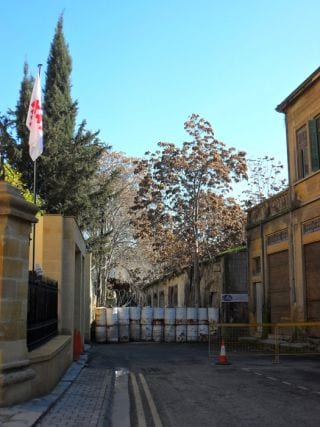
“In day-to-day life it’s a very present thing, even though people aren’t shooting at each other the atmosphere is there and it’s especially noticeable in Nicosia which is cut in half by the buffer zone so there is that cruel reminder.”
Standfield was first exposed to the Cyprus issue after successfully completing an internship with Alexander Downer, the United Nations Special Advisor to Cyprus where she was asked to present a report on how peace could be achieved in Cyprus. Her research and findings in this area were chosen to be presented to UN-led peace negotiations in Cyprus.
The key message of Standfield’s report was that peace in Cyprus needs to be the product of an inclusive process, and that women need to be central to this. She suggested that more women be included in the peace process as she believed “women are good at reaching across the dividing lines of ethnicity or a particular conflict in realising everyone suffers”.
She took her report with her to Cyprus and attended meetings with people who were involved in the peace process including; the UN; the Good Offices Mission; the UN development program and others such as civil society organisations. Although she didn’t make any formal presentation, Standfield sat in various discussions and spoke with various stakeholders in the peace keeping mission. She said that generally people, especially in the UN and amongst the civil society organisations, agreed that it was really important for women to be involved in talks.
She says that Mr Downer’s team of advisers is mostly women, the Chief of Mission of the peace keepers (Lisa Buttenheim) is also female, but she says the “buck stops with the Cypriot negotiating team”.
She said that on both sides of the negotiation teams in Cyprus they only had one woman each, and neither were at senior levels which was disappointing to Standfield.
This point she raises may give her argument of the need for more women validity. What if a young lady from South Australia, who only until recently was exposed to the Cyprus issue holds a view that could ultimately see Cypriots achieve peace?
Neos Kosmos

