
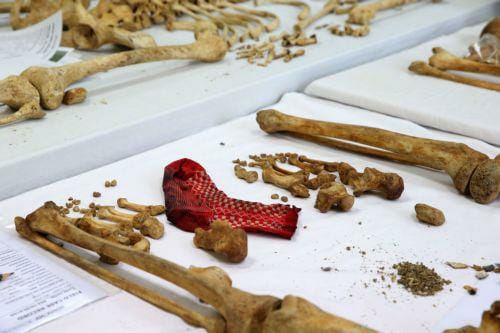

DNA samples have now been collected from the families of 11 Greek nationals missing since the Turkish invasion of Cyprus in 1974, completing a longstanding gap in efforts to identify their remains.
Presidential Commissioner Marios Hartsiotis told the Cyprus News Agency that the final outstanding sample was obtained during a visit to the family of Konstantinos Kentras in Argos Orestiko, Kastoria, on Thursday, 22 October.
Hartsiotis was accompanied by Greece’s Deputy Minister of National Defence, Thanasis Davakis. The visit formed part of a year-long effort to contact families across Greece, provide updates and secure the genetic material needed for identification.
According to the commissioner, 40 of the 77 missing Greek nationals have been identified, leaving 37 whose identities remain to be established.
He said reference samples from relatives were now complete for this group, improving the prospects of matching recovered remains with missing individuals.
Hartsiotis explained that some families had previously declined to provide samples for personal reasons. Direct contact and continued cooperation between the Greek and Cypriot authorities had helped resolve the outstanding cases.
The visits also gave relatives an opportunity to receive information about their loved ones without having to travel to Cyprus.
Significant scientific challenges remain. Hartsiotis said some remains had been treated with chemicals during the 1980s, damaging the DNA and making identification difficult.
The Cyprus Institute of Neurology and Genetics is using specialised methods to address this problem. An initial pilot study had produced a positive result, he said, raising hopes for further progress.
Families can also arrange appointments at the Presidential Commissioner’s office to examine records and share information that could assist investigations.
An open briefing for relatives is planned for January 2027, covering excavations, recoveries, identifications and other developments during 2026.
The Greek Defence Ministry said specialist staff from the 251 General Air Force Hospital were also contributing to the identification work through its laboratory.
Davakis described completing the collection of family reference samples as a crucial step towards identifying the remaining missing Greek nationals.
Hartsiotis stressed the urgency of continuing the work, more than five decades after the invasion, and reaffirmed the state’s commitment to establishing the fate of every missing person.
Source: Cyprus News Agency
Photograph: ΚΑΤΙΑ ΧΡΙΣΤΟΔΟΥΛΟΥ

