
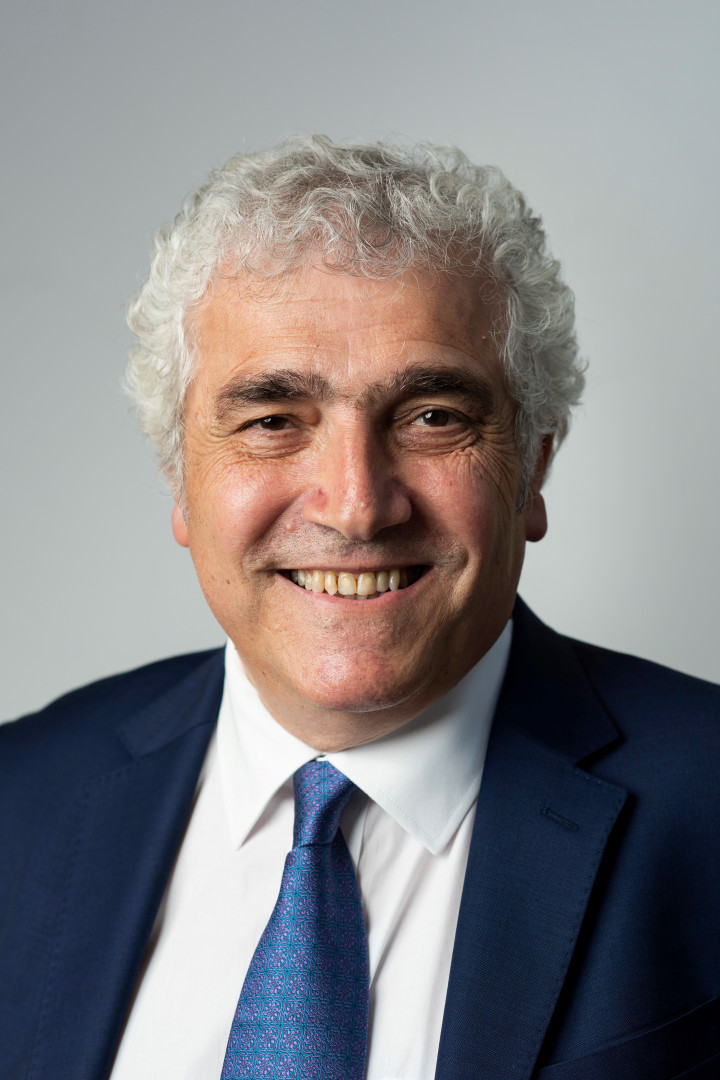

Aradippou-born Stephen Alambritis has been at the heart of British public life since 1985. He is well known for his work with the UK Federation of Small businesses between 1990 and 2010. During that time he was the voice of micro firms in articulating their concerns and aspirations in Westminster, Whitehall and Brussels.
Ministers also appointed the slick PR spokesman to a series of high profile positions. These included membership of the Cabinet Office Better Regulation Task Force and onto the Board of the influential Equality and Human Rights Commission. When Alambritis stepped down from the FSB, he soon found himself dealing with the problems of an outer London municipality.
The hugely successful public affairs professional was by 2010 an elected representative on the council of the London Borough of Merton, and not just a lowly backbench councillor, but thrust by his colleagues into the role of council leader, the equivalent of Mayors in Cyprus. He quickly got to work in his new task in the south London borough that comes with a population of 210,000 residents living in 80,000 houses.
The council is massive compared to municipalities in Cyprus. Alambritis is dealing with a turnover of £500 million and employing 2,000 employees in the Town Hall. By 2013, Merton under Alambritis, was named the Best Achieving Council in the UK. Alambritis was finding being a council leader an honour and a privilege and very satisfying. He had introduced new ways of working in the borough to raise income as central government cut funding to councils. He quickly set up the councils own property company giving it the ability to build its own housing. Alambritis was now on a good run and had other ideas in mind to revolutionise how his council worked. That was until Coronavirus struck the UK and London in particular.
Official figures for Merton show just over 180 deaths to date in the borough with just 31 having occurred in care homes with the vast majority happening in hospitals. Taken in the national context, the performance of the borough’s care homes has been exceptional, with much lower numbers of care home deaths than in many other boroughs.
Shielding continues to be a hugely successful endeavour in Merton with the Government nominating some 7,000 people for the borough to protect. Alambritis was adamant that his council contact and support every one of those people and this is now the case for all those vulnerable people.
Schools opening or not is a big issue in the UK but the position of Merton has not wavered since the schools closed – the council is working very closely with all the individual head teachers and will be supporting them in the decisions they make about safely reopening their own schools.
Much against his natural instincts as a Cypriot, Alambritis is introducing a temporary ban on barbecues at the 100 parks and open spaces in his borough simply to ensure they don’t attract large gatherings.
This week, the council has been looking closely at businesses re-opening in the borough. The Government advice is that non-essential businesses could reopen on 15 June and pubs and restaurants from 4 July. The council’s Trading Standards team is on standby to ensure the right businesses re-open, and once that happens to ensuring they put appropriate safety and social distancing measures in place.
Alambritis has used his small business background to notch another success story for his council during the pandemic. Merton is among the top three performers out of thirty three councils in London for supporting local businesses speedily, and have now distributed to over 1,400 small businesses grants totalling some £25 million helping them to stay afloat.
Alambritis cares passionately about his overstretched staff back at the Town Hall. He undertook a staff survey to ensure his council was providing the right support to staff working remotely from home. Around 85% of staff have told him they are well supported in working remotely, and are confident in doing so on a longer term basis, and 86% of staff have said they are happy with the type and frequency of communications they have been given them during lockdown.
Alambritis is now turning his attention to recovery plans although he believes the government is dismantling lockdown too soon. He is nevertheless leaving all those arguments to the national politicians. His main focus has now shifted to the future wellbeing of his residents.
“My concern today is of the much wider impact on our communities’ mental wellbeing as the country emerges from Covid-19, and the predicted recession which will see the economy shrink by 15% with potentially two million job losses by the end of the year,” says Alambritis.
He added “research clearly shows unemployment, income decline, and unmanageable debts brought by economic downturns are significantly associated with poor mental wellbeing, increased rates of common mental disorders, substance-related disorders, and suicidal behaviours.”
Alambritis continued “Covid-19 has upended life as we know it. The mental wellbeing of many people has been impacted directly by Covid-19, whether through the virus itself, the impact on jobs or the economy, self-isolation or the tragedy of losing a loved one.”
Alambritis concluded “We also know that Covid-19 is having a disproportionate impact on our Black, Asian and Minority Ethnic (BAME) communities including UK Cypriots. Only by working together with our partners across the system will we be able to address the significant challenges we will be facing over the coming months and years.”
