
Films can be even greater when they contain great music – films like Star Wars, Jaws, Lawrence of Arabia, Psycho and the 007 films……and films like The Godfather.
Francis Ford Coppola’s masterpiece will always be remembered for its iconic performances, its gripping and nuanced story and its pioneering cinematography. With all of that going for it, it’s easy to overlook the film’s remarkable score, composed by the prolific Nino Rota.
An indisputable classic, the score contains some of the loveliest and most memorable themes in film music history, themes that are perfectly suited to the emotion and aesthetic of the film, and that have defined what we think of as mafia music.
But like The Godfather itself, the music’s popularity belies a depth and nuance that transcends its mass appeal. Like all good film music, the score enhances the emotional content of the scenes it’s featured in. Consider the Baptism sequence and the way the organ music ratchets up the drama of the carnage as it unfolds. The score also develops the characters, deepening our understanding of their inner lives as only music can. The organ renders the irony of Michael’s false piety all the more disturbing.
But what really sets this score apart is how, rather than merely reinforcing the story, the music actually participates in the telling of it. Like an opera, we can hear the plot unfold in the score as well as the screenplay, one telling the tale through words and action, the other through the language of music.
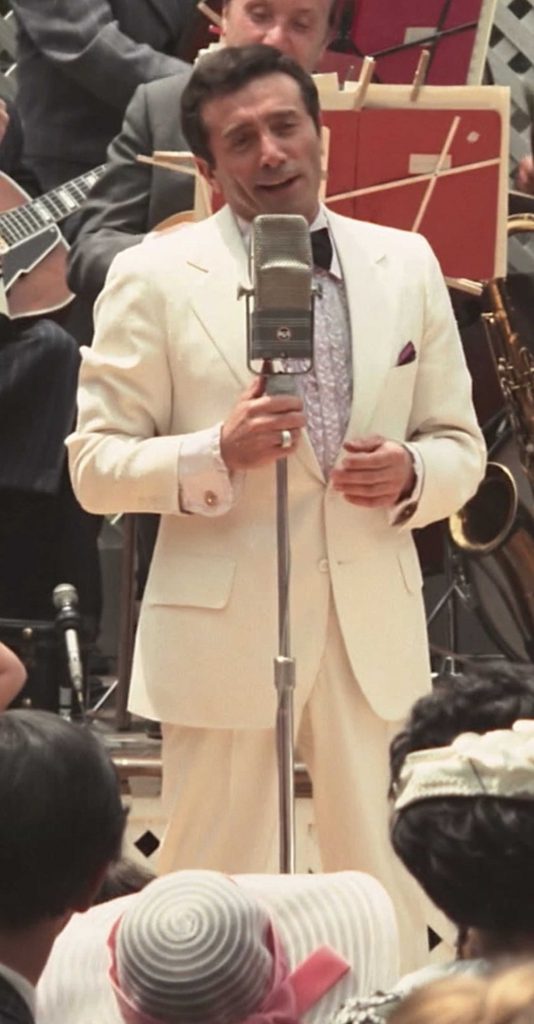
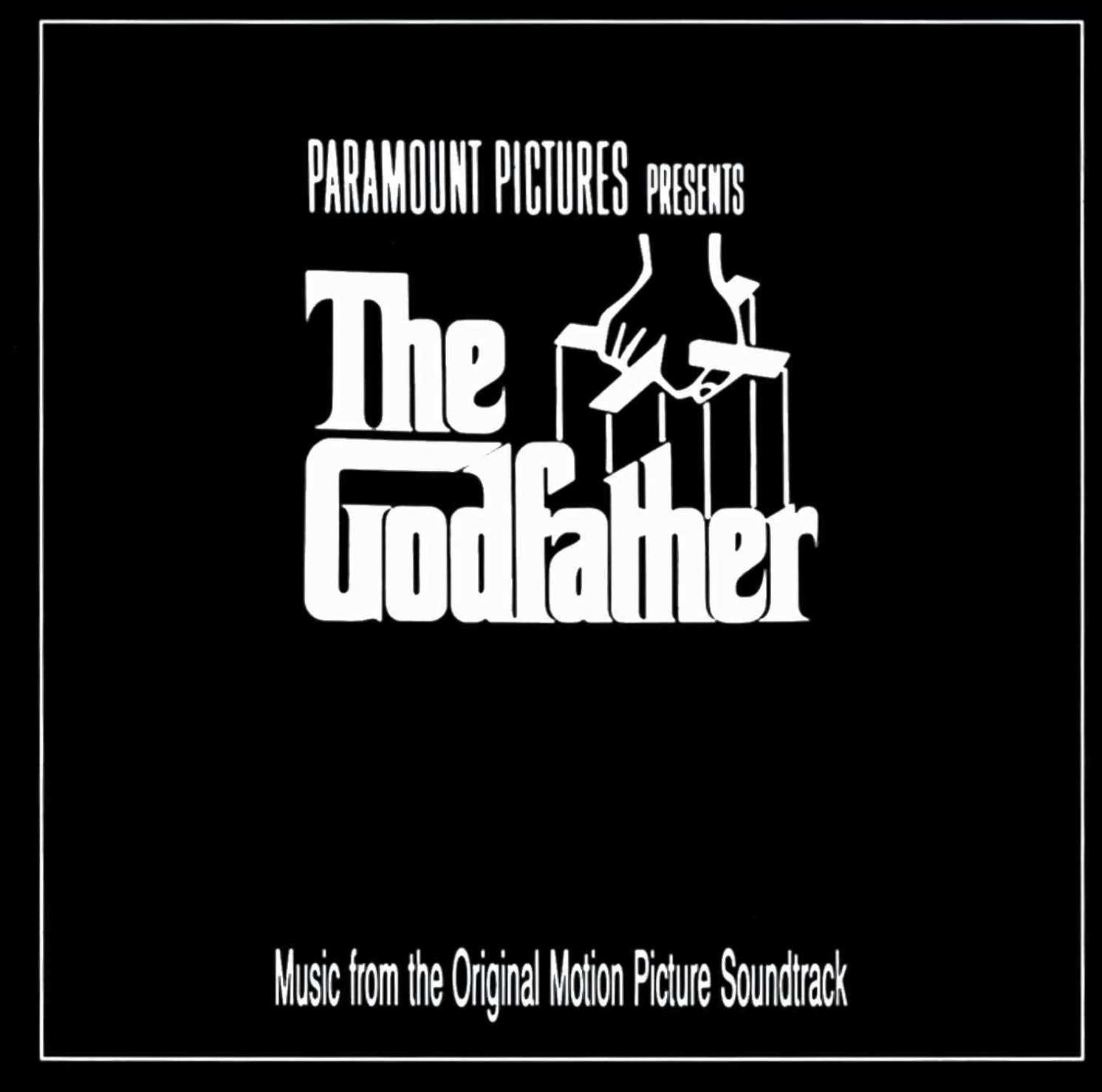
The Godfather is the soundtrack from the film of the same name, released in 1972 by Paramount Records. The song “I Have but One Heart” is sung by Al Martino, who performed it in the film as character Johnny Fontane.
The score was nominated for an Academy Award; however, the Academy withdrew the nomination after determining that the “Love Theme” was a rewritten version of Nino Rota’s music from the 1958 film Fortunella.
Background and Recording
Coppola hired Italian composer Nino Rota to create the underscore for the film, including the main theme, “Speak Softly, Love”. In October 1971, Coppola flew to Rome with a copy of the film to give Rota to view and create the score accordingly. For the score, Rota was to relate to the situations and characters in the film. Rota synthesised new music for the film and took some parts from his 1958 Fortunella film score, in order to create an Italian feel and evoke the tragic film’s themes. Rota also based the piece Main Theme (The Godfather Waltz) off the opening melody of Jean Sibelius’ Symphony No. 1.
Paramount executive Robert Evans found the score to be too highbrow and did not want to use it; however, it was used after Coppola managed to persuade Evans to agree. Coppola believed that Rota’s musical piece gave the film even more of an Italian feel. Coppola’s father, Carmine, created some additional music for the film, particularly the music played by the band during the opening wedding scene.
There are nine instances within the film where incidental music can be heard, including C’è la luna mezzo mare and Cherubino’s aria, Non so più cosa son from Le Nozze di Figaro.
There was a soundtrack released for the film in 1972 in vinyl form by Paramount Records. The album contains over 31 minutes of music coming from the film, with most being composed by Rota, along with a song from Carmine Coppola and one by Johnny Farrow and Marty Symes.
Track Listing
1. Main Title (The Godfather Waltz) – Nino Rota
2. I Have But One Heart – Johnny Farrow & Marty Symes
3. The Pickup – Nino Rota
4. Connie’s Wedding – Carmine Coppola
5. The Halls of Fear – Nino Rota
6. Love Theme – Nino Rota
7. The Godfather Waltz – Nino Rota
8. Apollonia – Nino Rota
9. The New Godfather – Nini Rota
10. The Baptism – Nini Rota
11. The Godfather Finale – Nini Rota
The Godfather Waltz – Analysis
The film opens, not with the famous “I believe in America” speech, but with music.
Over the opening credits and a black screen, we hear the first theme, an exquisitely beautiful trumpet solo, tinged with sadness, almost mourning.
The trumpet lingers on the last note, on what’s known as the dominant, a note of instability and uncertainty, like a speech broken off mid-sentence. There’s more to this theme, a closing statement that brings resolution, taking us back to the tonic key, back home. But here in the first moments of the film, the final statement is left out, the theme is incomplete.
Rota called this theme The Godfather Waltz. It recurs throughout the film, sometimes sounding sad and elegiac, other times sweet and romantic, but always with a touch of the ominous, or even the sinister. This is Vito Corleone’s theme, it represents him and the ideals he embodies – tradition, honour, strength. Though terrible acts are carried out in his name, the Vito Corleone we see is gentler, dancing with his daughter on her wedding day, playing hide-and-seek with his grandchild. It isn’t violence that motivates him (that’s Sonny and later Michael), but honour and respect for tradition and the old way of doing things.
Rota’s score was also nominated for Grammy Award for Best Original Score for a Motion Picture or TV Special at the 15th Grammy Awards. Rota was announced the winner of the category on March 3 at the Grammys’ ceremony in Nashville, Tennessee.
Controversy
Rota had received a nomination for the Best Original Score at the 45th Academy Awards. Upon further review of Rota’s love theme from The Godfather, the Academy found that Rota had used a similar score in Eduardo De Filippo’s 1958 comedy Fortunella. This led to re-balloting, where members of the music branch chose from six films: The Godfather and the five films that had been on the shortlist for best original dramatic score but did not get nominated. John Addison’s score for Sleuth won this new vote, and thus replaced Rota’s score on the official list of nominees.
Charlie Chaplin and two co-authors for their score featured in Limelight, a 21-year-old film that had just become eligible because it had not been screened in Los Angeles until 1972, went on to win the award.
1973 Oscar for Best Music
Limelight (Winner)
Charles Chaplin, Raymond Rasch, Larry Russell
Images (Nominee)
John Williams
Napoleon and Samantha (Nominee)
Buddy Baker
The Poseidon Adventure (Nominee)
John Williams
Sleuth (Nominee)
John Addison
The American Film Institute list of the greatest film scores:
1. Star Wars (1977)
2. Gone with the Wind (1939)
3. Lawrence of Arabia (1962)
4. Psycho (1960)
5. The Godfather (1972)
Nino Rota and Carmine Coppola went on to win an Oscar for their score for The Godfather Part II (1974).
Nino Rota
Giovanni Rota Rinaldi, better known as Nino Rota, was an Italian composer, pianist, conductor and academic who is best known for his film scores, notably for the films of Federico Fellini and Luchino Visconti. He also composed the music for two of Franco Zeffirelli’s Shakespeare films, and for the first two films of Francis Ford Coppola’s Godfather trilogy, earning the Academy Award for Best Original Score for The Godfather Part II (1974).
During his long career, Rota was an extraordinarily prolific composer, especially of music for the cinema. He wrote more than 150 scores for Italian and international productions from the 1930s until his death in 1979 – an average of three scores each year over a 46-year period, and in his most productive period from the late 1940s to the mid-1950s he wrote as many as ten scores every year, and sometimes more, with a remarkable thirteen film scores to his credit in 1954. Alongside this great body of film work, he composed ten operas, five ballets and dozens of other orchestral, choral and chamber works, the best known being his string concerto. He also composed the music for many theatre productions by Visconti, Zeffirelli and Eduardo De Filippo as well as maintaining a long teaching career at the Liceo Musicale in Bari, Italy, where he was the director for almost 30 years.
Al Martino
Al Martino was an American singer and actor. He had his greatest success as a singer between the early 1950s and mid-1970s, being described as one of the great Italian American pop crooners, and also became known as an actor.
Acting
Apart from singing, Martino played the role of Johnny Fontane in the 1972 film The Godfather, as well as singing the film’s theme, “Speak Softly Love”. Martino had been told about the character by a friend who had read the eponymous novel and felt Martino represented the character of Johnny Fontane. Martino contacted producer Albert S. Ruddy, who initially gave him the part. Martino was stripped of the part, however, after Francis Ford Coppola came on board as director and awarded the role to singer Vic Damone. Martino, in turn, went to Russell Bufalino, his godfather and a crime boss, who then orchestrated the publication of various news articles that claimed Coppola had been unaware of Ruddy having given Martino the part. Damone eventually dropped the role because he did not want to provoke the Bufalino crime family (in addition, Damone felt he was being paid too little for the role). Ultimately, the part of Johnny Fontane was given to Martino. He played the same role in The Godfather Part III and The Godfather Trilogy: 1901–1980 (the television miniseries that combines The Godfather and The Godfather Part II into one film).
Martino later returned to acting, playing aging crooner Sal Stevens in the short film Cutout, which appeared in film festivals around the world in 2006.
Johnny Fontane and Frank Sinatra
While pretty much everyone seemed to love the book and the movie, Frank Sinatra, the legendary singer, didn’t feel the same way. This was because it was widely believed that Johnny Fontane’s character was based on him. Paramount+’s ‘The Offer’ is a dramatic retelling of how the movie was made and features a confrontation between Puzo and Sinatra.
In Puzo’s novel The Godfather, Johnny Fontane is an alcoholic singer who is the godson of Don Vito Corleone. Johnny entertains the guests at Vito’s daughter’s wedding and later asks for his help with a role in a movie. This leads to the famous horse head scene in the film, where Vito’s enforcers threaten the film’s producer into letting Johnny play the role.
At the time, there were rumours about Sinatra having mob connections that allowed him to make certain moves in his career. It was also alleged that Sinatra got out of a contract with Tommy Dorsey, his bandleader, in 1951, through the threat of violence by the mob. This was similar to how Fontane’s career was helped by his connections to the mob. Furthermore, just like Sinatra, Fontane stars in a movie in his later career. So, Sinatra was convinced that the character was modelled after him, leading to quite the controversy later on. Francis Ford Coppola, later stated that Fontane was “inspired by a kind of Frank Sinatra character.”
Carmine Coppola
Carmine Valentino Coppola was an Italian American composer, flautist, pianist, and songwriter who contributed original music to The Godfather, The Godfather Part II, Apocalypse Now, The Outsiders, and The Godfather Part III, all directed by his son Francis Ford Coppola. In the course of his career, he won both Academy Award for Best Original Score and Golden Globe Award for Best Original Score with BAFTA Award and Grammy Award nominations.
Coppola played the flute. He studied at Juilliard, later at the Manhattan School of Music and privately with Joseph Schillinger. During the 1940s, Coppola worked under Arturo Toscanini with the NBC Symphony Orchestra. Then in 1951, Coppola left the Orchestra to pursue his dream of composing music. During that time he mostly worked as an orchestra conductor on Broadway and elsewhere, working with his son, filmmaker Francis on additional music for his Finian’s Rainbow.
Carmine contributed to the music performed in the wedding scene in The Godfather (1972). Later, his son called on him to compose additional music for the score of The Godfather Part II (1974), in which he and his father received an in-movie tribute with the characters Agostino and Carmine Coppola, who appear in a deleted scene from the young Vito Corleone flashback segments. Principal score composer Nino Rota and Carmine together won Oscars for Best Score for the film. He also composed most of the score for The Godfather Part III (1990). He made cameo appearances in all three Godfather films as a conductor.
Carmine and Francis together scored Apocalypse Now (1979), for which they won a Golden Globe Award for best original score. He also composed a three-and-a-half-hour score for US showings of Kevin Brownlow’s reconstruction of Abel Gance’s 1927 epic Napoléon. Carmine composed the music for The Black Stallion (1979), on which Francis was executive producer, and four other films directed by his son in the 1980s. In his audio commentary on The Godfather Part III DVD, Francis said that his father missed a cue during the shooting of that film’s opening wedding reception—something he never did in his prime. At that point, Francis realised that his father had little time left. As it turned out, Carmine died of a stroke, less than four months after The Godfather Part III premiered.
Finale
As The Godfather demonstrates, when you have a great film accompanied by equally great music, the result is one of the greatest movies of all time.
Image: Al Martino as Johnny Fontane
Source: en.wikipedia.org, denofgeek.com, reel rundown.com, thecinemaholic.com and filmschoolrejects.com