
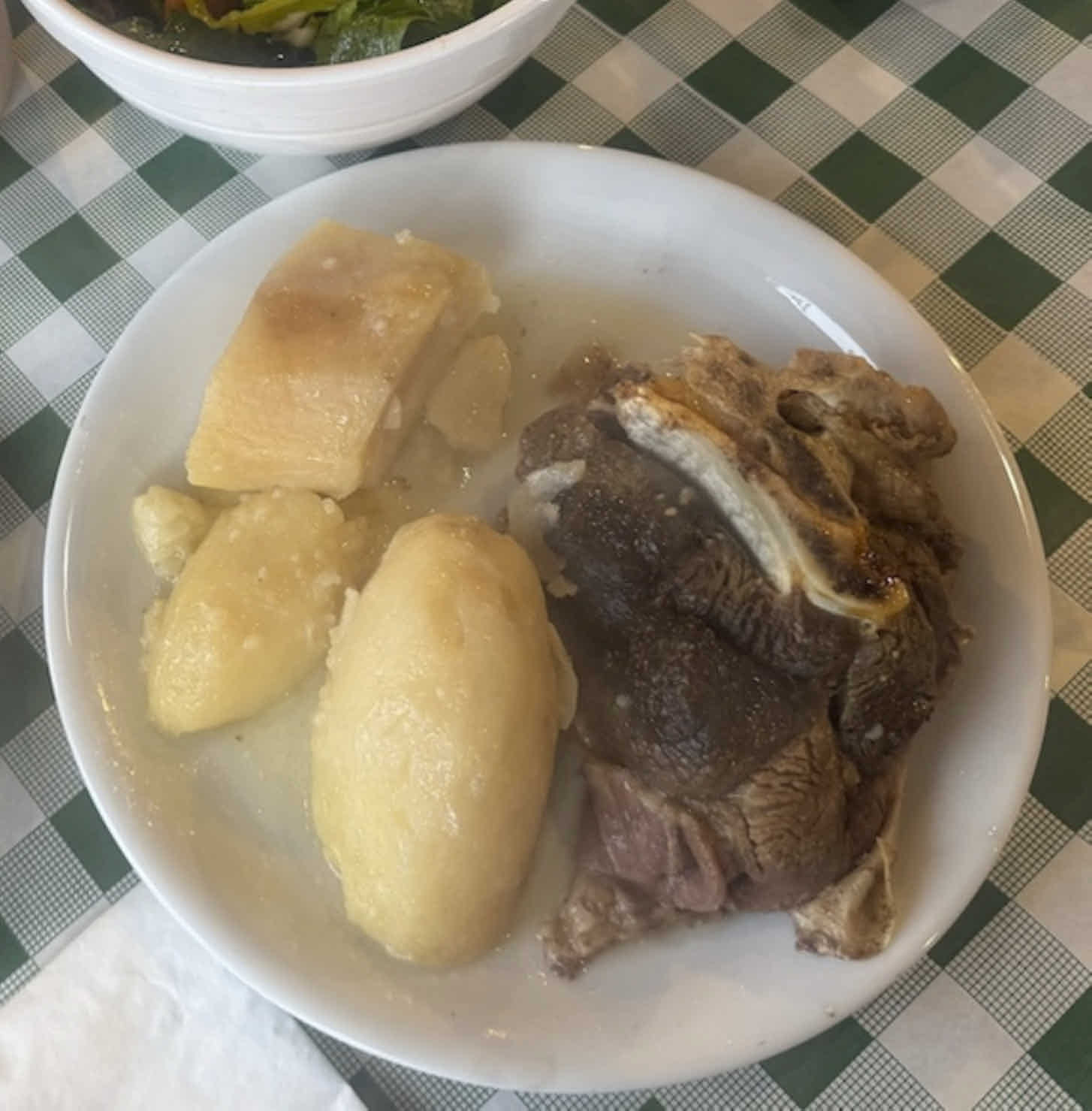

If you want an immersive experience in Cyprus’ culinary culture, try to eat like locals. A very local dish that will accentuate your food experience on the island is Ofto Kleftiko: lamb or goat meat slowly baked for a minimum of 8 hours in a sealed clay oven with potatoes, oregano, bay leaf, salt and pepper.
“Ofto” means baked, while “Kleftiko” means stolen. Why stolen? Animal stealing was an old custom observed among shepherds throughout Cyprus. A stolen animal every now and then was often considered a case of “tolerated theft” as such practices were perceived as a form of “food sharing”. Stolen lambs or goats were roasted in makeshift ovens dug into the ground to hide the wafting smell. The hole was sealed with soil so that no steam could escape to give them away. The lamb or goat was cut into pieces, salted and peppered, and then wrapped in either animal skin or carob leaves.
Nowadays, ofto kleftiko is slowly cooked in wood fired ovens, clay ovens or modern kitchen ovens. A more modern adaptation of this dish is to cook it wrapped in parchment paper over aluminium foil or in a Dutch oven or a covered casserole, and cook it for at least four hours in low temperature.
This cooking method allows the meat to cook completely in its own juice and the result is just a melt-in-the-mouth kleftiko.
Ofto Kleftiko was traditionally baked on Sundays. Villagers used to heat the oven early in the morning, before even going to church, so that Kleftiko would be ready for lunch. It is also served at family feasts after long periods of fasting and on major religious holidays. It can be accompanied with “patates oftes” (baked potatoes), “pourgouri” (crushed wheat pilaf), yogurt and village salad.
“Ofto kleftiko” is included in UNESCO’s Intangible Cultural Heritage list. It is the main dish at traditional festivals, family taverns and wedding feasts. Thus, whenever you have the chance, order ofto kleftiko and dig in.
Source: heartlandoflegends.com
