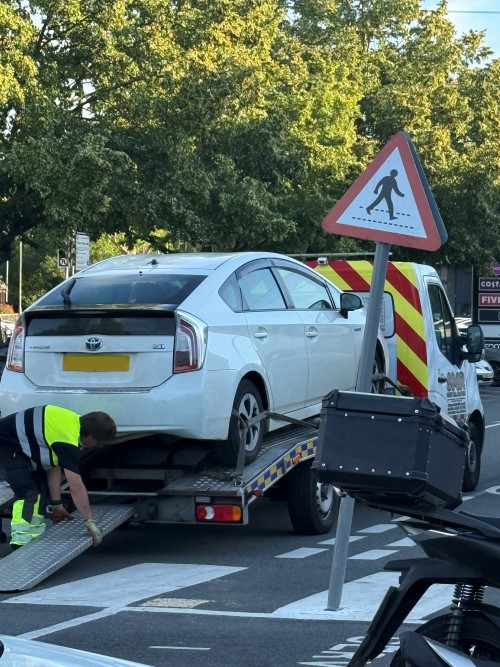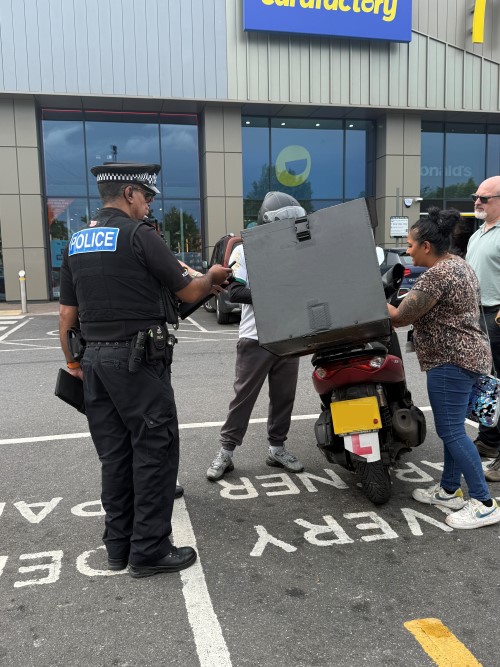

Police in Hertfordshire have been supporting the most recent national initiative to tackle organised immigration crime (OIC).
The operations took place between Thursday 18 June and Friday 26 June, with enforcement activity taking place in Cheshunt and Hemel Hempstead. Officers from Hertfordshire Constabulary’s Organised Immigration Crime and Neighbourhood Policing Teams were checking people working in the food delivery sector for immigration and exploitation offences.
During the operations more than forty people were interviewed, six vehicles were seized and thirteen people were arrested for immigration offences.
Hertfordshire’s officers were accompanied by the Home Office’s Immigration Enforcement Officers.
Detective Chief Inspector James Howarth, from the Public Protection Command, said: “We regularly carry out operations like this in partnership with the Home Office, National Crime Agency and other local partners to ensure workers are not being exploited and have the legal right to live and work in the UK.
“In many cases, organised crime groups are involved, ruthlessly exploiting people who have been trafficked into the country. These workers are often unaware of their rights and may be forced to work excessive hours for low pay, or in some cases no pay at all.
“These operations are designed to raise awareness of organised immigration crime, help people recognise the warning signs, and encourage reporting so that those responsible can be identified and brought to justice.
“The activity also provides an opportunity to engage with vulnerable individuals, identify potential victims of modern slavery and human trafficking, and ensure they are connected with the support and safeguarding services they need.”
Spotting the signs of potential OIC victims:
No access to ID documents.
Physical or psychological abuse.
Debt bonded – paid less than minimum wage/ not paid.
Transported to and from work in vans, often in groups.
Being picked up and dropped off to work at unusual times.
Working very long hours.
Poor accommodation/overcrowding.
No formal contract of employment.
Inadequate work equipment.
Often accompanied/ chaperoned.
Being spoken for.
May not know their own address.
Poor language skills.
Reporting can help protect people and catch those responsible for OIC.
If you see something that doesn’t look right, if you are worried about someone, or something looks suspicious, please report to police.
In an emergency, please call 999 and in non-emergency situations, call101.
You can also report via the Home Office endorsed charity www.stopthetraffik.org