
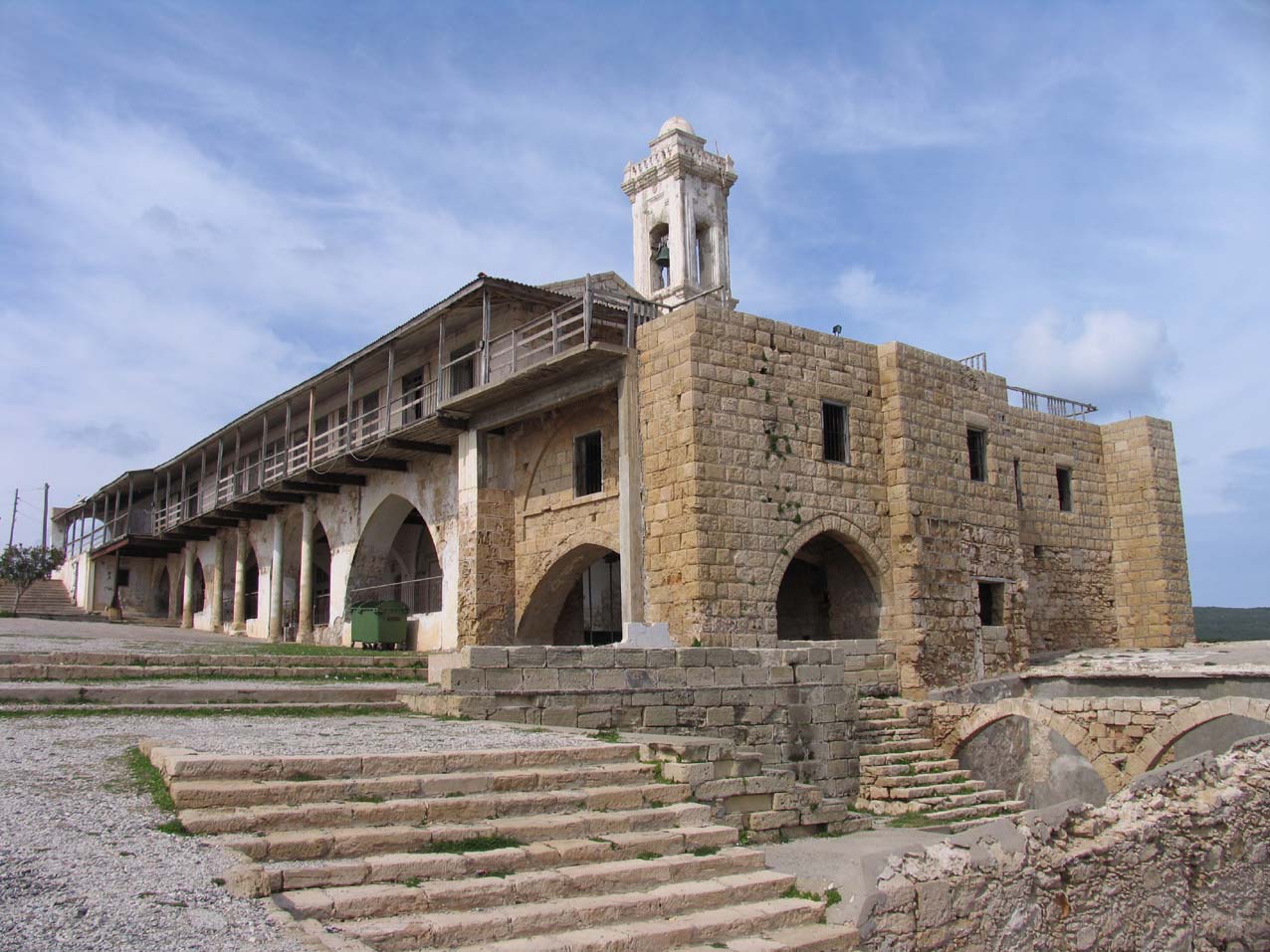

The restoration works at the Monastery of Apostolos Andreas (Apostle Andrew), situated at the north-easternmost point of the island of Cyprus, in the Turkish occupied areas, are expected to be concluded by the end of 2017.
The Monastery, which was once the pride of all Cypriots, has fallen into a state of deterioration, following the Turkish invasion in 1974.
On the occasion of the conclusion of one year since the works began, journalists were invited today to visit the area.
In statements to CNA, Greek Cypriot representative at the bi-communal Technical Committee on Cultural Heritage, Takis Hadjidemetriou, said that 50% of the work has been concluded and that if all proceeds according to the contract, the restoration will finish by the end of 2017.
Hadjidemetriou said that it is of great importance that the work is carried out by a consortium of Greek Cypriots and Turkish Cypriots.
“It is a cooperation between Greek Cypriots and Turkish Cypriots. Our goal and mission is to apply this kind of bicommunal cooperation to other areas and other monuments “he said.
The project is funded by the Church of Cyprus and the Evkaf Administration (with 2.5 million euro each) and with a contribution of 25,000 USD from the United States Agency for International Development (USAID). The UN Development Program inspects the work.
The overall restoration of the Monastery will take place in four phases. Current phase A includes the restoration of the Church, the adjacent buildings and geotechnical investigations, phase B concerns the restoration of the Chapel and the Fountain, and phase C includes the restoration of the building on the north wing. The last phase is for external works. All these phases will be carried out in accordance with the designs of the University of Patras of Greece.
The 1974 Turkish invasion of Cyprus and the subsequent occupation of the island have taken a heavy toll on Cyprus’ cultural heritage, despite existing internationally binding treaties regarding the protection of cultural heritage.
The damage is grave and in many cases, irreversible. The occupied museums have been looted and so have many private collections of antiquities. Churches have been vandalized; ecclesiastical icons and vessels stolen, church frescoes and mosaics have been removed and in many cases have been traced in Europe’s illegal antiquities trade markets and in auctions around the world.
The most serious and large-scale damage has been noted on the islands’ occupied churches. Some of the churches have even been demolished, others pillaged and some are currently being used as stables, mosques or as part of military camps.
