
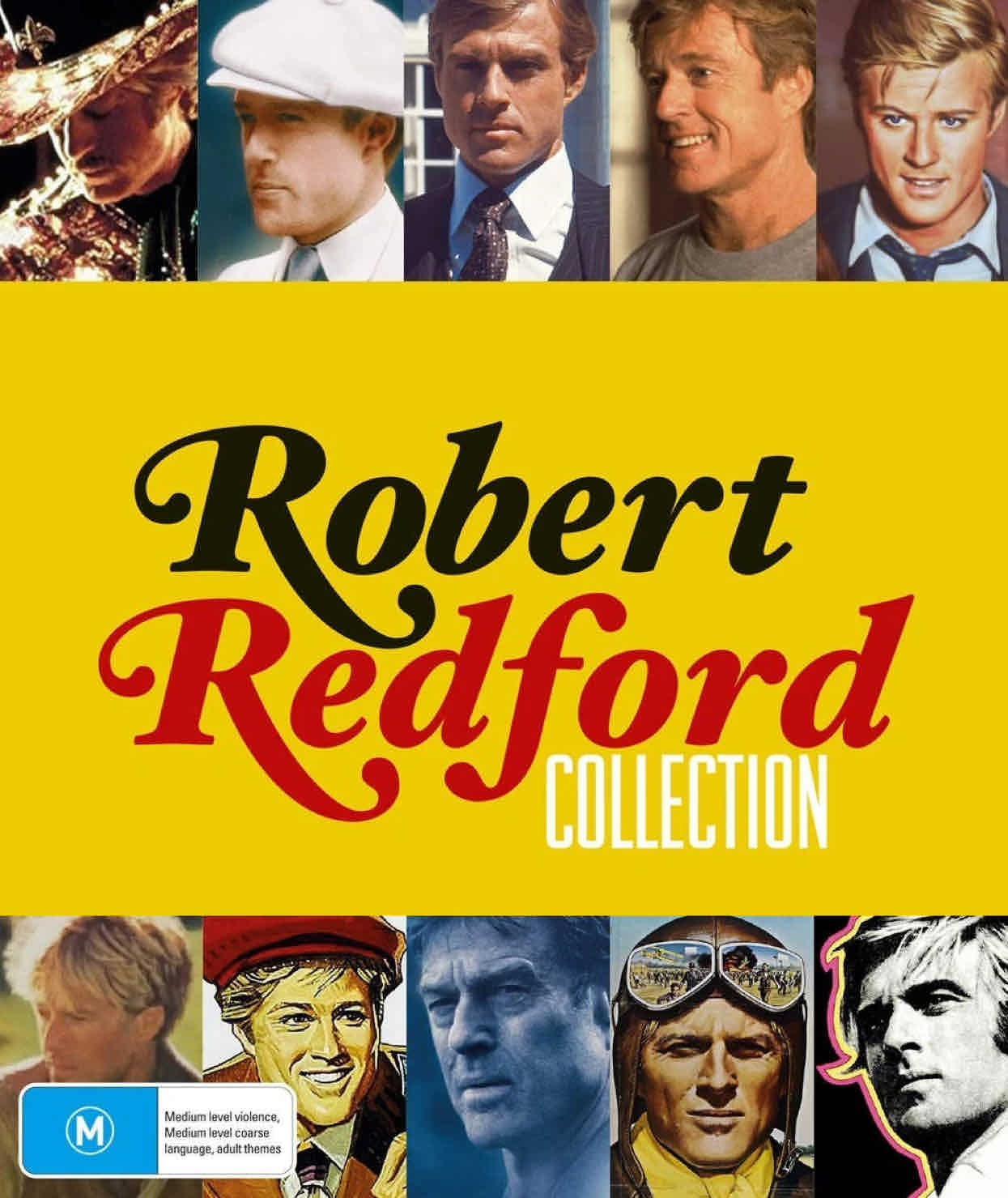

Robert Redford
Robert Redford, who died on September 16, 2025, at the age of 89, lived the kind of American life that becomes myth. He was a golden-haired leading man whose looks could have been enough. He was a filmmaker who chose to direct stories not about spectacle but about pain, compassion, and survival. He was an activist who put his wealth and fame behind environmental causes, truth in journalism, and independent voices in film.
Redford gleamed through more than 80 movies, many of them classics. His life included decades of activism and founding the Sundance Institute that profoundly shaped decades of independent film.
Early steps toward stardom
Born Charles Robert Redford Jr. on August 18, 1936, in Santa Monica, he was the child of modest means. His father was a milkman turned accountant; his mother died when he was only eighteen. Redford drifted through youth: gifted at baseball, surfing, and drawing, but restless, unsettled. He briefly attended the University of Colorado, then studied art in Europe, before settling on acting as the pursuit that matched his restless energy with purpose.
He began in theatre, on Broadway in Barefoot in the Park, and on television in series like The Untouchables and Alfred Hitchcock Presents, and he memorably played Death in a classic episode of The Twilight Zone. His first films, such as War Hunt (1962), hinted at his seriousness. But Hollywood did not quite know what to do with him. He was too beautiful to be just another actor, and too thoughtful to be content with lightweight parts.
His breakout came in the late 1960s, when the old studio system was crumbling and American cinema was searching for new heroes.
Redford’s starred in Barefoot in the Park (1967), where he reprised his Broadway role as the buttoned-up young lawyer opposite Jane Fonda. His charm, wit, and understated timing revealed a natural screen presence. The film showcased his ability to balance humour with sincerity, establishing him as a leading man of effortless charisma.
The Sundance Kid
Butch Cassidy and the Sundance Kid (1969) is where Robert Redford became Robert Redford. Paired with Paul Newman, he played Harry Longabaugh – known to history as the Sundance Kid. Newman had the lines and the charm, but Redford had the gaze, the wary intelligence, the sense of inevitability. Together they embodied a dying West, outlaws on the run not just from the law but from the closing of possibilities.
The film was light on its surface, filled with buddy banter and the famous bicycle ride with Katharine Ross. But it carried a melancholy that deepened the laughs. Redford understood that this was a story about men who could not survive in the modern world. His Sundance was graceful, funny, but also doomed. That blend of humour and tragedy would mark much of his career.
The partnership with Newman would continue in The Sting (1973), one of the great entertainments of its decade. Redford played Johnny Hooker, a small-time grifter learning the ropes of a con against a crime boss. The joy of that film is its elegance – how Newman and Redford dance through the twists. Redford’s performance is sly, understated, and deeply appealing. The film won the Oscar for Best Picture and made him a superstar.
The Way We Were and Gatsby
Redford could easily have stayed in the outlaw-rogue niche. But he was too ambitious for that. In The Way We Were (1973), opposite Barbra Streisand, he played Hubbell Gardiner – a golden college man, gifted with looks and charm, but hollow at the centre. Streisand’s Katie loves him, but he cannot return the intensity. The film is remembered for Streisand’s voice and passion, but Redford’s performance is essential: he is the man we love to look at, but cannot trust to stay. It is perhaps the best use of Redford’s beauty in his career, to show how beauty can conceal emptiness.
That same year, he played Jay Gatsby in Jack Clayton’s adaptation of The Great Gatsby. Fitzgerald’s novel is nearly unfilmable, but Redford gave it an earnest try. His Gatsby was dignified, yearning, too polite to be tragic. The movie falters, but in Redford’s careful stillness we see the ache of the American dream. He may not have captured Fitzgerald’s lyricism, but he embodied the paradox: a man who can acquire everything except the one thing he wants.
All the President’s Men
If one role defined Redford’s seriousness, it was Bob Woodward in All the President’s Men (1976). The Watergate scandal was still fresh, Nixon only recently resigned, when Redford decided to tell the story of two young reporters – Woodward and Carl Bernstein – who followed the money and exposed the rot at the highest level.
Redford was not interested in playing a hero in the conventional sense. There are no car chases, no shootouts, no love scenes. Instead, the drama is in the details: notes scribbled, phones dialed, doors knocked upon. Redford’s Woodward is cautious, dogged, respectful of fact. Alongside Dustin Hoffman as Bernstein, he created one of the great procedural films, and one of the most patriotic. In an age when journalism itself is under attack, All the President’s Men remains a beacon: truth can be pursued, and truth matters.
Out of Africa
Redford’s career reached another peak in Out of Africa (1985), Sydney Pollack’s sweeping romance with Meryl Streep. He played Denys Finch Hatton, the great white hunter who woos Streep’s Karen Blixen. The film is lush, almost too beautiful, but Redford and Streep ground it in reality. Their chemistry is remarkable: she intense, precise, yearning; he relaxed, enigmatic, elusive. One can see why she loves him, and why she cannot hold him. Redford’s refusal to adopt a British accent was controversial, but it works: his Hatton is less a historical figure than a projection of freedom.
Behind the camera
In 1980, Redford directed his first film, Ordinary People, and won the Academy Award for Best Director. The story of a suburban family torn apart by the death of one son and the survivor’s guilt of another, it is a devastatingly quiet film. Timothy Hutton, Donald Sutherland, and Mary Tyler Moore give career-defining performances.
What is remarkable is how Redford directs: without flash, without vanity, with great patience. He allows silence to speak. He observes people failing to say what they mean, and in those failures lies the truth. The Academy rewarded him, but more importantly, audiences recognised that Redford was not content to be just a face. He was a storyteller.
Later directing projects, like A River Runs Through It (1992) and Quiz Show (1994), confirmed his gift. A River Runs Through It, based on Norman Maclean’s memoir, is a love letter to family, fishing, and the land. Quiz Show is about the corruption of a television game show in the 1950s, but more deeply about the corruption of American innocence. Both films show Redford’s belief in morality, in the quiet choices that reveal who we are.
The aging star
As Redford grew older, he chose his roles carefully. In Sneakers (1992), he showed a playful side, leading a team of misfit hackers. In The Horse Whisperer (1998), which he also directed, he played a healer of horses and people, opposite Kristin Scott Thomas.
But his most remarkable later performance may be All Is Lost (2013). For nearly two hours, Redford is alone on a boat in the Indian Ocean, struggling to survive after his vessel is damaged. There is almost no dialogue. Every gesture, every look, carries weight. It is a performance of endurance, of dignity. Watching it, one cannot help but see Redford himself: older, weathered, still fighting, still refusing to give up.
His final starring role came in The Old Man & the Gun (2018), where he played an aging bank robber who cannot stop doing what he loves. It was a fitting farewell: charming, sly, rueful, acknowledging that even legends fade, but they can fade with style.
Sundance and activism
Perhaps Redford’s greatest contribution to cinema beyond his own career was the Sundance Institute and Film Festival. Founded in the early 1980s in Utah, Sundance became the beating heart of American independent film. It gave space to voices outside the mainstream, directors like Steven Soderbergh, Quentin Tarantino, Kimberly Peirce, Kelly Reichardt, Ryan Coogler. Without Redford, the indie boom of the 1990s might not have happened.
Redford also spent decades fighting for the environment. He spoke for land conservation, clean energy, the preservation of wilderness. He bought land in Utah not to develop it, but to keep it safe. He was not naïve; he knew the forces against him were vast. But he believed that to do nothing was a betrayal.
Personal life and loss
Redford’s personal life was marked by both joy and tragedy. He married twice – first to Lola Van Wagenen, with whom he had four children, and later to German artist Sibylle Szaggars, who survives him. His son Scott died in infancy. His son James, a filmmaker and activist, died in 2020 at the age of fifty-eight. These losses marked him deeply, as did the death of close collaborators like Sydney Pollack and Paul Newman.
Redford never courted scandal, never relished tabloid attention. He preferred the quiet of Sundance, the company of family, the solace of painting and nature. He resisted the label of “legend,” because legends are frozen, and he believed in growth.
The meaning of Robert Redford
What do we make of Robert Redford? He was not the most versatile actor of his generation, nor the most daring. But he was something rarer: a star who never betrayed his intelligence. He understood his beauty, and he used it—sometimes to lure us in, sometimes to show us its emptiness. He trusted silence, trusted the audience to lean in. He made choices that reflected conscience: All the President’s Men, Quiz Show, Truth. He directed films that asked us to feel deeply about family, loss, morality.
Robert Redford is survived by his wife, Sibylle, his daughters Shauna and Amy, grandchildren, and generations of filmmakers and audiences who felt his influence.
He leaves behind films that endure, a festival that changed cinema, land that remains unspoiled, and an example of how to live with purpose in a business that too often rewards vanity.
Redford’s passing reminds us that time wins, always. But meaning survives. His meaning is clear: that beauty can be deepened by conscience, that fame can be turned toward good, that stories – whether told on a big screen, in a mountain clearing, or by a lone man at sea – can matter.
Top 10
Butch Cassidy and the Sundance Kid (1969) – His breakout role as the Sundance Kid opposite Paul Newman; the perfect blend of charm, wit, and melancholy.
The Candidate (1972) – A sharp political satire where Redford plays an idealistic lawyer turned reluctant Senate candidate.
The Way We Were (1973) – As Hubbell Gardiner opposite Barbra Streisand, he embodied the golden man whose beauty masks emptiness.
The Sting (1973) – Another legendary pairing with Paul Newman, this time in a dazzling con-man caper.
The Great Gatsby (1974) – His interpretation of Fitzgerald’s Jay Gatsby remains iconic, if bittersweet.
All the President’s Men (1976) – As Bob Woodward, Redford helped create one of the definitive films about journalism and democracy.
Ordinary People (1980, director) – His directorial debut, a quietly devastating family drama that won the Oscar for Best Picture and Best Director.
Out of Africa (1985) – As Denys Finch Hatton, he brought enigmatic charm and tragic freedom opposite Meryl Streep.
A River Runs Through It (1992, director) – A lyrical and elegiac story of family and nature, with Brad Pitt as the restless younger brother.
All Is Lost (2013) – A late-career triumph: nearly wordless, just Redford alone at sea, fighting for survival with pure presence.
Source: en.wikipedia.org, thetimes.com, the guardian.com
