
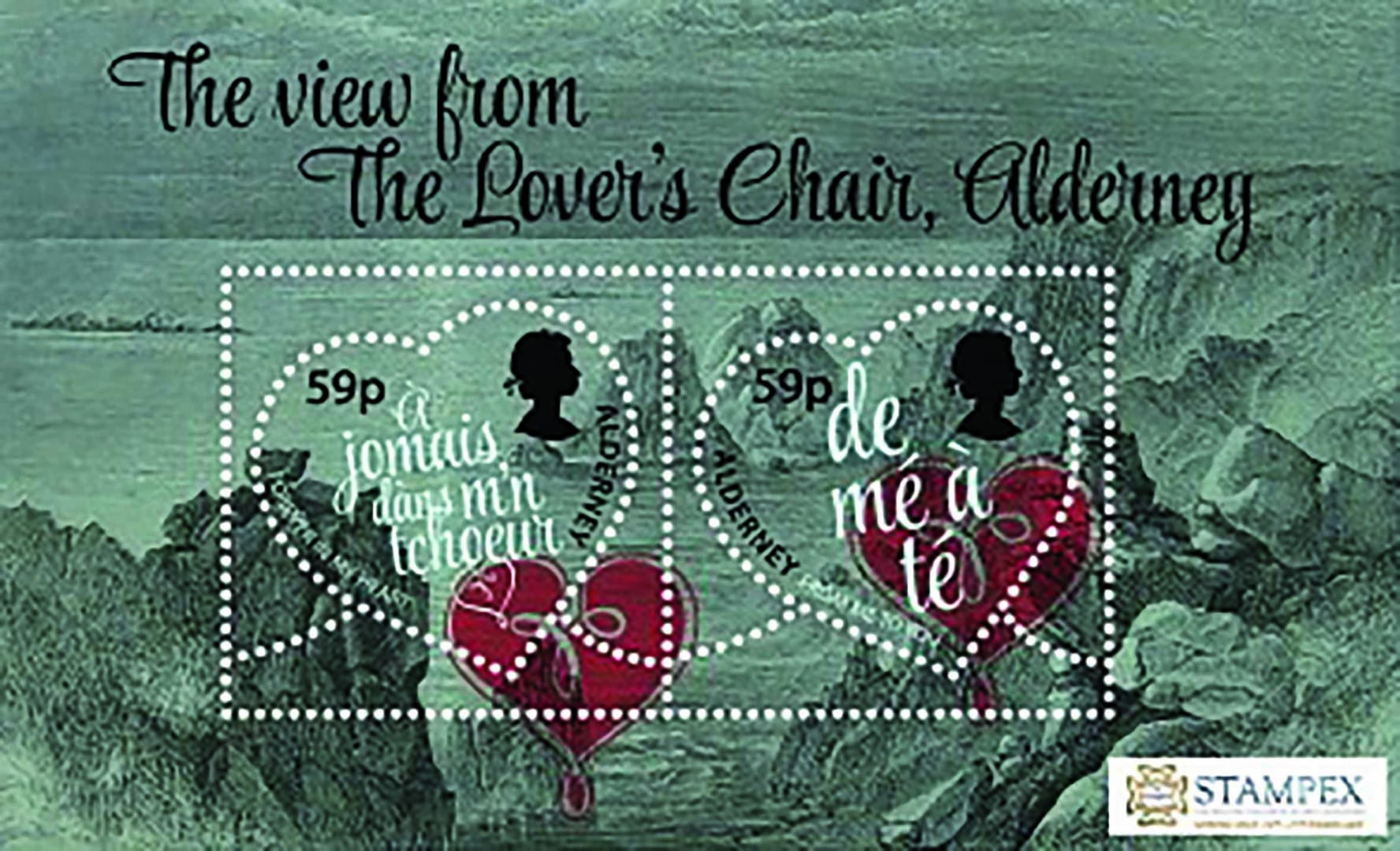

Stampex Valentine Exhibition Sheet
Date of issue: 14/2/2018
No one seems to know the true origins of Valentine’s Day, the day upon which we celebrate love all around the world.
Two saints who were both martyred in Rome share the feast day of 14th February, Valentine of Terni in around AD 197 and Valentine of Rome in around AD 496.
Many believe the celebration stems from this latter saint, dating back to the third century AD when Emperor Claudius II banned men from tying the knot, believing married men would make bad soldiers. Thinking this was unfair, St Valentine arranged marriages for the soldiers in secret but he was caught and sentenced to death. According to legend, he fell in love with his jailer’s daughter and before his execution, wrote her a letter signed “Your Valentine.”
The day itself, which is also called St Valentine’s Day or the feast of St Valentine, is thought to originate from an ancient Roman feast day called Lupercalia, celebrated in the middle of February but it later became a Christian celebration too.
Valentine’s Day became further associated with love thanks to Geoffrey Chaucer in the 14th century and by the 18th century, it has blossomed into an opportunity for people to show their feelings of love, sending hand-written “valentines” cards, giving flowers, trinkets or sweet treats.
Pre-printed Valentine’s cards started to appear in Georgian Britain and became more mass-produced in the early 19th century with the advance of printing techniques.
It was the Victorians who considered it bad luck to sign a Valentine’s card but not all their Valentines were romantic. Insulting cards known as ‘Vinegar Valentines’ went on sale for those who weren’t quite so romantic.
Today, Valentine’s Day is one of the most romantic days of the year, a day popular for wedding proposals, which would do doubt have made St Valentine himself proud!
Two beautifully scenic stamps released by Guernsey Post features ‘The View from the Lover’s Chair’, the work of Paul Jacob Naftel who was the Island’s most famous and successful artist during the 19th century.
Based on information supplied by the Guernsey Post Office, Philatelic Section, Guernsey, Channel Islands.