

“If everything seems under control, you’re just not going fast enough.”
– Mario Andretti, Formula One driver
The voice
You know that voice. The one that comes over the intercom. When the airline pilot speaks to the passengers, the voice he uses – that relaxed, casual, masculine, easy-going drawl, with its supreme, laid-back confidence, and world-weary charisma and charm. All of that, comes from one man … Chuck Yeager.
Something like: – “Now, folks, uh … this is the captain … ummmm … We’ve got a little red light up here on the control panel that’s trying to tell us that the landing gears are not … uh … locking into position when we lower them … Now … I don’t believe that little red light knows what it’s talking about – I believe it’s that little red light that isn’t working right”
… faint chuckle, long pause, as if to say, I’m not even sure all this is worth going into – still, it may amuse you …
“But … I guess to play it by the rules, we ought to humour that little red light … so we’re gonna take her down to about, oh, say, two or three hundred feet over the runway, and the folks down there on the ground will give us a visual inspection.”
That particular voice is specifically Appalachian in origin. It originated in the mountains of West Virginia, in the coal country of Lincoln County. In the 1940s and 1950s this gravel-deep voice drifted down over the Californian desert, and into all the phases of American and global aviation.
Military and airline pilots began to talk in that West Virginia drawl, or as close to it as they could in their native accents. It was the drawl of Charles Elwood Yeager. Every pilot on earth now talks this way. Every single one of them.
The Right Stuff
Yeager enlisted in the Army Air Force in 1941, aged eighteen. In his first eight missions, he shot down two German fighters. On his ninth he was shot down over German-occupied France; he bailed out and was picked up by the French resistance, who smuggled him into Spain disguised as a peasant. He made it back to England and returned to combat during the Allied invasion of France. By the end of the war he had thirteen kills. He was 22 years old.
‘The Right Stuff’ is a classic 1979 book by Tom Wolfe about the pilots engaged in U.S. post-war research with experimental rocket-powered, high-speed aircraft, and the first Project Mercury astronauts selected for the NASA space programme.
The book is based on extensive research by Wolfe, who interviewed test pilots, the astronauts and their wives. Yeager, who was considered by his peers as the best test pilot of them all, was never selected as an astronaut. But, he was the first man to break the sound barrier, in 1947, flying the experimental Bell XS-1 plane at Mach 1 speed. (Mach 1 is the speed of sound).
Wolfe wanted to find out why the astronauts accepted the danger of space flight. He recounts the mental and physical characteristics — the “right stuff” — required for their jobs. Wolfe likens the astronauts to “single combat warriors” from earlier eras who received the honour and adoration of their people before going to fight.
The book was adapted as a film in 1983, and later as a television series, by National Geographic / Disney+ in October 2020.
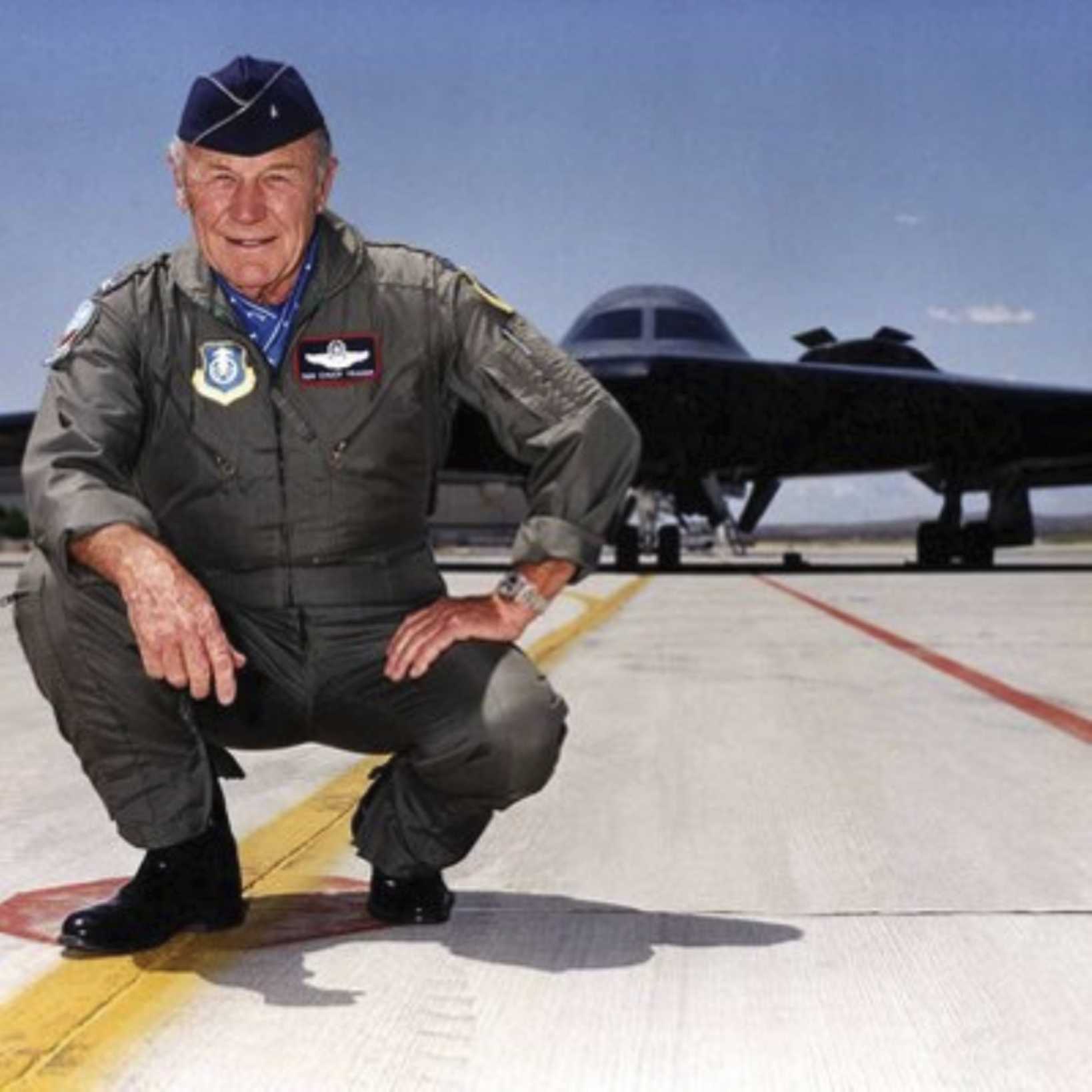
(Source: The Right Stuff, by Tom Wolfe. Picture: Chuck Yeager 1923 – 2020)
James Neophytou

