
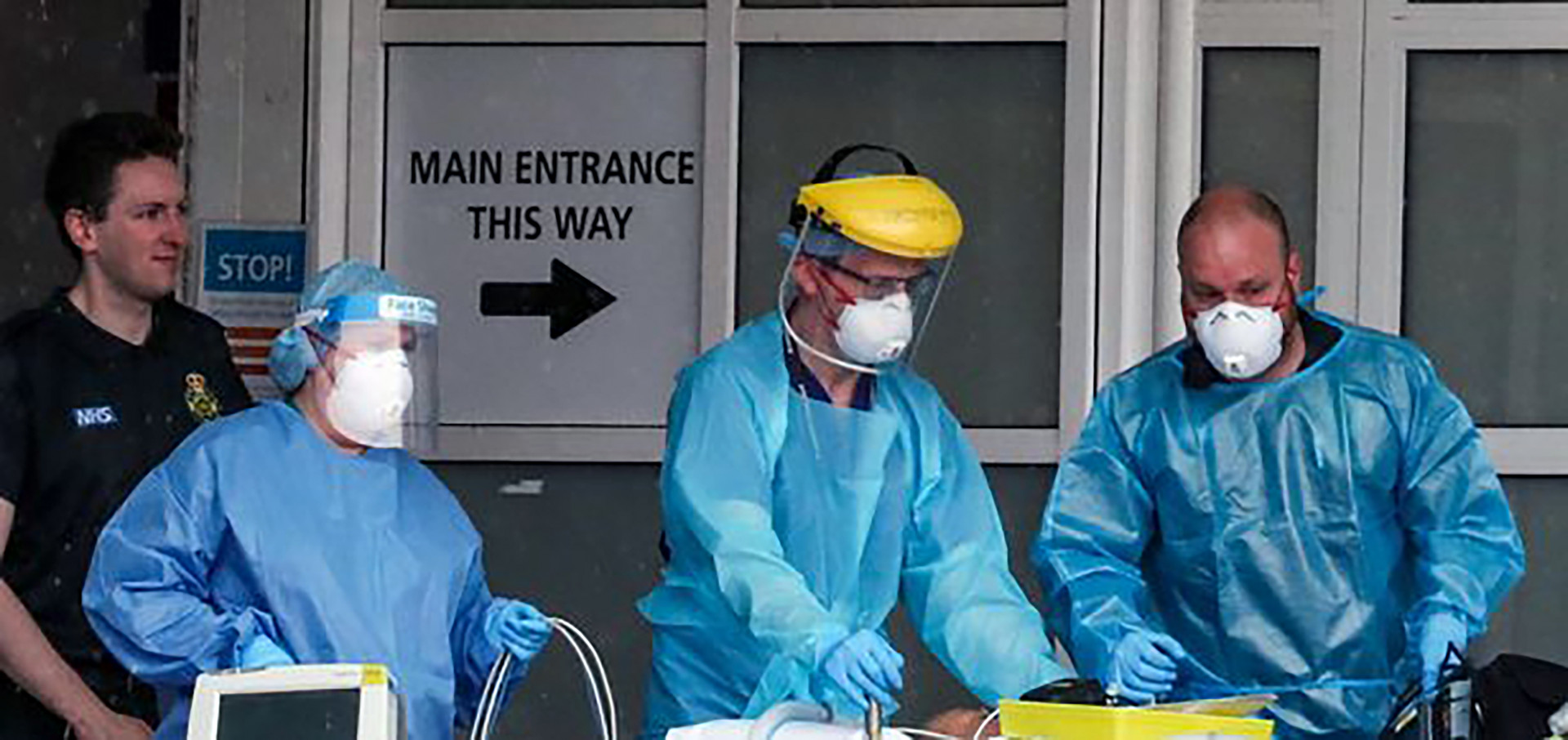

The UK is “at the peak” of the coronavirus outbreak, Health Secretary Matt Hancock has told MPs – on the same day the number of UK hospital deaths rose above 18,000.
Delivering an update on the government’s COVID-19 response in the House of Commons yesterday, Mr Hancock thanked the British public for their “steadfast commitment” in following lockdown rules. “It is making a difference, we are at the peak,” he said.
But the health secretary added that social distancing measures would not be relaxed or changed until the government’s five tests for exiting the lockdown are reached.
Department of Health and Social Care later announced that, as of 5pm on Tuesday, 18,100 people had died in UK hospitals with coronavirus – a rise of 763 deaths reported in 24 hours.
Another 665 people had died in English hospitals after testing positive with coronavirus, bringing the total to 16,272.
In Scotland, another 77 hospital patients had died with coronavirus in the last 24 hours, bringing the total to 1,062.
And, in Wales, another 15 people died in hospitals with COVID-19, bringing the total to 624.
In the Commons, Mr Hancock also revealed to MPs that 15 social care staff have died with coronavirus, although he did not give a figure of how many care workers have been tested for COVID-19.
He said the government would be allowing more people to be eligible for tests and would make tests easier to access.
The health secretary explained how contact-tracing would now play a key role as the UK overcomes the peak of the coronavirus outbreak, with a new NHS app “in development”.
“As we reach – have reached the peak – and as we bring the number of new cases down, so we will introduce contact tracing at large scale,” he said.
Conservative former health secretary Jeremy Hunt – who is now chair of the Commons health committee – asked whether it would be possible to track and trace every new COVID-19 case in the community in the next two weeks, when ministers are again due to review the lockdown.
Mr Hancock replied: “We are ramping up our testing capacity and our capacity for contact-tracing in a matter of weeks, and we’ll have it ready to make sure that we can use that as and when the incidence of transmission comes down.
“The effectiveness of test, track and trace to keep the reproductive rate of this virus down is determined by the incidence in the community and our goal is to get to a point where we can test, track and trace everybody who needs it.”
Mr Hancock said the government follow the advice of the Scientific Advisory Group for Emergencies (SAGE) on whether Britons should wear masks in public. But he downplayed the prospect of every UK household being given masks, as countries like Japan have done.
He said: “I can’t promise that we will give everybody free masks, I mean that would be an extraordinary undertaking, and we do have to make sure that we have supplies available especially for health and social care staff.”
Vaccine trials
An urgent appeal has been issued for volunteers to take part in human trials of a potential coronavirus vaccine – with those who take part offered up to £625.
Teams at the University of Oxford and Imperial College London are each getting at least another £20m of public money after making “rapid progress” in the hunt for a COVID-19 vaccine, Mr Hancock has said.
Oxford’s clinical trials are due to begin today (23 April). Volunteers must be aged 18 to 55 and in “good health”, the University of Oxford says.
The vaccine, called ChAdOx1 nCoV-19, is made from a chimpanzee virus that has been genetically engineered to carry part of the coronavirus.
The tests will be carried out at Bristol Children’s Vaccine Centre, University Hospital Southampton and Imperial College London, which is also developing its own vaccine, with volunteers having to live in those city areas.
For the trials in the capital, people must live in north west, west or south west London.
People who have tested positive for coronavirus cannot take part in the trials, or those who live in the same household as any vulnerable groups at risk of “severe COVID-19 disease”.
Women who are pregnant, intend to become pregnant or are breastfeeding during the study are also ruled out.
Anyone who has already taken part in a trial with an adenoviral vaccine or has received any other coronavirus vaccines is also ineligible.
The University of Oxford says volunteers must be “healthy” and it has published an extensive list of conditions which would rule people out of the trials, including those with a history of cancer, severe allergic reactions, asthma or other serious long-term illnesses.
The trial is due to last six months, with a further optional visit a year after being given the potential vaccination.
The university says this is the first time the vaccine has been given to humans but similar vaccines have been “widely administered for many pathologies without significant safety concerns”.
Results from the human trials could be available as soon as September.
