
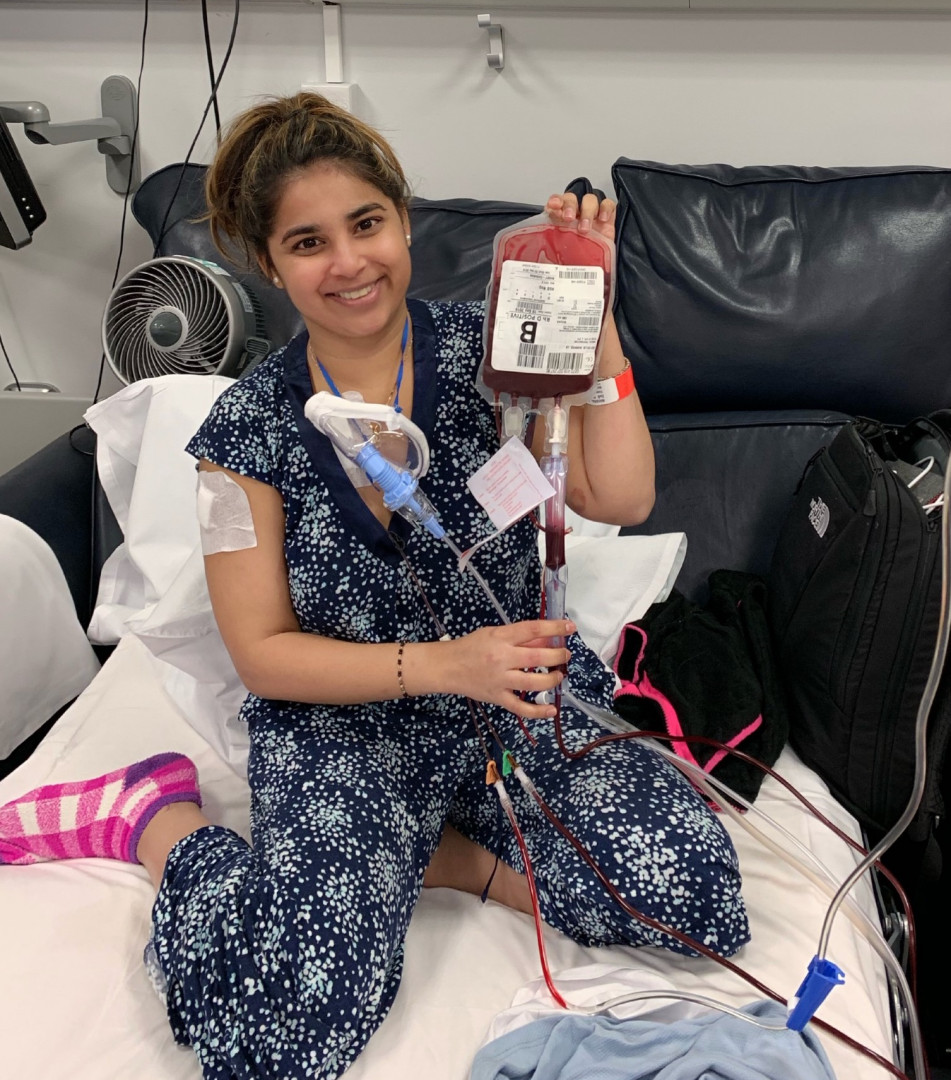

In March this year, United Kingdom Thalassaemia Society (UKTS) – the national charity for thalassaemia – launched an art competition for children all over the world. With concerns about blood supply levels during the current COVID-19 pandemic, the aim was to raise awareness through art about the vital need for blood donation. The competition closing date was 4 June with winners to be announced on 14 June to celebrate World Blood Donor Day, a campaign initiated by the World Health Organisation (WHO) in 2004.
The campaign surpassed all expectations, with the charity receiving 293 entries submitted from 45 countries. UKTS Chairman, Gabriel Theophanous said: “Not only have we been bowled over by the overwhelming response and the creativity, but also the high degree of empathy shown in the children’s artwork. Thalassaemia is one of many conditions and situations where lives depend on blood donors. We cannot stress enough how important it is for people to donate blood if they can.”
Thalassaemia is a chronic blood disorder affecting the genes that are responsible for production of red blood cells. What this means is that patients with thalassaemia are dependent on regular blood transfusions throughout their lives. Without them, they would die in early childhood. Thalassaemia developed as an evolutionary response to malaria which is why it mainly affects those coming from regions such as Asia and South East Asia, the Mediterranean, South America, the Caribbean, Northern and Central Africa and the Middle East. Whilst it was initially prevalent in these regions, due to the migration of communities over the centuries, anyone can be at risk. In fact, 10,000 babies are born with thalassaemia every year around the world.
Roanna Maharaj, 30, from Wood Green in London, has beta thalassaemia. She has had blood transfusions all her life but during her most severe spell she needed blood from nearly 250 people over two years to stay alive. Roanna said: “Blood donors are amazing. They are giving somebody like me a chance at life. Without them I would not be here today. They are the invisible superheroes and I cannot thank them enough!”
For more information about thalassaemia, please visit the charity website www.ukts.org
The submissions for the at competition are available for viewing via the following link: http://tiny.cc/artcompetition
To vote, please visit the following links:
Category 0-5 years: https://cutt.ly/birth-5
Category 6-11 years: https://cutt.ly/6-11
Category 12 and above: https://ukts.org/competition-results/entries-for-age-group-12-and-older/