
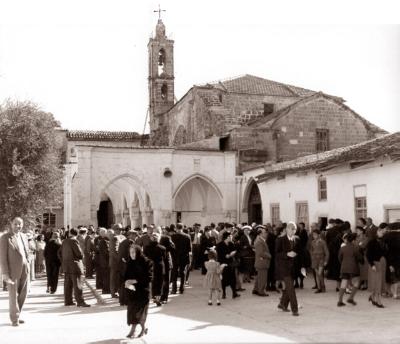

The US embassy in Nicosia has welcomed the fact that the restoration of the Armenian Church and Monastery in the Turkish occupied part of Nicosia has been awarded with the Europa Nostra 2015 award of the EU for cultural heritage.
A press release issued by the embassy notes that through its cooperation with the UNDP, the USAID financed this restoration work, worth many million of US dollars, during which Armenian, Greek Cypriots and Turkish Cypriots cooperated with international experts.
The US is a supporter for many years now, of such initiatives which demonstrate that the protection of cultural heritage can build bridges between communities which are in conflict, US Ambassador in Nicosia John Koening said during an event last month organized at the site.
The European Commission and Europa Nostra revealed today the winners of the 2015 European Union Prize for Cultural Heritage / Europa Nostra Awards, considered Europe’s most prestigious prize in the heritage field. The 28 award winners, selected from 263 applications submitted by organisations and individuals from 29 countries, are honoured for outstanding achievements in four categories: 1) conservation, 2) research and digitization, 3) dedicated service to heritage, and 4) education, training and awareness-raising.
The Armenian Church and Monastery in Cyprus is among the winners in the category conservation for the 2015 Awards.
According to Europa Nostra, the restoration of the Church aimed to preserve a masterpiece of gothic architecture that, since 1963, `has suffered from misuse and neglect`.
The project began in 2007 as part of a larger peace-building effort in Cyprus. It was designed both to restore one of the most noteworthy parts of the island’s cultural heritage and to provide Armenian, Greek and Turkish Cypriots with the opportunity to work together with international experts to preserve their common heritage.
“The Jury saw this project as a definite success story, partly of conservation, with high quality research and meticulous conservation techniques, but also as an exercise in the even more challenging process of rebuilding a community. The architectural element is wonderful and precious, but so is the need to restore and develop the social cohesion of the community in the city.” Europa Nostra said.
The Republic of Cyprus, an EU member state since 2004, has been divided by Turkish troops since 1974 which still hold 37% of the island`s territory.
More than 500 churches situated in the areas under Turkish occupation since 1974 have been destroyed, plundered and looted or turned into stables, warehouses, restaurants and hotels. The Cyprus government and the church have repeatedly protested this destruction to the UN, the World Council of Churches and many other international and religious organisations.
