
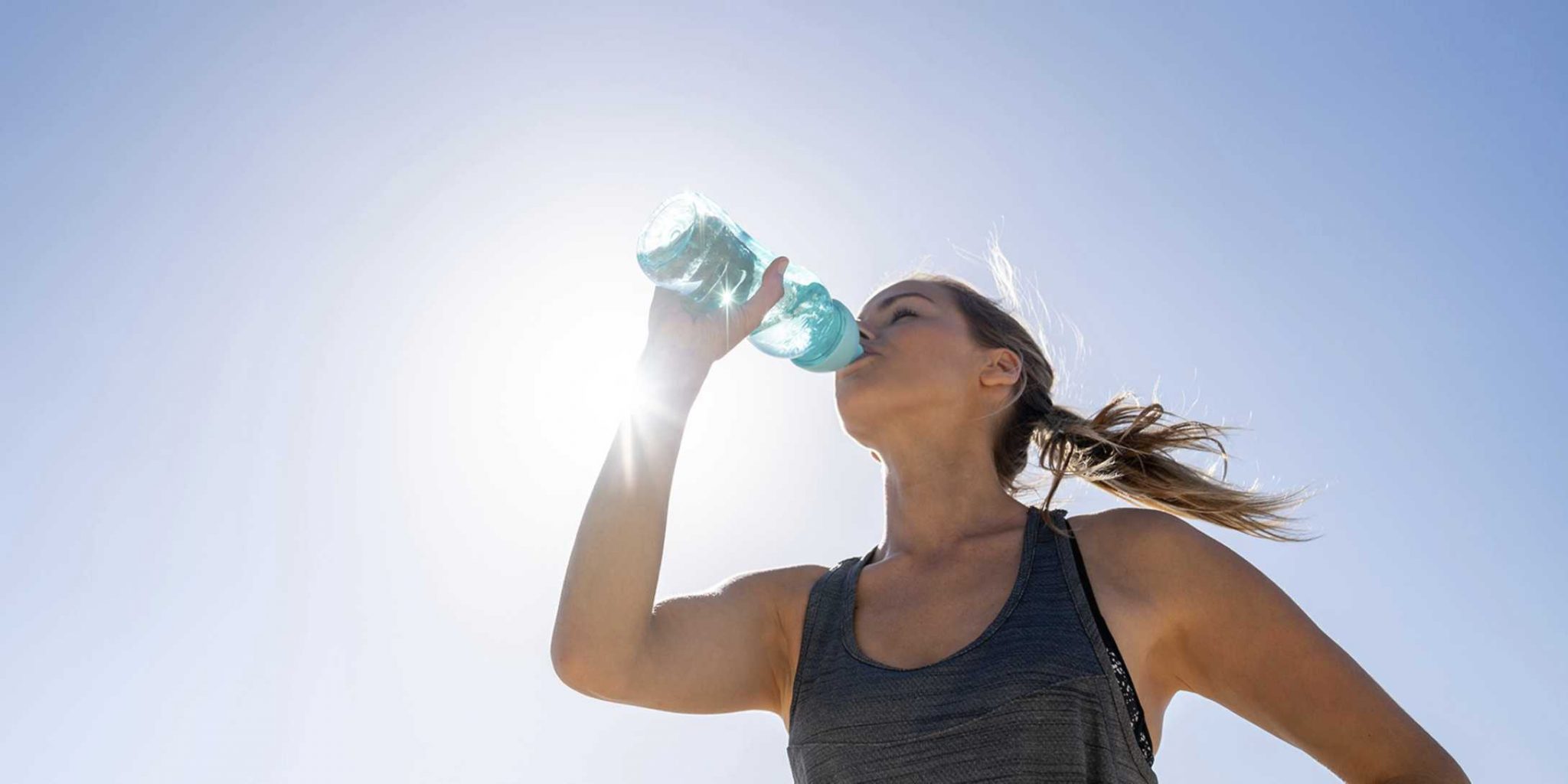

In the hot weather, we are easily reminded that we need to hydrate because we are likely to feel thirsty more frequently. In reality however, we shouldn’t actually allow ourselves to get to that point of feeling thirsty, as by that time, we are actually already dehydrated and in need of water. Thirst is normally the brain’s way of warning that you are dehydrated because you are not drinking enough fluid.
Other common signs the body uses to alert you of dehydration is a dry mouth, feeling fatigued, weak and possibly with irritability, headache and/or feeling lightheaded, deep coloured urine or urine that is with strong concentrated odour and passing urine less frequently than normal.
Other signs of dehydration include having sugar cravings; often thirst can be misunderstood for hunger and you may even crave sugary fruits when actually a drink would do the trick.
Bad breath can occur when dehydrated because the body is not producing enough saliva. Without the saliva present to clear out debris, bacteria has the chance to grow and cause bad breath. The same occurs after fasting for long periods of time; if you are not eating, saliva decreases and bacteria growth increases, causing bad breath.
If dehydration continues, problems such as constipation can occur; when the normal water content of the body is reduced, it upsets the balance of minerals, the salts and sugars in the body, which affects the way the body functions. Water makes up two thirds of a healthy body. It assists in digestion, flushing out waste and toxins, keeps skin plumped up and healthy and functions with lubrication of the joints – having enough fluid in eyes.
Anyone can become dehydrated, but those that may be prone to it are babies and infants as they have a low body weight and may be sensitive to even small amounts of fluid loss, people who have long term health conditions such as diabetes, athletes who lose large amounts of body fluid through perspiration when exercising for long periods and workers of hard physical labour and especially in the sunshine and hot weather.
Older people may not be so aware of themselves becoming dehydrated.
People who drink alcohol get dehydrated as the alcohol works as a diuretic which means frequent urination. It causes the body to expel lots of water as it tries to remove and get rid of these strong fluids from the blood through the renal system, which includes kidneys, ureter and bladder at a much faster rate.
You can also lose the balance of electrolytes usually maintained in the body, they can become too low or too high. Electrolytes are found in the food and drink that are consumed, hence the well-known breakfast craving, after a night out drinking. The body wants to replace the electrolytes lost. The electrolytes are minerals in the body that have an electric charge. Sodium, calcium and magnesium are all electrolytes. They help balance the body’s pH level and move nutrients into cells. They also make sure nerves, muscles and heart work efficiently in the way they should.
The amount of water you take should equal the amount you lose.
What to drink to stay hydrated
– Drinking plenty of water sounds easy enough, but surprisingly many people actually don’t drink enough of the right fluid. Water, or water diluted with sugar free cordials, can be far more effective than drinks with a high rate of caffeine such as coffee, cola or tea. Caffeine works as a diuretic and will flush out the body, therefore not aiding in retaining fluid hydration. Drink decaffeinated teas, make a brew, add some alternative sweetener if required such as stevia, allow to cool and have as an ice tea for the summer.
– Keep a bottle of water handy and at the ready; if you are not so keen on plain water, then make a fusion, add a little hint of a fruit flavour like some slices of orange to enhance it.
– Fizzy pop drinks may contain more sugar than you need, therefore not great.
– We are told to drink six to eight glasses or cups of fluid a day, however a study has shown that in a warm climate, or for those who are quite active, men should be drinking 15.5 cups / 3.7 litres a day and women 11.5 cups, approximately 2.7 litres.
Persistent thirst can be a sign of an underlying problem such as diabetes.
Stay hydrated!
Love and Sparkles
Samsara x
www.samsarabellydancer.co.uk
Facebook: Samsara Kyriakou
