Walking the tightrope between upholding traditions and the need for change
By Alex Theodosiou
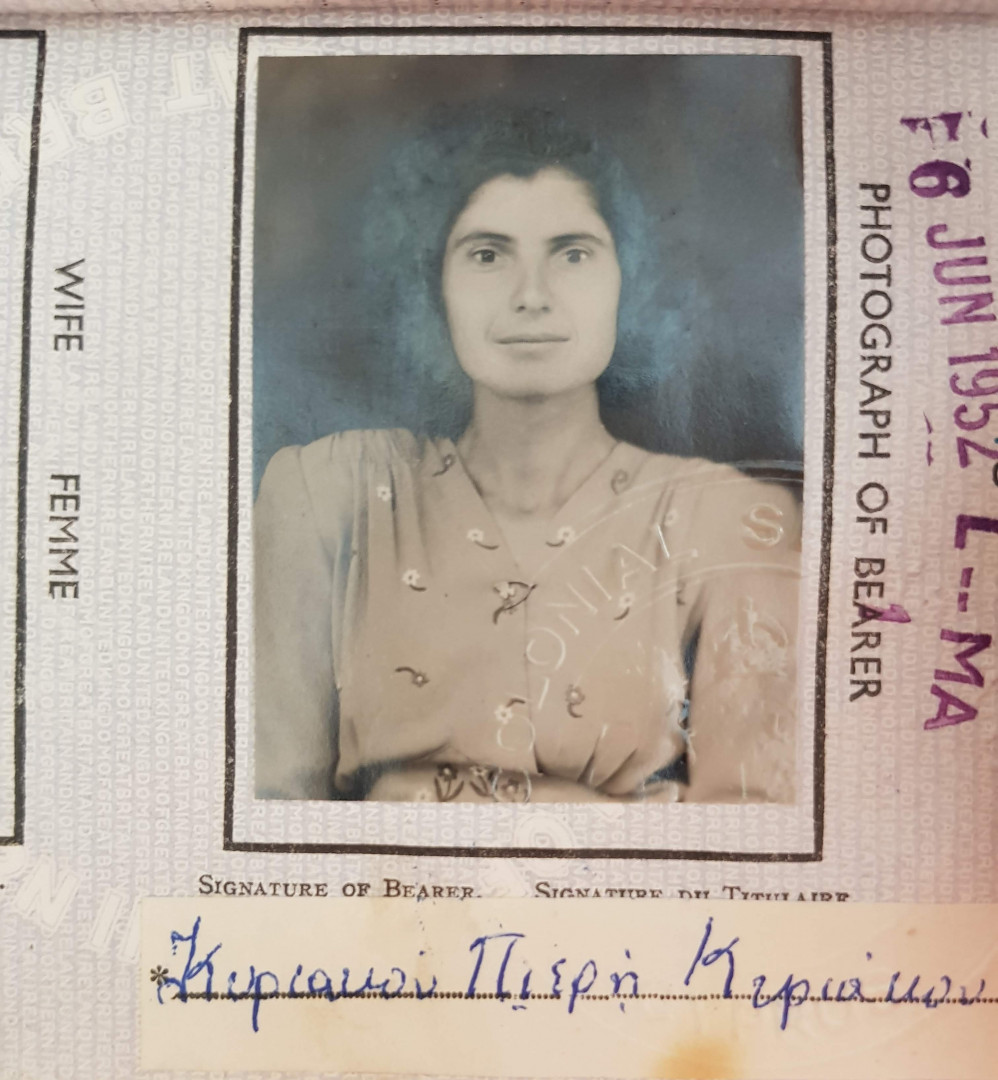
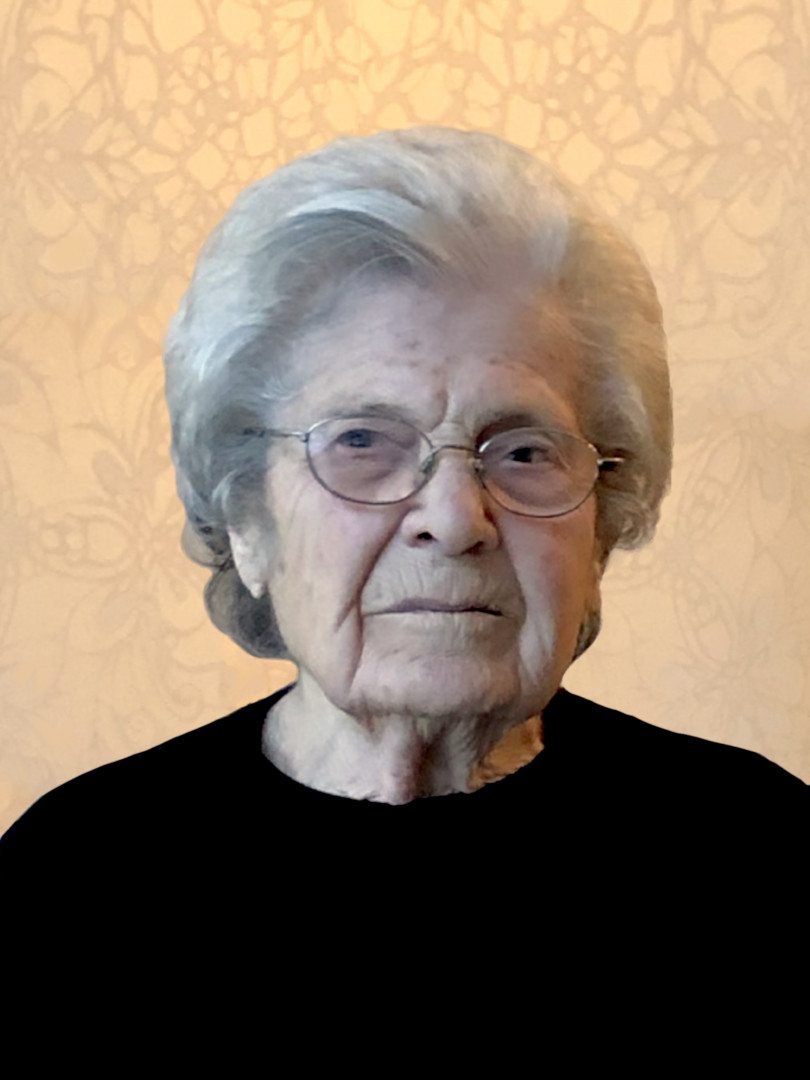
My yiayia, Kyriakou Liasides (nee Pieri) passed away on 18 March 2021, at the age of 97. She had for some years felt like a living relic, having been born in 1924, but her departure is, of course, nonetheless keenly felt. Yiayia was from the village of Komi Kebir, on the peninsula of Karpasia, and grew up in a society predominantly governed by rhythms of life that had remained largely unperturbed for centuries. The distance between this rural corner of Cyprus and north London in 2021 is vast. In fact, even the London of the early 1950s, to which Yiayia emigrated, is a world away from the city today.
The loss of her as an individual is enormous, but this is compounded by what she represented. For me, the symbolism of Yiayia’s passing feels profound: another of my grandparents departing further weakens my direct, tangible links to Cyprus. I fear that when my grandparents are gone, that long, unbroken connection with the island will in some way be irrevocably lost. An image comes to mind of a kite buffeted in a high-wind, its tether to solid ground straining and fraying. Of course, I still go to Cyprus, and still a lot of have family there, but the Cyprus my parents visited in their youth – lovingly described, their words brimming with nostalgia – and especially the Cyprus that my yiayia personified, is hard to see today.
Of course, this is not necessarily a bad thing. It is axiomatic that customs and culture change over time, and this process should not be resisted by default. Clearly, it wouldn’t be prudent or indeed historically informed to romanticise a time of colonial rule and widespread poverty; but the pace of change can often be frenetic, with important things lost along the way.
The passing down of knowledge, of the building blocks of a cultural tradition, are of critical importance to any people, especially to an immigrant community. While we, as British Cypriots, are largely able to hold our multifaceted identity with ease, the risk of cultural erosion is very real – especially for third-generation immigrants like myself. For my family, Yiayia was the gatekeeper of our paradóseis (our traditions). Having her around felt like an insurance against the attrition of our cultural heritage. Since her passing, anxieties around loss have loomed large. The responsibility for keeping these traditions alive – capturing their vibrancy and historical significance in all their complexity – now rests squarely on our shoulders, and the act of forgetting sometimes seems an easier prospect than the task of remembrance.
Yiayia was full of stories of the past, into which she’d weave mathímata (lessons) about village rituals and family customs. The stories of that distant time were always oddly evocative, and they have made an impact on us, my brother and I. Stories of the villagers of Komi Kebir dancing while scything wheat in the fields, of how the hills above the village of Merika, abundant with wild herbs, mouskomírizan (smelled sweetly); of Yiayia’s auntie rolling out gossamer-thin sheets of dough to make pastries and toumakouthkia (rectangular pasta); of her older brother Takis pressing the first virgin olive oil of the season.
In some respects my Yiayia was an unmistakable product of her time, but she was undeniably an outlier, someone with an uncommon spark of brilliance. The superlatives available in the English language cannot convey the half of it. Indeed, more than the fascinating recollections of her youth – which provided an invaluable window into Cypriot village life – Yiayia’s greatest legacy is the bestowal upon her family of her principles.
For Yiayia, pride was paramount. To be proud of oneself was of great importance, but this was to be built upon pride in one’s family, and one’s roots. My cousins and I were taught that to be an upstanding individual, we had to know who we were and where we had come from. This emphasis did not, however, allow room for arrogance. Humility and generosity of spirit were core components of Yiayia’s lessons to her grandchildren. These were traits born of her experiences of poverty, loss, and struggle, but rather than jettison them now that we have the privilege of enjoying comfortable lives, we were urged to hold them with even more zeal. To comport oneself with honour was the necessary starting point, from which all other achievements follow. She told me again, in November last year, of the importance of these values, of what to aspire to most, and the worth of the intangible over the material: ‘Ohi blousios, blousios stin kalosíni, kai stin loyikí’ (‘not wealthy, but rather rich in kindness, and in sensibility’).
Yiayia’s fixation on the conferral of values to those she loved was a recurring theme, and such was her passion and intellect that she was able to articulate her message in myriad different ways, often disarmingly profound and poetic in equal measure. In June last year, rounding off a humorous story about a ‘kouloufos’ (an oaf), she used the phrase ‘a man who wears clothes only’, or, in other words, ‘an empty suit’. I was struck by how well this summed up her message – there was nothing of value in the man’s character, nothing of real worth beneath the clothes on his back. So strong was her teaching, that, for my family, these values have come to signify a large part of what it means to be a Greek Cypriot.
That her grandchildren would remember her teachings, after her passing, became increasingly important for Yiayia as time went on. I took to writing down as much as I could: stories from the village, phrases in heavy local dialect I hadn’t heard before, beautiful turns of phrase. Yiayia would often tell us, deadly serious, to make sure when we did things, when did them ‘me to tropo’ – in the correct and appropriate manner. Internalising and sharing her wisdom and experiences feels very much like a task worth pursuing in this way. I think we as a community more broadly should engage in a similar endeavour. The passing of time and the inequities of history make the need for this all the more pressing: we can’t now go to Komi Kebir, or any other part of the North, and feel that connection. Most of the people have been uprooted, and it’s been occupied territory for almost 50 years, so why shouldn’t we take Yiayia’s message to heart and make sure we’re diligent in the task of keeping our culture healthy?
That process is easier said than done. Opinions on identity are nebulous, and by their very nature idiosyncratic. But we should ask ourselves a few fundamental questions. What is it we truly value about our heritage? When we strip away the layers of our identity, what are we left with at the core? Outside of genetics, what makes us Greek Cypriot? And are these the same things that mattered to our parents and grandparents? The answers to these questions will no doubt differ from individual to individual, from family to family, but some semblance of consensus should exist among our community as a whole.
Food is, I think, a powerful outlet for the expression of culture, a vector through which matters social, political, historical, and geographical can be understood. Yiayia happened to be an exceptional cook: a master of pastries, and the doyenne of fayito stin kasarola (dishes prepared in a pan on the hob). Watching Yiayia cooking – frying Cyprus potatoes, or cooking her famous melitzanes, or kolokasi yiahni, or bishies thiples (the list goes on) – observing her calm, practiced movements meant seeing parts of our culture manifested through muscle memory. It’s these aspects of being Greek Cypriot that, for me, are so important. Because these village recipes are imbued with deep social, historical, and familial significance. Retaining them means so much more than simply keeping aflame one aspect of the past. It means honouring the struggle of your ancestors, it means consciously choosing to connect with your roots, it means understanding the importance of the family table. These are the kind of things that, surely, we can’t let ourselves forget as Greek Cypriots.
There are a lot of us in London, and we’re an immigrant community that’s achieved considerable success in integrating and thriving in the UK. But we shouldn’t leave the business of upholding our culture to the Cypriots in Cyprus. It’s a somewhat common observation that, in the short-term, diaspora communities hold on doggedly to aspects of their native culture, often longer than people back home. But over time these things can become anachronistic, and eventually the forces of assimilation and exposure to diverse stimuli can serve to soften the grip on what was once tightly-held.
Understanding and honouring the path already trodden is a necessary part of figuring out where to go next. Fundamentally, keeping traditions alive is important for us if we hope to create new ones. In an ever-changing world, this can often be the only way to keep them relevant and therefore keep them going. A tradition in a vacuum, one that can’t still in some capacity be practiced, interpreted, experienced, is ultimately inert. If it doesn’t resonate with us and can’t be woven into the fabric of how we live today, it will be relegated to history. This is an especially important point to keep in mind when thinking about our forebears and our culture. Simply chronicling how things used to be certainly has value, but holding this knowledge and applying it to our lives today is the oxygen which culture needs to survive.
We increasingly need to do this in a place as diverse as London, where more and more of us find partners from other backgrounds, and our community comprises growing numbers of people that are half, quarter, eighth Greek Cypriot. This need not be a process of dilution, or of competition, so long as one can hold onto the essential spirit of each one of these cultures. Being clear about how one’s Greek Cypriot heritage – however large or small a part of the whole that may be – continues to feel valuable and relevant, should guarantee it a place at the table.
Measuring the importance of all this can be difficult; these intangible customs and beliefs can feel fleeting. For me, though, what’s at stake was made very real when we lost Yiayia. But, even in the short time we have been without her, I have realised how strongly she imprinted her principles and the traditions from our island upon my family. Their impact is, I hope, indelible. Yiayia’s outlook on life was unwavering, and in some regards outmoded. But what she fundamentally stood for – decency, integrity, and pride in one’s roots – has universal value, unfettered by time or place. That last theme is of particular importance to us as a community, and it comes with the responsibility of understanding that heritage, and caring deeply for how it’s remembered. If we’re dextrous about it, we can ensure that as part of our culture’s inevitable development, those important strands – a Yiayia’s recipe, a Pappou’s saying, a village song – are kept intact and celebrated. Although it’s not easy to capture it all, in the way we choose to manifest these customs in our daily lives, they can be more resilient and permanent than any physical object or heirloom.
In that spirit, then, as an homage and an act of sharing knowledge, I’d like to end this with my Yiayia Kyriakou’s humble but soulful recipe for bamies (okra in tomato sauce). Kalin orexi.
Bamies
Serves 4 Active time: 30 mins Total time: 1 hour
• 900g okra
• 100ml light olive oil
• 100ml sunflower/rapeseed/vegetable/corn oil
• 1 large white onion
• 1 tin of good-quality chopped tomatoes
• 1 cube chicken stock (or vegetable stock), dissolved in in 1 cup of hot water
• Juice of half a lemon
• ½ teaspoon ground cinnamon
• 3 cloves
• Salt
• Black pepper
1. Wash and thoroughly dry okra on paper towels.
2. Cut off the tops of the okra, being careful not to cut into the pod itself. Finely dice onion.
3. In a large frying-pan or high-sided frying-pan, heat both the olive and other oil on a medium heat.
4. Fry the okra in batches, making sure not to overcrowd the pan. Cook until the okra is coloured, approximately 5 minutes. Set aside coloured okra on a paper towel-lined plate to drain until all okra has been cooked.
5. With okra set aside, re-heat oil over medium heat and gently fry onion until translucent.
6. Add chopped tomatoes, cinnamon, cloves, and stir to incorporate spices.
7. Add stock dissolved in water and tomato puree. Season with salt and pepper to taste.
8. At this point add the okra back to the pan and turn heat down to low, cover with lid and gently simmer for approximately 30 minutes, until okra is soft and sauce is slightly reduced.
9. Add lemon to brighten the dish before serving. It is excellent with roast chicken, fried potatoes, bread, and a Cypriot village salad.
Alex Theodosiou lives in north London and works as a security analyst, specialising in terrorism and insurgency. His parents are Greek Cypriots born in London, and his grandparents emigrated from Cyprus in the 1950s.They are from the villages of Arkounta and Kelaki, in Lemesos district, and Komi Kebir and Lapathos, Ammohostos district.