
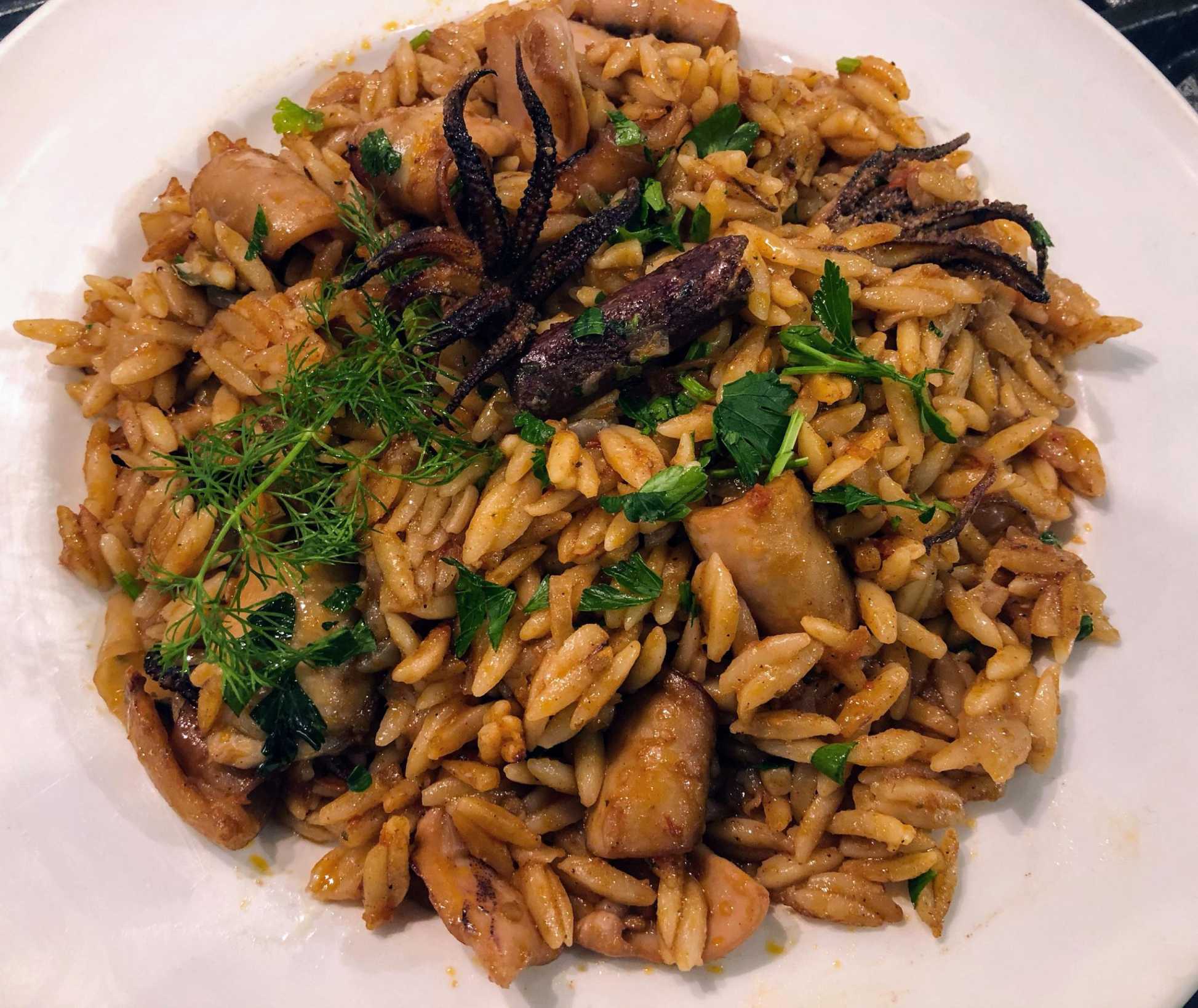

Kalamarakia Yiovetsi / Baked Rice Pasta with Baby Squid
Molluscs, (meaning soft-bodied), such as squid, cuttlefish, octopus, mussels, lobster, crabs, crayfish, shrimps, prawns, clams, oysters, scallops and snails, are important foods during this time of Greek Orthodox Lent.
I was inspired to make this comforting, classic one-pot dish by two dishes, one made with octopus and rice, which I had at a little local works café in Larnaca, Cyprus, and the other made with small macaroni and cuttlefish that I sampled at a local tavern in Corfu town.
Every time I cook this meal, it takes me back to Cyprus and Greece and my house is filled with beautiful aromas.
Ingredients (serves 4):
50ml olive oil
500g small squid, cleaned, washed and drained
350g orzo (Κριθαράκι)
1 small onion, chopped
3 garlic cloves, chopped
1 shot of Ouzo or Tsipouros (Raki)
4 fresh ripe tomatoes, blended
1 tbsp tomato puree
3 allspice (μπαχάρι) corns
1 cinnamon stick
1-2 bay leaves
½ tsp oregano
½ tsp ground cinnamon
½ tsp chilli flakes
1-2 tsp sugar
Salt and freshly ground black pepper
Juice of ½ lemon
700ml (1 ¼ pint) hot water
1 vegetable stock cube
Juice ½ lemon
Chopped parsley
Method:
Open out the clean squid, scrape skin with the back of a knife and cut into four. Leave the tentacles whole, but cut them just below the eyes and remove the pick.
Warm olive oil in a medium heavy saucepan and sauté the onion and garlic for a few minutes. Mix the squid and stir fry for 4-5 minutes, then pour the alcohol and allow to evaporate.
Add allspice, cinnamon stick, oregano, bay leaves, chilli flakes, blended tomatoes, tomato puree and cook for 5 minutes. Pour the hot water with the vegetable stock cube, mix and simmer for 20 minutes or until squid is nearly tender.
Preheat the oven to 180c / gas mark 4. Mix the orzo (Κριθαράκι) and place in an earthenware or ovenproof dish and add the lemon juice. Place in a hot oven and bake uncovered for about 20 minutes, mixing once or twice to avoid sticking and until most of the liquid has been absorbed by the orzo, but still has some sauce; if too dry, add more hot water.
Remove from the oven (it will still absorb its liquid as it rests), sprinkle with chopped parsley and serve in warm bowls.
Shellfish
Shellfish allergies are among the most common in the world, with countries around the globe implementing regulatory guidelines for their labelling. Interestingly, it’s an allergen that often manifests itself in the food-allergic person’s adulthood, with 60% of those allergic experiencing their first reaction after the age of 18.
There are a lot of creatures that fall under the umbrella of “shellfish,” however, and a person might find themselves allergic to some but not others. Let’s look at how this category is divided.
Crustacea
The crustaceans group includes commonly eaten seafood like shrimp, crab and lobster. Also included: prawns, crayfish, krill and barnacles.
Though their name, crustaceans, refers to their hard crusts or shells, not all creatures with shells and exoskeletons fit into this category. True crustaceans usually have segmented, split limbs or appendages and develop from larvae.
Molluscs
Molluscs are soft-bodied invertebrates that exist within hard calcium carbonate shells. There are around 100,000 species in this category, including snails and slugs. The ones we eat, like in the crustacea category, come from the sea: clams, mussels, scallops, oysters and cockles, among others. Technically, squids and octopi are cephalopod molluscs, though they don’t have shells.
You can be allergic to crustaceans but not molluscs, and you can be allergic to molluscs but not crustaceans. You might only react to certain kinds of crustaceans and molluscs, or you can be allergic to species from both types of shellfish – about 15% of shellfish-allergic people are. The uniting, allergy-causing factor here is the protein tropomyosin, which is used in muscle movement.
Interestingly, there might be a connection to dust allergies and shellfish allergies. Dust mites are like crabs in that they are arthropods and have tropomyosin proteins. Some people with noted crustacea allergies also develop dust allergies and vice versa.