
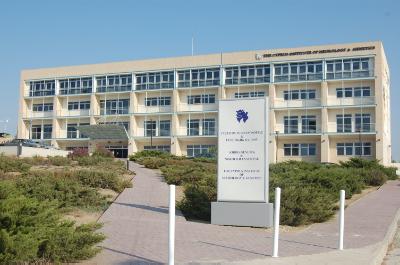

A new discovery by scientists at the Institute of Neurology and Genetics (CING) in Nicosia may open the way for gene therapy to benefit patients with inherited neuropathy, also known as Charcot-Marie-Tooth Disease, according to a press release issued on Tuesday.
Following 15 years of intense research to understand the cause and to develop experimental models for hereditary neuropathies such as Charcot-Marie-Tooth disease, Prof. Kleopas A. Kleopa, head of the Neuroscience Laboratory, along with a team of researchers, announced a successful gene delivery method targeting peripheral nerves to reverse the findings of neuropathy.
The project has been funded by the Muscular Dystrophy Association of USA, the Cyprus Research Promotion Foundation, and Telethon.
The results have been recently published in the Annals of Neurology, one of the most prestigious international scientific journals in the field of neurology. In this paper, the CING scientists used a genetically modified viral vector produced in the Department of Molecular Virology at CING that is safe for therapeutic purpose as a gene carrier. The Neuroscience lab scientists showed that this vector when delivered directly to the nerve was able to provide stable expression of the missing healthy gene, GJB1/connexin32, and to reverse the progressive nerve damage. Mutations of this gene cause one of the commonest hereditary neuropathies. The protein produced by the vector was still detectable several months after a single injection.
Gene delivery resulted in more than 50% improvement in the pathology of the nerves in this model, while the injection procedure of the virus did not cause any local or systemic inflammation confirming that the engineered virus was safe and effective.
The team of the Neuroscience Lab has already further developed this method to deliver the gene by lumbar puncture injections, and has shown similar efficacy and safety. This new approach will be much easier to use in future clinical applications of the treatment as it offers non-invasive easier access to multiple peripheral nerves. Thus, it is the first time that patients with hereditary neuropathies can hope for a cure, as the clinical application of this method is feasible.
These research findings were presented at the European Academy of Neurology Meeting in Berlin, in June 2015. The work was highly praised and included in the highlights session of the Meeting. For this presentation, Prof. Kleopa received the 2015 Investigator Award of the European Academy of Neurology in the field of neuropathies.