
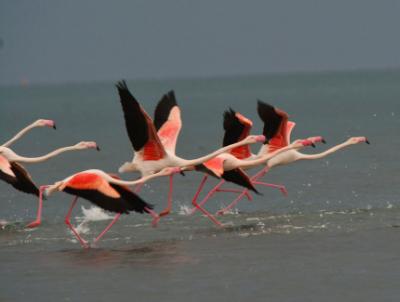

Flamingos, black-headed gulls and teal are among over 61 different species of birds who found refuge this winter in Cyprus` wetlands in their thousands.
A BirdLife Cyprus press release, issued on Monday to mark World Wetlands Day, reports a total “count of over 11,000 water birds of 61 different species, including impressive numbers of Flamingos (over 3,000 counted), Teal (over 2,000 counted) and Black-headed gulls (over 1,300 counted)”.
The mid-winter count is organized across the globe by Wetlands International.
BirdLife Cyprus organized counts at 52 sites between 16th and 18th January 2015 to contribute Cyprus data to the world effort to keep tabs on the health of populations of wetland birds, the press release adds.
It is noted that “in winter, Cyprus is an important winter refuge for many wetland species from further north, offering great natural sites like the Larnaca and Akrotiri salt lakes, the Famagusta wetlands and Oroklini Lake and also good man-made sites such as the dams at Kouklia and Akhna”.
According to BirdLife Cyprus “the ‘top’ sites in January 2015 proved to be Larnaca Salt Lake, which held the most waterbirds (over 3,700 counted) and Oroklini Lake, which held the greatest variety of waterbird species, with 19 recorded.”
In Cyprus, the NGO continues, “the inclusion of key sites within the EU Natura 2000 network of protected sites represents a big step forward for wetlands, but it is only through sympathetic management that these wildlife havens can be maintained into the future and reach their true potential.”
“The example of Oroklini Lake, a key Natura 2000 wetland now ‘bursting’ with both birds and human visitors, shows just how much can be achieved in a relatively short time, provided there is active good management”, said Director of BirdLife Cyprus Clairie Papazoglou.
Oroklini Lake has been the subject of a highly successful 3-year management project funded under the EU LIFE instrument – a project that has involved BirdLife Cyprus, relevant government departments and the local Oroklini community, the press release continues.
“Site protection and water management actions and the creation of visitor facilities have transformed Oroklini from one of the most threatened to one of the best protected and most visited wetlands in Cyprus,”, it concludes.