
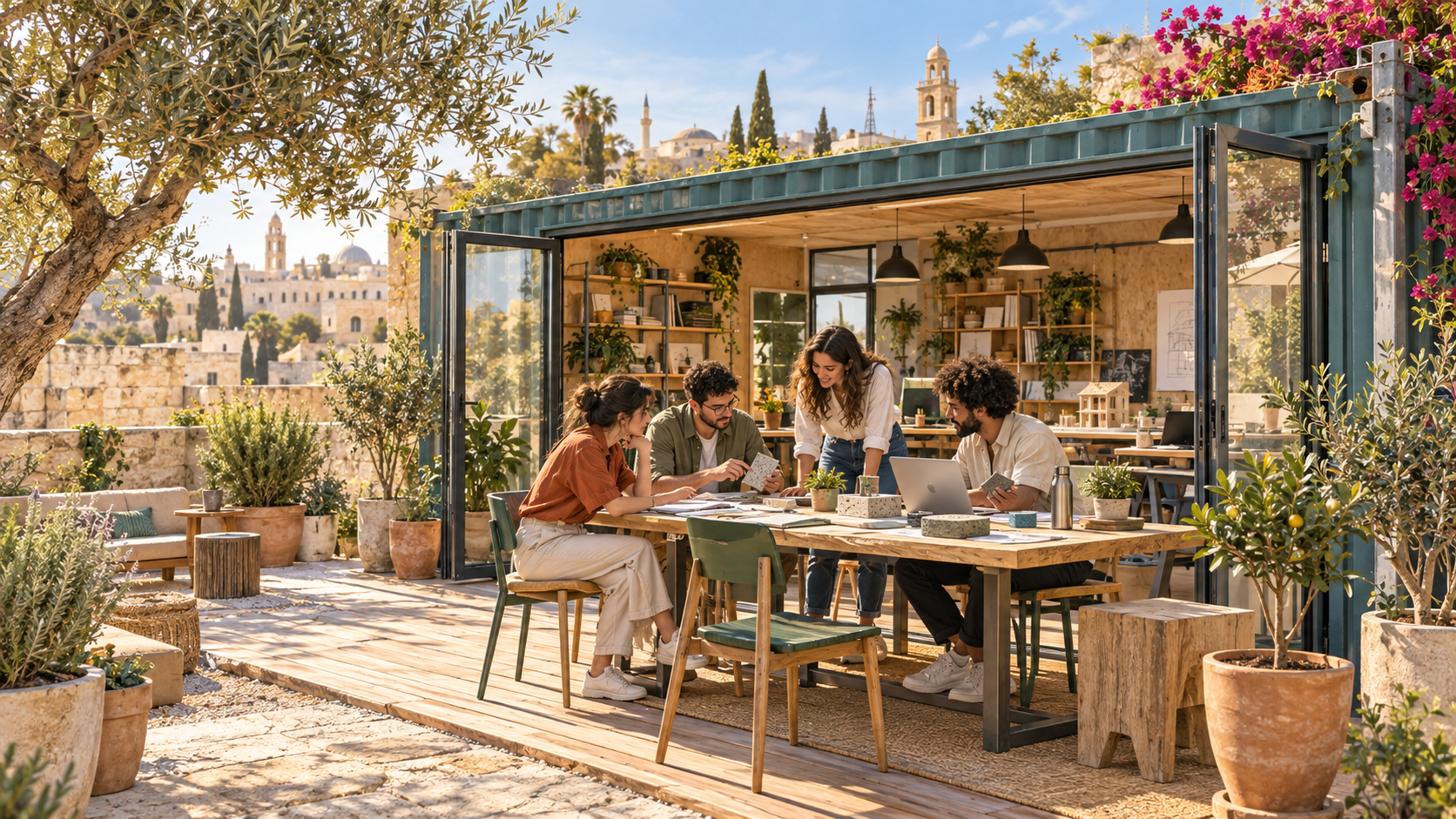

An innovation hub bringing together young people, entrepreneurs and creatives from both communities in Cyprus has won recognition at the 2026 New European Bauhaus Awards in Brussels.
The Social Impact Generator Hub, based in a converted military container in Nicosia’s United Nations buffer zone, supports collaboration on social and environmental challenges.
Speaking to the Cyprus News Agency, Steve Stavrou and Berfu Ilgililer said the award recognised the work of the hub and the communities involved.
Stavrou said the team was “happy” and “proud” of the achievement, having also reached the final the previous year in a different category.
The initiative began in 2016, when Stavrou and co-founder Burak Duluay launched an online platform connecting entrepreneurs from Cyprus’ communities. It featured a start-up map, job listings and events designed to strengthen links across the island’s entrepreneurial ecosystem.
As events in the buffer zone attracted more participants, the team sought a permanent base. Working with the Civil Affairs component of the UN Peacekeeping Force in Cyprus, it converted a container near Ledra Palace into a shared innovation space.
The hub opened in 2021 and has since hosted hackathons, mentoring, business development programmes and other events. The initiative describes it as the world’s first innovation hub operating in a buffer zone.
“It is impressive what we can do when we create things together,” Stavrou told CNA.
He said shared challenges, including climate change, health and wider social issues, affect communities across Cyprus and underline the importance of cooperation.
Ilgililer said the aim was to encourage more young people from across the island to discover the space and explore opportunities to develop ideas together.
Recent work has focused particularly on the values of the New European Bauhaus and on helping people in the cultural and creative sectors turn their ideas into viable projects.
Through European, international and regional programmes, the hub gives young entrepreneurs access to training, resources, networks and, in some cases, funding.
Supported ventures include projects developing sustainable materials and finding new uses for waste, such as turning discarded plastic into furniture and materials for the built environment.
Ilgililer said some participants had met through the hub’s programmes and continued working together afterwards, particularly on sustainability and the reuse of materials.
A new venture development programme is planned for late 2026 or early 2027. Open to teams from across Cyprus, it will offer training and small grants, with participants working alongside one another for three to five months.
Source: Cyprus News Agency (CNA)