

Colder weather, umbrella season and pocket tissues at hand? This could only mean one thing… winter is here!
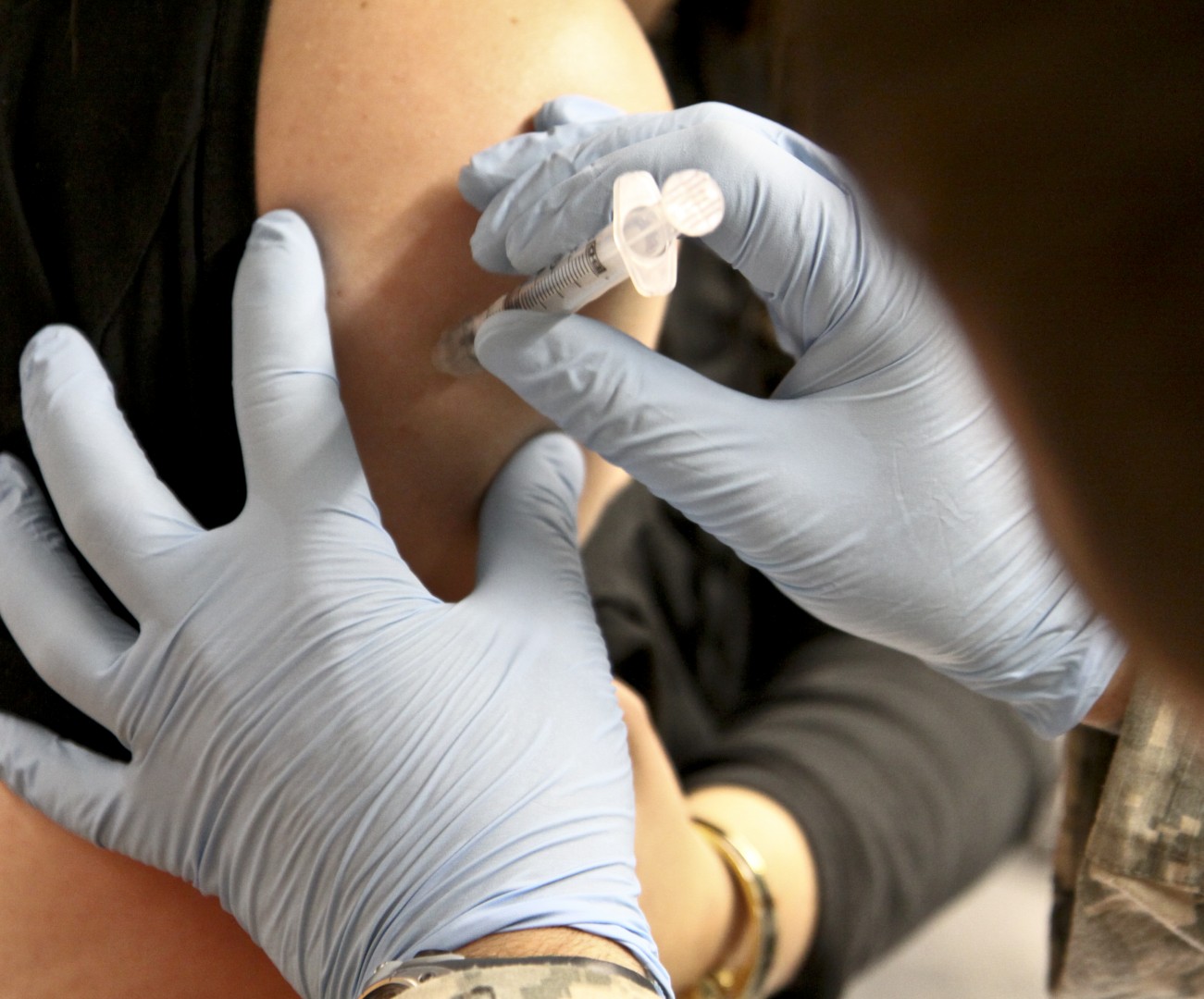
It is that time of year where we try to avoid the obvious, which is catching the terrifying flu. However, each year the professionals work together to formulate a vaccination to help prevent such issues. The government-funded flu vaccination is set out to help protect against unpredictable viruses, circulating every winter season.
If you are pregnant, over the age of 65, a child or adult with a long-term health issue, or even just have a weakened immune system, you are more likely to be targeted by the flu, more unpleasantly than anyone else.
As if a runny nose, sore throat and a fever isn’t enough to deal with, individuals in the categories above could be in danger of developing a more serious case of the flu, pneumonia. Therefore, the flu vaccine is promoted and offered free, to help kickback against the flu.
One may ask how will this vaccination benefit me? The vaccination is the most well known protection available to us to prevent the flu entering our systems and affecting us this winter.
The flu vaccine helps your body’s immune system to produce antibodies, which then attack the flu virus. After you have had the vaccine, if you are exposed to such viruses, your immune system will instantly recognise the virus, prevent protein (antibodies), and then these will begin to fight off the flu.
As with most health-related remedies, there are opposing opinions. For most, the annual flu vaccine for instance works as it should, then for others, the vaccine has its destructive touch.
Pregnant women for instance automatically fall into the ‘at-risk’ group of individuals who should receive the vaccination. Of course, for many, the obvious is that the ‘flu-jab’ will protect both the mother and the baby. On the other hand, some people may be more cautious as to what they are injecting into their bodies before they give birth.
It is not to say that the flu vaccine is positive in everyone’s opinion but it has been said that it does not contain anything harmful to the mother or the baby. In fact, women who have the vaccination could potentially protect their babies within the first few months after they are born.
However, only one negative attribute of the jab is the level of protection it has in some cases. This may vary between person to person. This means you may still catch a ‘flu-like’ illness, though it is said to be more mild than the ordinary flu, before the vaccination. This possible minor effect remains the same throughout all the ‘in-risk’ groups, not just in pregnant women.
It is a known fact and a part of life that people will worry about medicines and the chemicals that enter our bodies. For instance, there has been a lot of controversy concerning not only the flu-jab, but with children having their Measles Mumps and Rubella (MMR) vaccination; there has been an on-going debate about whether the MMR jab may potentially lead to the Autism.
The first part of the MMR jab should be given to babies, followed by the second part when the child is between three-five years of age, before starting school.
Its aim is to protect against three particular illnesses: Measles, Mumps and Rubella. These illnesses are highly fatal, however many people argue that the vaccination which helps prevent it, is not good enough in the long run for our children.
According to an article on the Autism Speaks: “the measles-mumps-rubella (MMR) vaccine did not increase risk for autism spectrum disorder (ASD). This proved true even among children already considered at high risk for the disorder.”
The claims followed from a published study by Dr Andrew Wakefield in 1988, claiming that there is a link between autism and the MMR jab. Since then, his work has been disbelieved after further studies have been published, showing no link to autism.
If you are concerned and in need of more information and advice concerning the annual flu vaccination or MMR jab, contact your local GP.
Marianna Despina Charalambous