
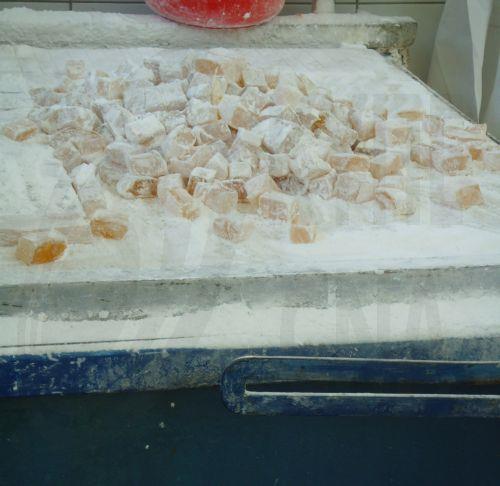

Four Cypriot products, Zivania, Loukoumi Geroskipou, Agros rose preserve and Ouzo – the latter protected as both a Cypriot and Greek product – are among the emblematic European products protected under the EU–Australia trade agreement.
In total, the agreement provides protection for 165 agri-food products and 231 spirit drinks from the EU in the Australian market, including the four Cypriot products.
However, protection is not uniform across all products, as the agreement adopts different models depending on the specific characteristics of the Australian market. For certain products, such as Ouzo (after seven years) and Pecorino Romano (after five years), full protection will apply following a short transitional period, during which Australian producers will have to cease using the respective names.
In other cases, such as Feta and French Gruyère, a system of limited protection – known as the “grandfathering clause”, also used in the EU–Canada (CETA) agreement is applied. This allows producers who had already been using the term for at least five years prior to the agreement to continue doing so, provided they do not imply European origin and comply with strict labelling requirements.
The case of Italian Prosecco is also notable, as a compromise has been reached. Τhe name is protected as a geographical indication, while its use for the grape variety remains permitted in Australia. However, exports of Australian Prosecco to third countries will cease after a ten-year transitional period.
Similarly, in the cheese sector, the agreement clearly distinguishes the protected name Parmigiano Reggiano from the generic term “parmesan”, which may continue to be used in the Australian market, but without references to Italy, including symbols or stylistic elements.
According to EU officials who briefed the press, the EU–Australia trade agreement strikes a balance between the need to protect Europe’s gastronomic heritage and the realities of a market where certain names and practices have been established for decades, partly due to the large population of European migrants in Australia.
As with similar trade agreements, the final outcome combines different layers of protection and tools, those of full protection, transitional periods, and grandfathering rights, allowing the European Union to safeguard the identity of its products without abruptly disrupting the Australian market and domestic production.
