

Cyprus Ministers have reiterated the Greek Cypriot side`s determination and commitment in achieving a just and viable settlement of the Cyprus problem, that will allow the Greek Cypriots and Turkish Cypriots to peacefully co-exist on the long-divided island.
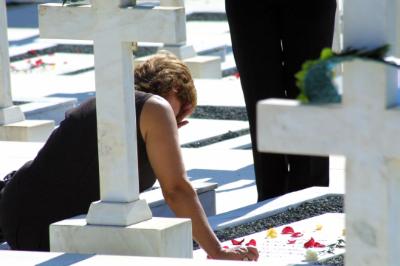
Speaking during memorial services held on Sunday in the government-controlled areas of Cyprus, on the occasion of the 41st anniversary of the invasion of the island by Turkish troops, which still occupy 37% of its territory, the ministers also underlined the importance of the EU`s active involvement in UN-led efforts to reunify Cyprus, as well as the fact that the key to a solution lies in Ankara.
Interior Minister Socratis Hasikos said that Cyprus President Nicos Anastasiades is making tireless efforts for an honest and just settlement of the Cyprus problem, on the basis of UN resolutions and the international and European law, which will safeguard the human rights of all Cypriots. He stressed that “we can unite Cyprus and its people, in the framework of a bizonal, bicommunal federation as long as Turkey does not insist on positions which jeopardize the unity of the state and the people.”
Hasikos also stressed that the settlement of the Cyprus problem must respect Cyprus` EU membership and that the EU constitutes the best safeguard and guarantee for the human rights and fundamental freedoms of all Cypriots. He described the selection of Mustafa Akinci at the leadership of the Turkish Cypriot community as a positive development, noting however that the key for a settlement is in Ankara.
Finance Minister Haris Georgiades stressed the need to acknowledge the mistakes of the past, learn from them and not repeat them. Referring to the economy, he noted the need to make steps that restore and boost the foundations of the economy and social cohesion, safeguard the state`s entity and do not lead to marginalization and isolation.
Georgiades stressed that the Cyprus problem and the economy must be both addressed and dealt with in a responsible way, adding that “it is only in this way that we will be able to take difficult, bold and right decisions and address the difficulties and challenges lying ahead.”
Education and Culture Minister Costas Kadis said that “we work hard to achieve a functional and viable settlement of the Cyprus problem,” noting that “we hope that through the new peace negotiating process which began recently, in a more favourable climate and with the active involvement of the EU, we will reach a settlement that will abide by the acquis communautaire, be based on the international law principles and safeguard the human rights and freedoms of all the legitimate citizens of our country.”
A settlement, he added, that will give the potential to the citizens to co-exist peacefully, but will also ensure that Greek Cypriots will be able to survive to their forefathers` land. He added that the people must live in freedom and feel secure.
Presidential Commissioner for Humanitarian Issues and Overseas Cypriots Fotis Fotiou said that the Greek Cypriot side has the good will to make the ongoing talks succeed, noting at the same time that it is up to the other side, and especially Turkey, to contribute in the same substantive and determined way, taking decisions that will help both Turkish Cypriots and Greek Cypriots to pass through to a new era, with better prospects and hope for the future.
He said that the aim is to achieve a functional and viable settlement, that will safeguard the reunification of Cyprus, will terminate the faits accomplis of the Turkish invasion, ensure the right of the people to return to their properties and the implementation of fundamental rights and other human rights.
Turkish troops invaded Cyprus on 20 July 1974, following a military coup that toppled the legal government of the Republic which was engineered with the Greek military junta. In a two-phase invasion and despite repeated calls by the UN Security Council, Turkey occupied 37% of the sovereign territory of the Republic.
UN backed talks have resumed since May, between President Anastasiades and Turkish Cypriot leader Mustafa Akinci, aiming to reunify the island under a federal roof.