
Lewis Gilbert
Lewis Gilbert CBE (1920 – 2018) was an English film director, producer and screenwriter who directed more than 40 films during six decades; among them such varied titles as Reach for the Sky, Sink the Bismarck!, Alfie, Educating Rita and Shirley Valentine, as well as three James Bond films: You Only Live Twice, The Spy Who Loved Me and Moonraker.
Having worked in show business since the age of five, Gilbert knew the value and appeal of pure entertainment. This connection with the appetites of the audience proved to be one of his most important assets over a long and varied career. It certainly endeared him to producers – the Bond executive Cubby Broccoli was so convinced of Gilbert’s suitability that he called the director back the day after he turned down the job of directing the fifth film in the Bond series, You Only Live Twice. Broccoli won him over by appealing to his sense of humour, saying: “You are making a mistake. You have the world’s biggest audience and it’s waiting to see what kind of a hash you make of it.”
Fortunately he didn’t make a hash of it – despite outgoing 007 Sean Connery’s mounting discontent with the role this is one of the most stylishly over-the-top and entertaining of the Connery Bonds. The title became eerily prophetic when Gilbert, along with Broccoli and other crew members, narrowly escaped death during pre-production. They were booked to fly out of Japan on a BOAC flight to Hong Kong and London, which they missed when they were invited at the last minute to a ninja display. The flight left as planned, but disintegrated 25 minutes after take-off, killing everyone on board.
In a career that was remarkable for its genre-crossing range, he also directed Kenneth More in the classic war film Reach for the Sky (1956), turned Michael Caine into a star when he brought the ultimate swinging Sixties antihero Alfie (1966) to the big screen and directed Julie Walters and Pauline Collins in Oscar-nominated performances in Educating Rita (1983) and Shirley Valentine (1989) respectively.
Lewis Gilbert was born in Hackney, east London. His parents were second-generation vaudeville entertainers and from an early age, Gilbert would accompany them to the theatre, watching from the wings. He first joined them onstage as a five-year-old and soon became part of their act. When two years later his father died of tuberculosis, Gilbert was soon helping to support the family, first as a child extra in silent films, then in more prominent roles. Perhaps to fill the void left by his father, he became obsessed with football. By the age of ten he would wait for Arsenal players to emerge from their ground every Saturday so that he could carry their bags the 200 yards to the Tube station.
A pivotal career moment came when aged 17, Gilbert landed a role in The Divorce of Lady X (1938), which was directed by Alexander Korda. Impressed by Gilbert’s performance the director suggested that he should go to Rada. Gilbert told him of his directing ambitions, which had more or less crystallised at that very moment. “I said to Korda that I didn’t want to be an actor,” Gilbert recalled, “I wanted to be a director. Looking back it seems like chutzpah, but he laughed. He thought it was very funny.” Korda set up an apprenticeship and later gave him his first job as a runner.
While still in his teens, he worked as a third assistant to Alfred Hitchcock on Jamaica Inn. He learnt a lot from Hitchcock about the handling of actors.
The Second World War interrupted Gilbert’s nascent career. He enlisted in the RAF and was assigned a post with the RAF Film Unit, then subsequently with the US Air Corps Film Unit, where he assisted the Hollywood director William Keighley.
Another fortuitous encounter led to a job at Gaumont British Instructional, based at Lime Grove studios, where Gilbert caused a stir by casting the comic actor Charles Hawtrey in a documentary about prefab houses. The film was a success with the client as well as with audiences.
It was at Lime Grove studios – specifically in a lift – that Gilbert met the woman who was to become his wife. Hylda Tafler, an actress and model, became not only his spouse, but also his confidante and trusted adviser for more than 50 years until her death in 2005. She had a son, John, by a previous marriage, whom Gilbert adopted. They had a second child together, Stephen, who was born prematurely at the beginning of the shoot of Gilbert’s most controversial film, the X-rated exploitation picture Cosh Boy (1953).
Both boys ended up working alongside their father on various film projects. John, who worked in the music industry, produced the soundtrack of Educating Rita and was the second unit director on Friends (1971). Stephen wrote a song for the score of Educating Rita and was the second-unit director on Shirley Valentine.
Gilbert directed several more documentaries before moving into fiction with The Little Ballerina (1948), which was notable for a performance of Les Sylphides by Margot Fonteyn. After a run of low-budget dramas, Gilbert was established in the commercial mainstream with Albert RN (1953). During the fifties, Gilbert made war films his speciality. The best known and most successful was Reach For The Sky, in which More, who was one of the biggest British stars of the period, played the legless Battle of Britain pilot Douglas Bader.
After this, his stock had risen to such an extent that John Davis, the notoriously rude head of Rank, asked to see him to discuss Carve Her Name With Pride, a film that had a star – Virginia McKenna – but as yet no director.
Another film from that period was Sink the Bismarck! (1960), again starring More and notable for sea battles fought in the Pinewood tank. Gilbert was also invited to Korda’s house and asked to direct The Admirable Crichton.
Gilbert’s career changed direction in 1966 after Hylda saw the stage play Alfie and urged her husband to make it into a film. As an East End boy, the subject matter struck a chord with Gilbert, and, it turned out, with the audience. Terence Stamp was favoured for the title character, but having played Alfie on stage, he declined to reprise the role. The suggestion to cast Caine in the role that would secure his star status came from Gilbert’s son John.
Gilbert was impressed with Caine’s performance in The Ipcress File and he told Paramount that “there’s only one person who can play this part, and that’s Michael Caine”. Their response was: “Michael who? We’ve never heard of him.” Gilbert replied: “You will, trust me.”
One of Gilbert’s innovations was to have the womaniser Alfie frequently breaking the fourth wall by speaking directly to the camera narrating and justifying his (usually disreputable) actions. The film won the Jury Special Prize at Cannes, earned five Oscar nominations and gained its director the option of bigger projects, the first of which was You Only Live Twice.
This was followed by several disappointments. Firstly there was a costly flop, The Adventurers (1970), an adaptation of a Harold Robbins novel, which was filmed in Colombia and for which he needed so many extras – 12,000 – for a battle scene that he had, he said, practically the entire Colombian army on his payroll. Then Gilbert missed out on the job of directing Lionel Bart’s musical Oliver!, something he had very much wanted to do.
Gilbert returned to the Bond stable with The Spy Who Loved Me and Moonraker in quick succession.
Perhaps the two most notable films of his late career were adaptations of plays by Willy Russell. Educating Rita (1983), again suggested by his wife, was about the often prickly relationship between a young Liverpool hairdresser trying to better herself and her Open University tutor. It picked up the three Baftas – best film (Gilbert), best actor (Michael Caine) and best actress (Julie Walters).
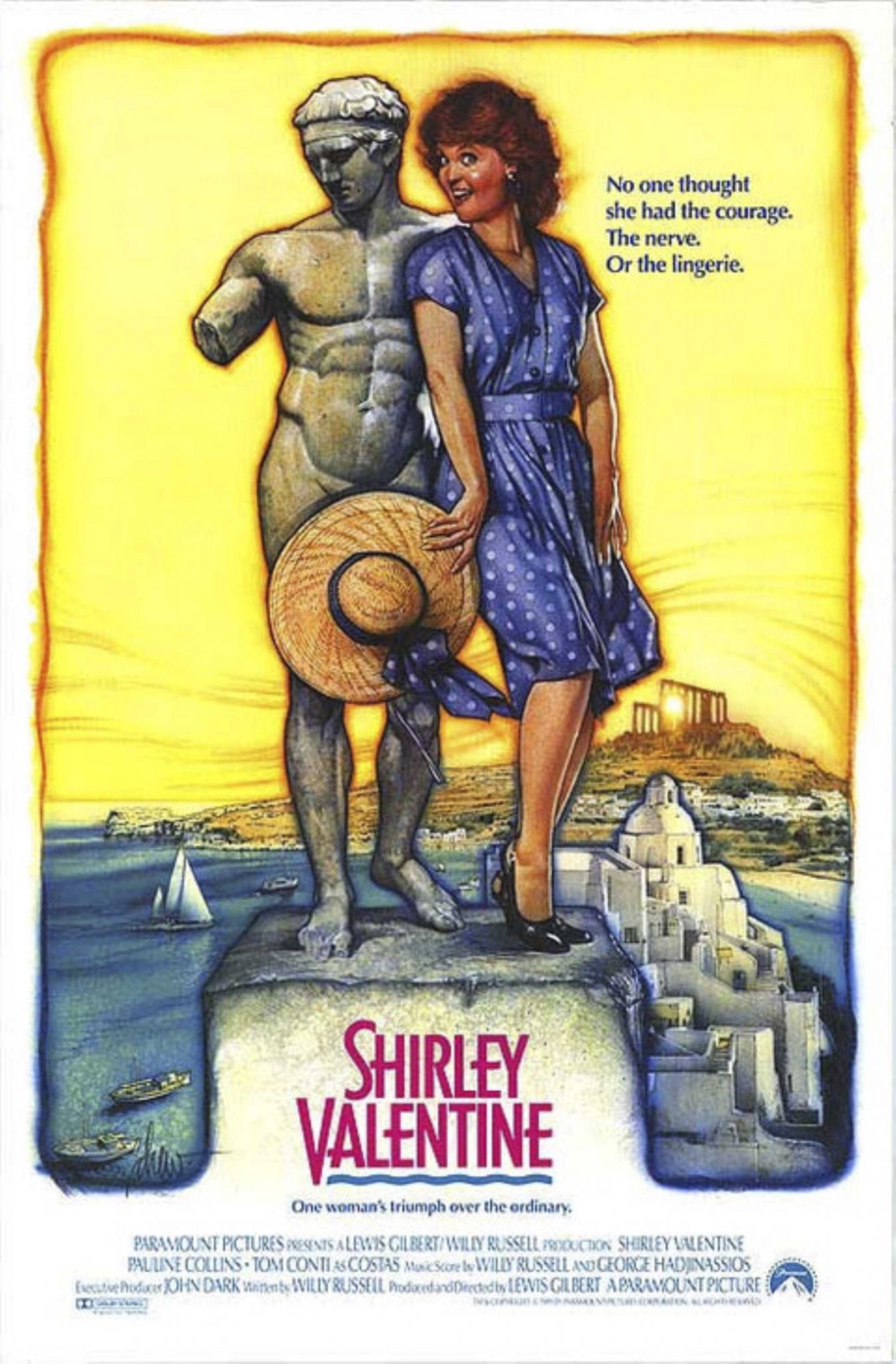
Pauline Collins also won a Bafta for her performance in Shirley Valentine, at a ceremony that held a surprise for Gilbert. Exhausted, he had suggested to Hylda that they slip away. Princess Anne was on stage, beginning to announce the recipient of the Michael Balcon Lifetime Achievement Award. Gilbert whispered to his wife: “Quick, some old buffer is going to get up and drone on forever. If we don’t shift, we’ll be here until three in the morning.”
A moment later it dawned on Gilbert that Princess Anne was talking about him. During the montage of clips, he confessed that he was about to make an escape. The Princess replied: “You wouldn’t have got far, we have people on the doors for that.” A few months later Princess Anne presented him with another award, a CBE.
All My Flashbacks: The Autobiography Of Lewis Gilbert – Extract
In his autobiography, Gilbert reveals how he had to coax a reluctant Bond beauty to deliver her lines.
Of the three Bond pictures I made, I think The Spy Who Loved Me was the best. Roger Moore by then had played him twice.
There’s a tradition of trying to find new faces to play the girls in Bond films. While we were in the middle of searching, I was approached by one of the heads of United Artists UK who had a photo of his girlfriend, a beautiful but inexperienced actress called Barbara Bach.
Perhaps we could find a small part for her, he wondered. After Cubby and I had looked at the photo, met Barbara and saw a test she had done for film director Tony Richardson, we began to think she could play the female lead, Anya. In terms of acting, it wasn’t such a huge stretch.
In the movie, the Soviet Union has assigned Anya as a special operative to help Bond kill Stromberg and obtain the microchip on which is printed Stromberg’s programme to destroy the world. What the Soviets don’t know is that she is playing a double role.
Because Bond has killed her boyfriend, she plans to kill Bond as well as keeping the microchip for her country.
Cubby and I had taken a chance on Barbara Bach. We knew that she was inexperienced, but that was a chance we were prepared to take. Other people’s reactions we had not considered.
First of all, there was her boyfriend, the chap at United Artists. He was nervous. “I only asked if you could give her a small part,” he said. “I never meant to push her into this.”
“It’s all right,” I said. “It’s my decision and Cubby’s.”
Then there were the actors. What would their reaction be? What was I going to do, then, if I had to keep stopping to talk to Barbara? The best thing, I thought, was to enlist Roger’s aid. I would say: “I need you to be kind and understand.”
This worked pretty well until Barbara, more nervous than usual, simply couldn’t take in what I was saying. We did 15, maybe 20 takes, and Roger was becoming visibly fed up.
Barbara burst into tears. “No, I can’t do it. I’ll never get it, ” she said.
I took her to one side. “It looks like I’m bullying you, I know,” I said, “but really, I admire you. Taking on a part like this took courage.
“OK, it’s making you unhappy right now, but when you see the film at a big premiere, you’ll thank me and say, ‘Yes, I was much better than I expected’.
Don’t think about it – just do it. The number of takes doesn’t matter. Keep going and you’ll get it.” And keep going she did and she got it.
Bond girls are not noted, on the whole, for giving good performances and so tend not to get good reviews. Barbara did give a good performance and did get good reviews.
When I’d finished the film I was quite pleased with it because it contained certain elements not seen in a Bond film before. The Soviet Anya playing off the English Bond with Anya winning one round, Bond fighting back and winning the next, made for a good structure. It lent itself to both comedy and romance. Although you could tell the two were physically attracted to each other, at the same time the two were scoring off each other.
United Artists were so delighted with the film they wanted the next Bond picture right away.
Top 10 Films
1: Reach for the Sky (1956)
Biopic of RAF Group Captain Douglas Bader who, after having lost both legs, flew a British fighter plane during WWII.
2: The Admirable Crichton (1957)
In 1905, Lord Henry Loam and his family and servants are shipwrecked on a deserted island where the survival of the fittest renders the rigid class system irrelevant.
3. Sink the Bismarck! (1960)
The World War II story of the Royal Navy’s effort to defeat Nazi Germany’s most powerful warship.
4. Alfie (1966)
An unrepentant ladies’ man gradually begins to understand the consequences of his lifestyle.
5. You Only Live Twice (1967)
Bond and the Japanese Secret Service must find and stop the true culprit of a series of space hijackings, before war is provoked between Russia and the United States.
6. The Spy Who Loved Me (1977)
Bond investigates the hijacking of British and Russian submarines carrying nuclear warheads, with the help of a K.G.B. agent whose lover he killed.
7. Moonraker (1979)
Bond investigates the mid-air theft of a space shuttle, and discovers a plot to commit global genocide.
8. Educating Rita (1983)
An alcoholic professor has been hired by a working-class girl for her higher education.
9. Shirley Valentine (1989)
Shirley is a 42-year-old bored Liverpudlian housewife who takes a holiday trip to Greece and meets a local man who bolsters her self-confidence. She evolves and transforms to the point that her husband doesn’t even recognise her.
10. Stepping Out (1991)
A has-been Broadway performer gives tap lessons to a group of misfits who, through their dance classes, bond and realise what they can achieve.
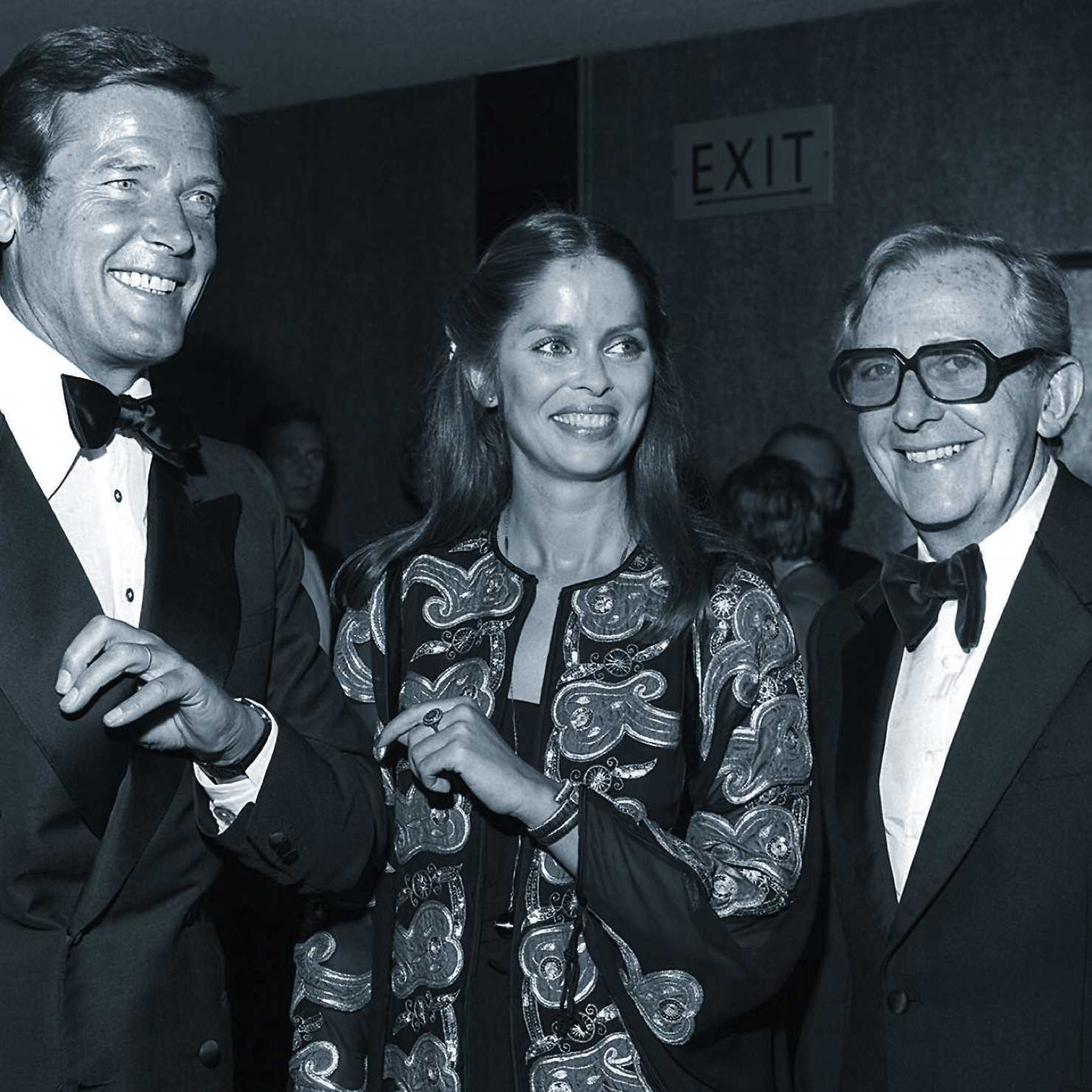
Photo: Roger Moore, Barbara Bach and Lewis Gilbert
Source: thetimes.co.uk en.wikipedia.co.uk imdb.com