
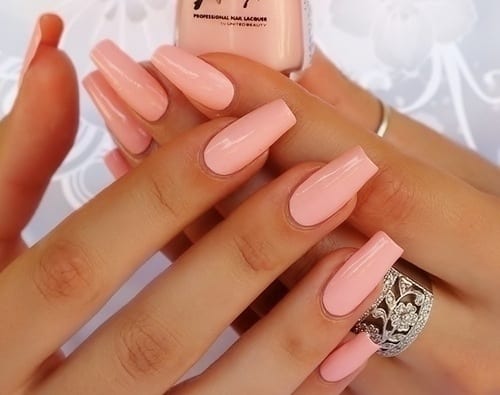

The Nail industry has been big for years. It is second to having hair done and followed by make-up. Even those who don’t often like to wear much make-up, still like to get their nails done. It was, and still is popular to get nails manicured whilst actually getting hair done at the hairdressing salon. In the past, ladies would often sit under hood hairdryers with rollers in their hair and a manicurist would sit by the side doing their nails. Things progressed to desk tables within salons as blowdrying the hair became more popular.
Manicured, well kept hands looked great, but didn’t reinforce the natural nail for hard wearing strength and durability. Although nail polish helped a little, it needed some nail technology for artificial structure to give nails length and strength. Many would often use stick-on nails with nail glue almost as strong as superglue that would strip the natural nail, dehydrating its natural state and weakening the nail. These nails were not really meant to be kept on longer than a couple of days, but many people would do so against manufacturer’s instructions.
Acrylic nails came into action and took over, first with artificial nail tips and then followed by an acrylic overlay. The acrylic overlay was applied by using a brush, mixing an acrylic liquid and powder and then applying quickly over a nail. This would dry within minutes to form a rock solid structure.
Sculptured acrylics followed by using a nail form on the fingertip under the nail to sculpt nail tips for those that wanted length added without a tip glued on and filed on top to blend in. This was actually much better as it moulded to the natural nail shape of the client’s individual nails was far better as it did not allow water to seep through any gaps which could cause problems. No glue or filing to blend was needed for this but it was more time consuming and therefore more costly. They were also solid and if bashed about, the client would feel the pain with bruising along with the odd accident sometimes forcing the structure off with damage.
The acrylic method is still one of the most popular methods of reinforcements used with the tips. Used with caution, it is one of the best methods for the right client. Without any flexibility, it may not be suitable for some types of work situations that can cause pressure on the fingertips where accidents can occur. Also on application, it is essential that the nail technician does not file or sand down the natural nail excessively with a machine file as this will cause thinning of the natural nail and weaken the nail. It should be done with by hand with a grit padded file, just enough to allow the overlay structure to adhere.
Machines are quick but should really only be used for filing the actual acrylic structure down at the end and not used on the natural nail at all. With a good technician and use of a quality product, there should not be a problem on the natural nail. Regular maintenance will be necessary between 2-3 weeks depending on the nail growth rate of the client as the artificial structure moves down with natural nail growth away from the cuticle area. If left too long in time between maintenance, the client may find discomfort as the nails may catch in the hair, cause snagging and other problems.
The advantages of artificial structures are that of strength. As the structure is not with oils like that of a natural nail, nail polish will absorb into structure and last longer than that of ordinary nail polish.
So if you want strength and durability for your nails, do your research and look for a good nail technician.
Love and Sparkles
Samsara x