

Excavations at the Agora of ancient city Nea Paphos, the capital of Cyprus in the Hellenistic and Roman periods unveiled new finds, Department of Antiquities said on Tuesday.
The Department announced the conclusion of the third season of excavations of the Department of Classical Archaeology of the Institute of Archaeology, Jagiellonian University (JU) in Kraków, Poland, conducted between August 12th and September 20th.
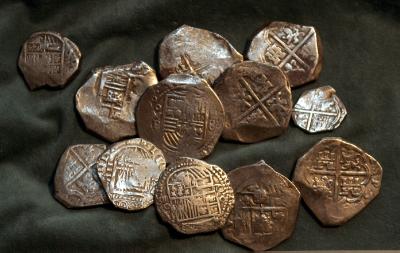
The Department said that the campaign aimed was not only to excavate and provisionally elaborate the uncovered material, but also to make a preservation work performed by member of the Institute’s staff. The latter consisted of cleaning and conservation of metal artefacts discovered during the previous seasons, and kept in the Paphos District Museum. Of particular importance was the cleaning of coins, which – together with pottery – are key elements for the chronology of uncovered architecture and other objects.
Excavations in the central part of the eastern portico of the Agora, by the entrance to the square from the east were extended to the south, where new rooms were uncovered; the total number of rooms uncovered reached 15. A majority of them had been most likely shops (tabernae) situated by the eastern entrance of the Roman Agora.
Exploration was completed in rooms 6 and 7, reaching bedrock. Architectural structures (walls, floors, etc.) were uncovered, dating most likely to the Hellenistic and Early Roman periods. Main works were conducted in the southern part within rooms 3 and 5, whose exploration had begun the previous year, and in the newly uncovered rooms 13-15.
Exploration results in Room 13 were particularly interesting. Here, the earliest structure uncovered so far is the cistern with rectangular entrance. It appears that the cistern is earlier than the earliest phase of the eastern portico of the Agora, therefore it should be probably dated to the Hellenistic period. Such chronology is suggested by pottery and coins. When the foundations of the eastern portico of the Agora had been built, most likely in the time of Augustus, the western wall of the cistern was disassembled; later it was erected anew (in different technique), and it formed part of the portico foundations.
In the 2013 season new trench (Trench III) was opened. It is situated not far from the southern portico of the Agora, and north of it. It aims at checking whether there had been any structures earlier than the Roman Agora here. Ten walls, fragments of two floors and other architectural structures were uncovered. The analysis of pottery found in the lowest layers by the walls indicates that some of these structures had functioned in the Hellenistic period, and were covered by thick layer of Roman leveling.
At the time, the Department said it was unable to assess whether these structures had been connected with the Hellenistic Agora, adding that in order to answer this question, exploration of Trench III ought to be continued in the following season.
The team led by Professor Ewdoksia Papuci-Władyka comprised nearly 40 persons, including the staff of the Institute, doctoral students, graduate and undergraduate students doing their field practice and volunteers.