
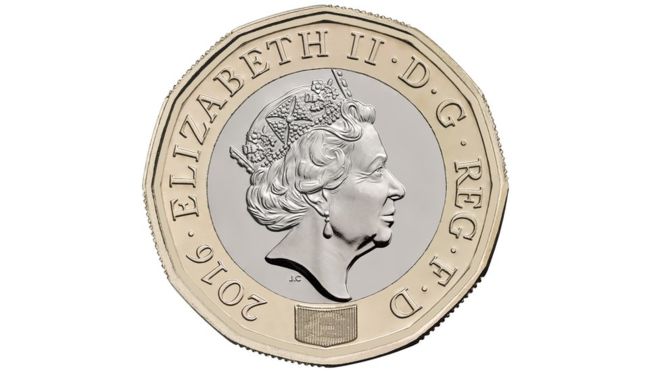

More than a billion new £1 coins will enter circulation in March, with the current £1 coin being withdrawn in the autumn.
It will be March 28 when the first of the new, lighter but wider 12-sided coins is issued. In the six months that follow, both coins will be legal tender but in September, shops will no longer accept the old £1 coin. You will, however, still be able to deposit it at banks.
Why is the new coin being introduced?
Pound coins are heavily counterfeited with around three per cent of the existing circulation a fake. It is hoped the new version will be considerably more difficult to reproduce illegally due to a number of security features. These include a latent ‘hologram-like’ image where the £ symbol switches to a number 1 when seen from different angles.
What will it feel like?
The new coin will be slightly lighter than the existing one due to it being thinner. It will be marginally wider than the existing pound.
What will it look like?
As our images show, the coin is constructed from two metals rings. The outer one is a gold coloured nickel-brass alloy and the inner ring is a silver nickel-plated alloy.
It features a new design that shows the English rose, the Welsh leek, the Scottish thistle and the Northern Irish shamrock emerging from one stem within a royal coronet. This was created by David Pearce who won a public design competition at the age of 15.
Where can I exchange my old coins after September?
According to the Royal Mint you will still be able to deposit the old coin at most high street banks including RBS, NatWest, Ulster, HSBC, Barclays, Lloyds, Santander, Nationwide, Clydesdale, Yorkshire Bank, Halifax, Bank of Scotland and The Post Office.