
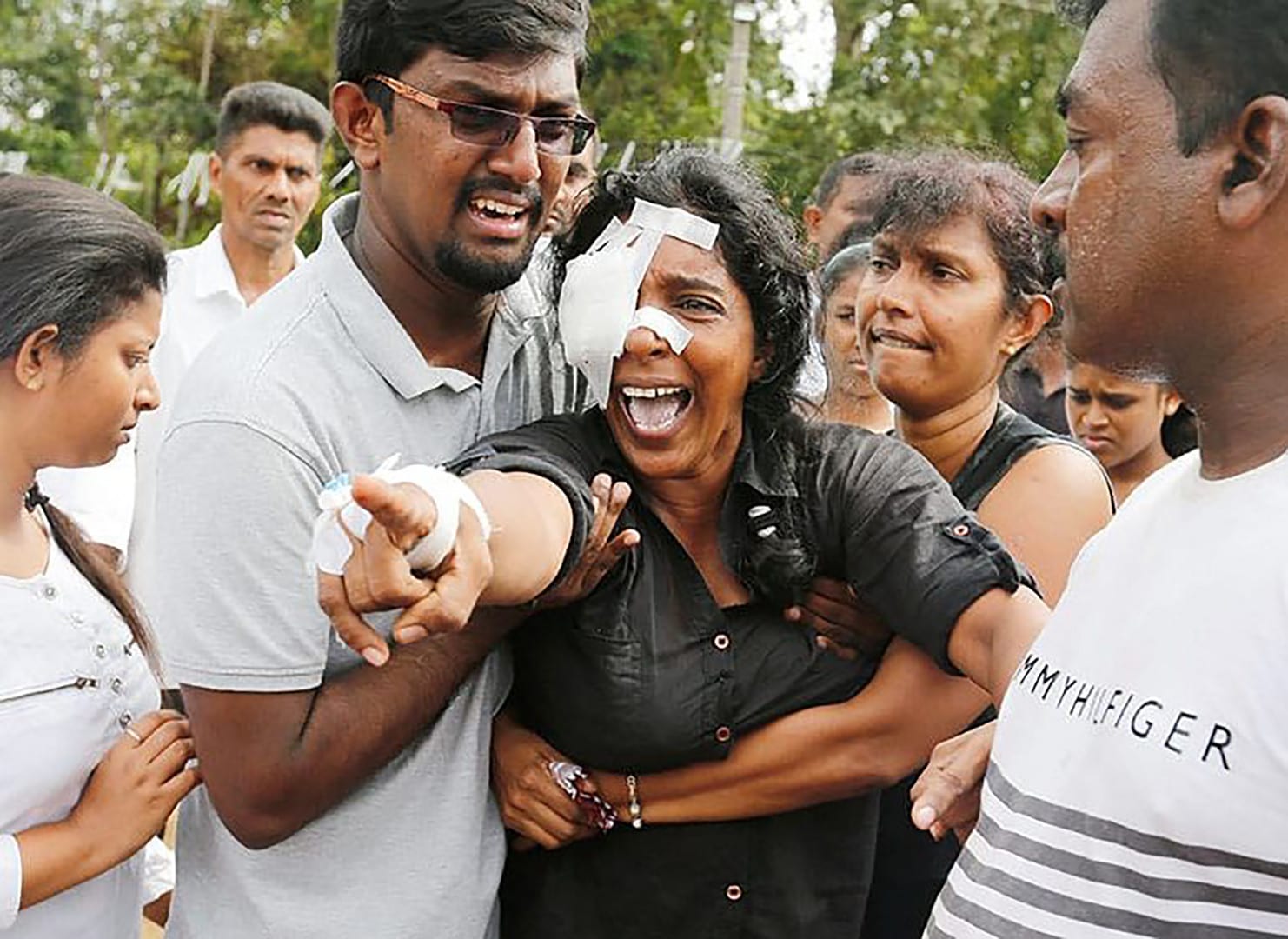

Devastating Easter bombings in Sri Lanka were retaliation for attacks on mosques in New Zealand, a Sri Lankan official said on Tuesday, as Islamic State claimed responsibility for the coordinated blasts that killed 321 people.
Islamic State’s claim, issued on its AMAQ news agency, came shortly after Sri Lanka said two domestic Islamist groups, with suspected links to foreign militants, were believed to have been behind the attacks at three churches and four hotels, which wounded about 500 people.
The government has said at least seven suicide bombers were involved.
“The initial investigation has revealed that this was in retaliation for the New Zealand mosque attack,” junior minister for defence Ruwan Wijewardene told parliament.
He did not elaborate on why authorities believed there was a link to the killing of 50 people at two mosques in the New Zealand city of Christchurch during Friday prayers on March 15. A lone gunman carried out those attacks.
Wijewardene said two Sri Lankan Islamist groups – the National Thawheed Jama’ut and Jammiyathul Millathu Ibrahim – were responsible for the blasts early on Sunday during Easter services and as high-end hotels served breakfast.
U.S. intelligence sources said earlier the attacks carried some of the hallmarks of Islamic State, even though it had not made an immediate claim of responsibility, as it usually does.
Prime Minister Ranil Wickremesinghe told parliament investigators were looking into foreign links.
Earlier on Tuesday, Sri Lankan government and military sources said a Syrian had been detained among 40 people being questioned over the bombs.
“He was arrested after the interrogation of local suspects,” one of the sources said, referring to the unidentified Syrian.
Funerals
Tuesday was declared a national day of mourning and the funerals of some of the victims were held, as pressure mounted on the government over why effective action had not been taken in response to a warning this month about a possible attack on churches by the little-known National Thawheed Jama’ut group.
The first six attacks – on three churches and three luxury hotels – came within 20 minutes on Sunday morning.
Two more explosions – at a downmarket hotel and a house in a suburb of the capital, Colombo – came in the early afternoon.
Most of the dead and wounded were Sri Lankans, although government officials said 38 foreigners were killed. That included British, U.S., Australian, Turkish, Indian, Chinese, Danish, Dutch and Portuguese nationals.
The U.N. Children’s Fund said 45 children were among the dead.
Footage on CNN showed what it said was one of the bombers wearing a heavy backpack. The man patted a child on the head before entering the Gothic-style St. Sebastian church in Katuwapitiya, north of Colombo. Dozens were killed there.
The bombs brought a shattering end to a relative calm that had existed in the Buddhist-majority Indian Ocean island since a bitter civil war against mostly Hindu, ethnic Tamil separatists ended 10 years ago, and raised fears of a return to sectarian violence.
Sri Lanka’s 22 million people include minority Christians, Muslims and Hindus. Until now, Christians had largely managed to avoid the worst of the island’s conflict and communal tensions.
The government imposed emergency rule at midnight on Monday, giving police extensive powers to detain and interrogate suspects without court orders.
An overnight curfew has also been imposed since Sunday.