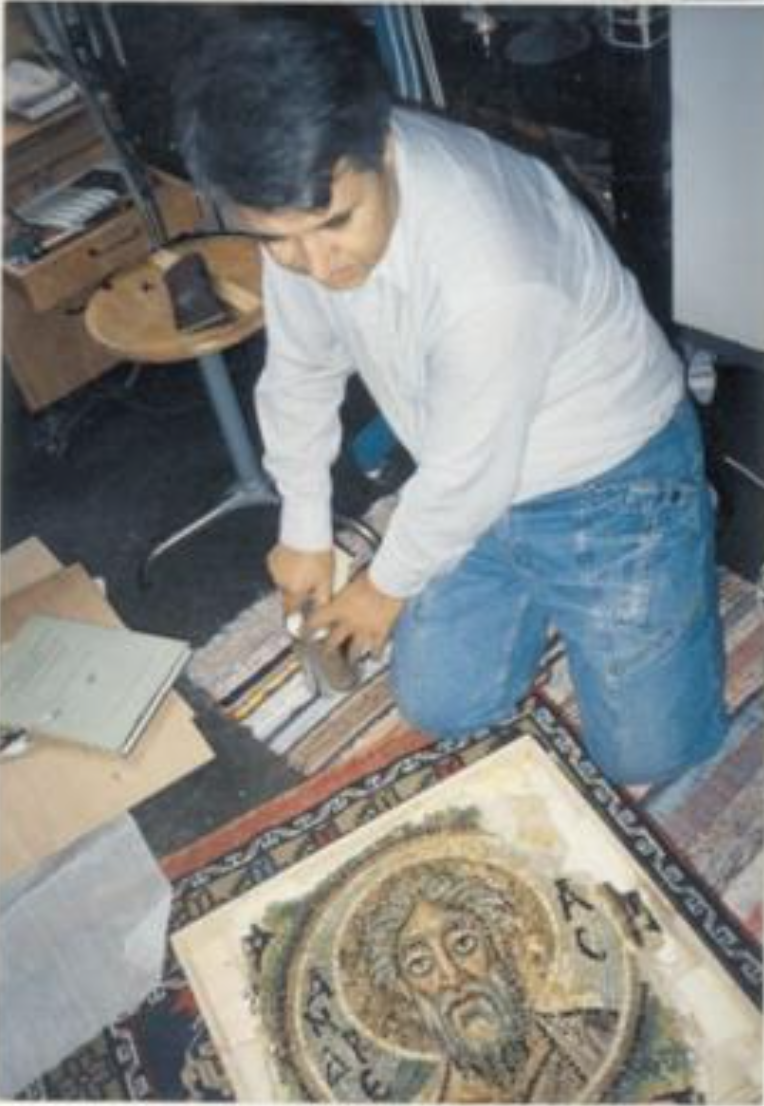
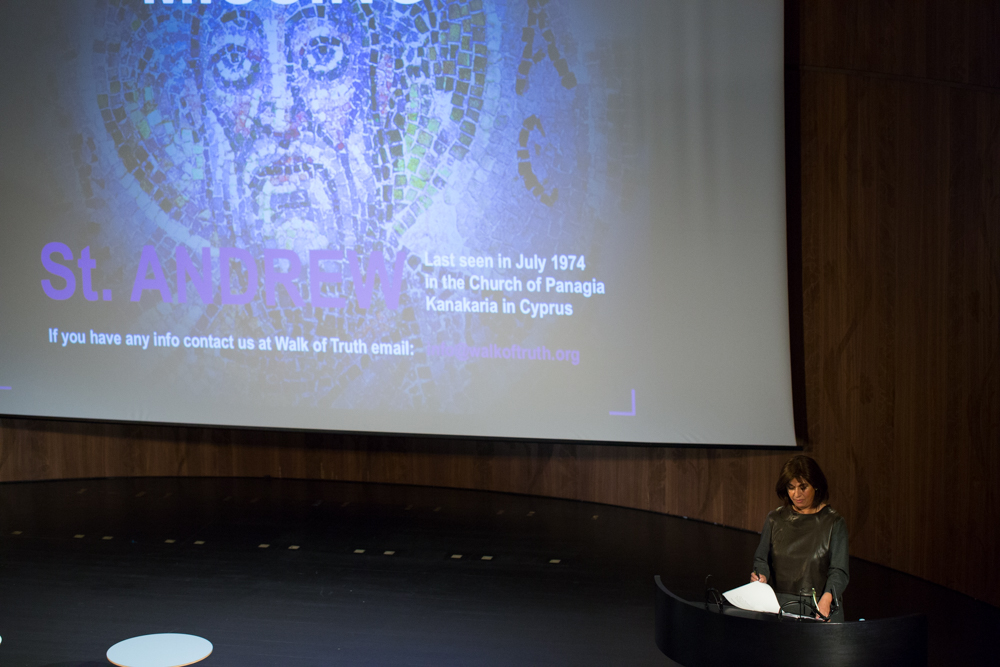

St Andrew mosaic of Panagia Kanakaria church in the Turkish occupied peninsula of Karpasia became a world symbol of looted cultural heritage, during a presentation by the founder `Walk of Truth` , Cypriot Tasoula Hadjitofi at the Victoria and Albert Museum in London last Tuesday.
The presentation took place during an international seminar titled “Culture in crisis” coorganized by V&A Museum and the University of Yale. The participants had the chance to discuss destruction of cultural heritage in Syria, Iraq, Cyprus and elsewhere. Hadjitofi pointed out that the destruction of cultural heritage should be a crime against humanity and a war crime.
Hadjitofi told the participants that the wall mosaic went missing during the 1974 Turkish invasion of the island, pointing out that the destruction of the island`s cultural heritage is still taking place, 41 years after the invasion, and many looted treasures have been missing since then and are not included in any international list of stolen items, such as the one by Interpol.
Hadjitofi told the participants how in 1997 she was approached by a Dutch art collector who wanted to sell stolen treasures from Cyprus among which the missing St. Andrew mosaic.
She also referred to the infamous Turkish smuggler Aydin Dikmen who stole a total of 207 treasures from the Turkish occupied areas of Cyprus.
Recently, the Munich Court of Appeals ruled the return to the Republic of Cyprus of additional 34 treasures that were stolen by Dikmen were found by the German Police in his apartments in Munich in 1997. St Andrew wall mosaic is not among these items.
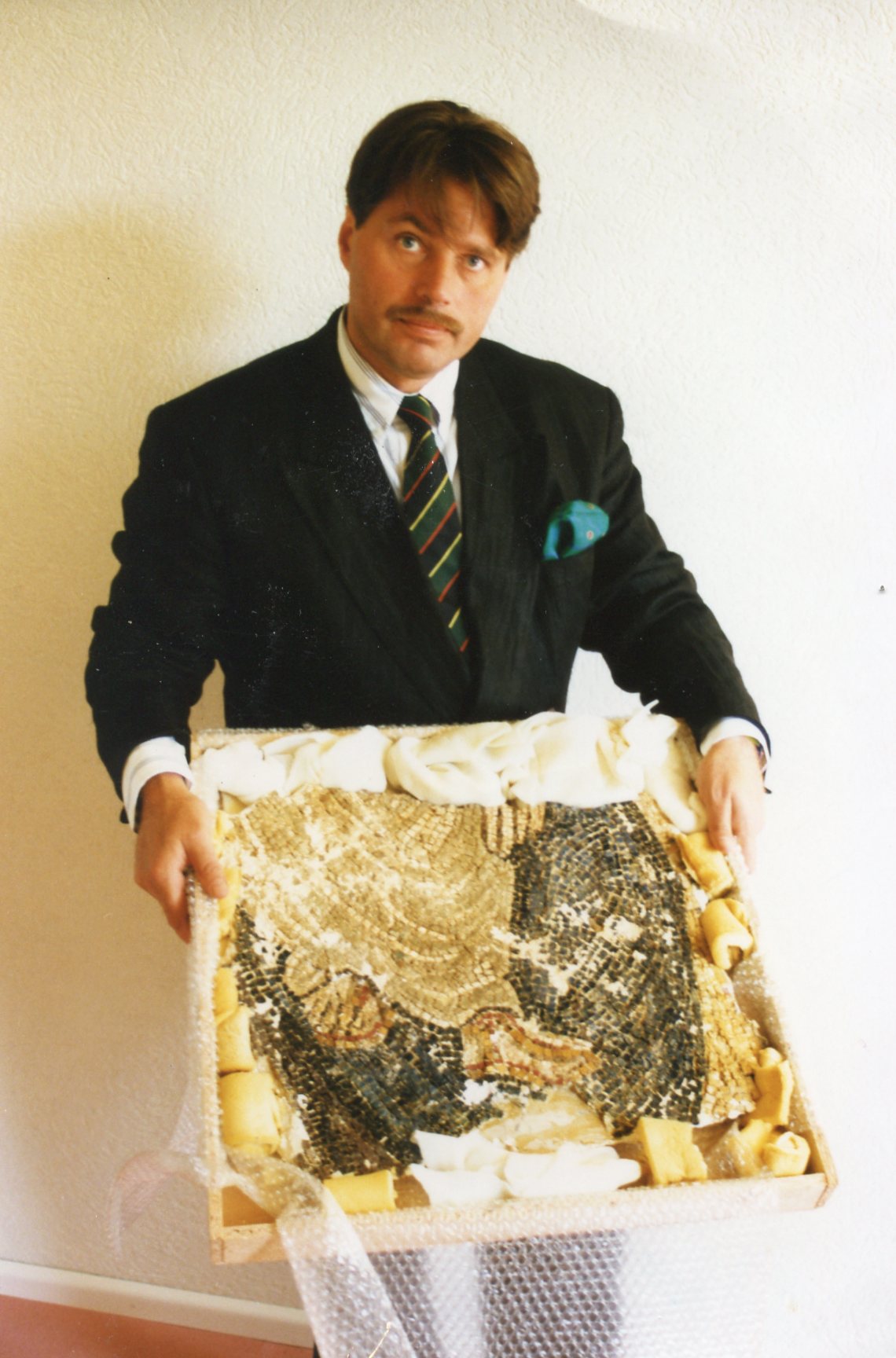
Turkish art smuggler Aydin Dikmen had his headquarters in Munich and channelled the booty taken from the occupied areas through Turkey, to the whole world. One of the biggest cases of illicit trading in antiquities involving Aydin Dikmen was the plundering of the wall paintings from the church of Agios Euphemianus and the 6th century wall mosaics from the Church of Panagia Kanakaria.
In October and November 1997 the German Police raided apartments maintained by the Turkish dealer in illicit antiquities in Munich. The number of works of art they uncovered was astonishing since treasures were found from about fifty looted churches in Turkish-occupied Cyprus.
The records kept by the Turkish illicit dealer in antiquities were lodged as exhibits at the Bavarian Court. The detailed way in which he kept his records is unprecedented: photographs and sketches prior to the theft of the mosaics and wall paintings, during their removal and after, as well as copies of the mosaics intended to be sold as originals in the illicit antiques trade.
The uncontrolled situation in the Turkish-occupied area of Cyprus after the Turkish invasion in 1974 fostered the development of a network of dealers in illicit antiquities whose aim was to sell out the cultural heritage of Cyprus. With the encouragement and help of the Turkish army, the trade in illicit antiquities has brought great profit to those involved, and Cypriot treasures already adorn private collections in a number of countries including Turkey, Russia, Switzerland, Holland and the UK, and even as far as the US, Australia and Japan.
More than 500 churches situated in the areas under Turkish occupation since 1974 have been destroyed, plundered and looted or turned into stables, warehouses, restaurants and hotels. The Cyprus government and the church have repeatedly protested to the UN, the World Council of Churches and many other international and religious organisations.