
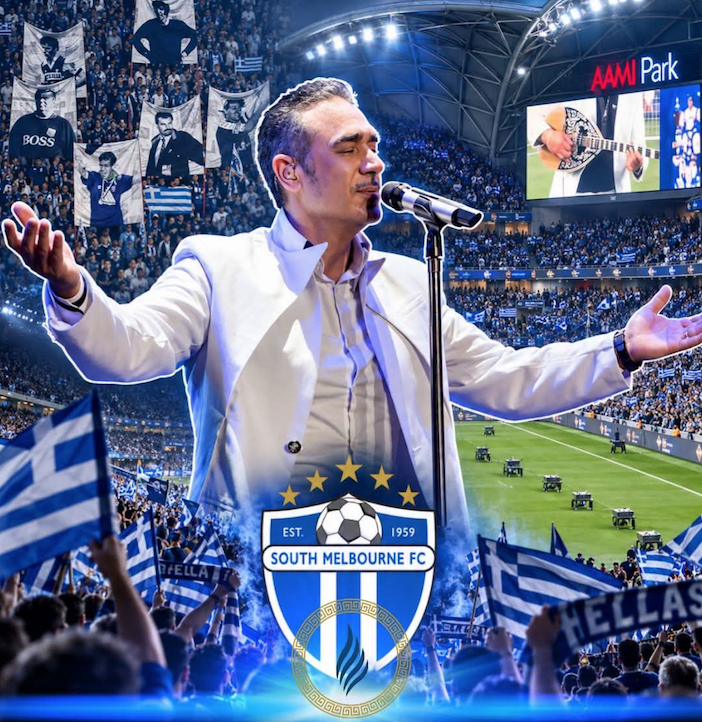


Greek flags, blue-and-white scarves and the unmistakable sound of Greek music helped transform Melbourne’s AAMI Park into a celebration of Greek heritage, as South Melbourne Hellas defeated Melbourne Victory in a dramatic Australia Cup final that will be remembered for generations.
In front of a record crowd of 29,911, South Melbourne secured a historic 4–3 penalty shootout victory after the teams drew 1–1 following extra time. The triumph made South Melbourne the first National Premier Leagues (NPL) club to win the Australia Cup, delivering a landmark moment for Australian football and the Greek-Australian community.
The occasion was about far more than football. Greek flags waved across the stands as supporters celebrated a club whose identity is deeply connected to Melbourne’s Greek community. The atmosphere reflected generations of cultural heritage, with music, chants and club colours bringing supporters together for one of the biggest nights in South Melbourne’s history.
The reference to legendary Greek singer Notis Sfakianakis captures the distinctly Greek character of the celebrations. His music became a fitting symbol of the cultural pride surrounding South Melbourne Hellas.
A dramatic final decided on penalties
After a goalless first 90 minutes, Melbourne Victory took the lead in the 95th minute of extra time through Denis Genreau, whose improvised volley appeared to put Victory on course for the trophy.
South Melbourne refused to give up. In the 117th minute, Max Mikkola found the net following a dangerous delivery from substitute Jordan Swibel, sending the final to a penalty shootout and the South Melbourne supporters into celebration.
Goalkeeper Javier López proved decisive, saving penalties from former South Melbourne player Harrison Sawyer. Victory captain Jason Davidson then sent his attempt over the crossbar, allowing South Melbourne to seal a 4–3 shootout triumph.
A Club rooted in Greek-Australian history
Founded in 1959 by Greek immigrants, South Melbourne FC has played a significant role in Australian football for generations. Known affectionately as Hellas, the club represents the contribution of Greek Australians to the country’s sporting and cultural life.
Its history includes Hungarian football legend Ferenc Puskás, who coached the club, and Ange Postecoglou, who played for South Melbourne before becoming one of Australia’s most prominent football managers.
The final also brought together two different eras of Australian football. Melbourne Victory represents the modern A-League, while South Melbourne carries the legacy of the National Soccer League and the migrant communities that helped shape the game.
For South Melbourne’s supporters, this victory was more than a trophy. It was a celebration of heritage, identity and belonging.
As the celebrations continued at AAMI Park, the message was unmistakable: for Melbourne’s Greek community, football remains a powerful connection to its roots. South Melbourne Hellas had made history, and the entire occasion felt like a victory shared across generations.